
The Life Insurance Act 1956 stands as a landmark in the history of India’s financial sector. It marked the turning point when the government took charge of life insurance to protect policyholders, encourage savings, and strengthen the economy. While many people know about the Life Insurance Corporation (LIC), fewer understand the key features that make this Act unique. If you want to know how the Act shapes life insurance in India, this article will guide you through its most important aspects, using simple language and real examples.
Why The Life Insurance Act 1956 Was Needed
Before 1956, more than 245 private insurers operated in India. Many failed to honor their commitments. Policyholders often lost their savings due to mismanagement and fraud. After India’s independence, the government wanted to protect citizens’ money and build public trust. The Life Insurance Act 1956 was created to nationalize the life insurance sector, ensure fair practices, and promote financial inclusion.

Key Objectives Of The Act
The Act had several clear goals:
- Protect policyholders’ interests by bringing all life insurance under government control.
- Mobilize savings for nation-building.
- Eliminate unfair competition among private insurers.
- Promote insurance awareness across urban and rural India.
These objectives are woven into the Act’s structure, making it a foundation for the insurance sector’s stability and growth.
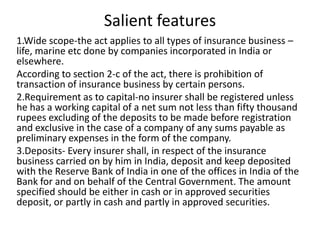
Salient Features Of The Life Insurance Act 1956
Let’s look in detail at the main features that make this Act special.
1. Nationalization Of Life Insurance
The Act nationalized all private life insurance companies. This meant the government took over their assets, liabilities, and management. The aim was to create a single, trusted entity.
Example: Imagine dozens of small shops selling the same product, but some cheat customers. The government closes all the shops and opens one reliable store, so everyone feels safe buying.
2. Establishment Of Life Insurance Corporation (lic)
The Act led to the creation of the Life Insurance Corporation of India (LIC) on 1st September 1956. LIC became the only authorized life insurer in India for decades.
LIC’s responsibilities included:
- Collecting premiums and paying claims
- Managing policyholder funds
- Spreading insurance to all parts of India
Interesting fact: LIC started with 5 zonal offices, 33 divisional offices, and 212 branch offices.
3. Acquisition And Transfer Of Assets And Liabilities
The Act gave the government power to acquire all assets and liabilities of private insurers. This ensured a smooth transition and safeguarded policyholder money.
A simple data comparison helps:
| Before 1956 | After 1956 |
|---|---|
| 245+ private insurers | 1 government-owned LIC |
| Frequent failures and fraud | Centralized oversight and safety |
4. Monopoly Of Lic
For nearly 44 years, LIC enjoyed an exclusive monopoly on life insurance. No private company could sell life insurance in India until the sector reopened in 2000. This allowed LIC to focus on public welfare, not just profit.
5. Capital Structure And Government Guarantee
The Act set LIC’s initial capital at ₹5 crores, provided by the Government of India. The government also guaranteed all sums assured by LIC, making policies safer for the public.
Non-obvious insight: Many people don’t realize that this guarantee means the government is ultimately responsible for paying claims, making LIC policies uniquely secure.
6. Centralized Control And Regulation
The Act brought strict government control over:
- Investment of funds
- Appointment of LIC’s top management
- Policy terms and conditions
This structure reduced the risk of mismanagement and protected policyholders from sudden changes.
7. Social Objectives And Welfare Focus
The Act made LIC responsible for serving all sections of society. It had to spread insurance to villages, small towns, and disadvantaged groups—not just wealthy urban areas.
Example: LIC introduced special policies for farmers, industrial workers, and the poor, fulfilling the Act’s social vision.
8. Legal Provisions For Policyholder Protection
The Act includes many clauses to protect policyholders, such as:
- Strict rules for claim settlement
- Clear guidelines for surrender value and paid-up policies
- Transparent disclosure of terms
This legal backing gives confidence to buyers, even today.
9. Policyholder Participation In Profits
The Act allows policyholders to share in LIC’s profits. Surplus funds are distributed as bonuses, which increase the value of policies.
Tip: Always check if your policy is “with profit” to benefit from these bonuses.
10. Appointment Of Agents And Their Regulation
The Act sets clear rules for appointing and regulating insurance agents. Only qualified, licensed agents can sell LIC policies. This ensures better service and reduces fraud.
11. Regular Auditing And Reporting
The Act requires LIC to:
- Maintain proper accounts
- Undergo regular government audits
- Present annual reports to Parliament
This transparency builds public trust and ensures accountability.
12. Investment Guidelines For Lic
The Act specifies how LIC must invest policyholder funds. The focus is on safety and national development, not speculation.
Here is a simple breakdown:
| Investment Area | Purpose |
|---|---|
| Government securities | Safety and steady returns |
| Infrastructure projects | Nation building (roads, power, etc.) |
| Approved shares and debentures | Limited, for balanced growth |
Non-obvious insight: By law, a large part of LIC’s funds must be invested in government-backed projects. This helps the country develop, while keeping your money safe.
13. Power To Frame Rules And Regulations
The Act gives the government power to make detailed rules for running LIC. This flexibility helps LIC adapt to new challenges without changing the law every time.
14. Dispute Resolution Mechanism
If there is a disagreement between a policyholder and LIC, the Act provides a legal mechanism for quick resolution. Policyholders can approach consumer courts or insurance ombudsman for redressal.
15. Tax Benefits And Incentives
The Act made life insurance policies eligible for tax benefits under Section 80C and Section 10(10D) of the Income Tax Act. This encourages people to buy insurance for both protection and savings.
Example: If you pay premiums on a life insurance policy, you can deduct that amount from your taxable income (up to a limit), reducing your tax bill.
16. Adaptability To Future Reforms
While the Act began with a government monopoly, it was flexible enough to allow reforms. In 2000, the sector opened to private and foreign players, but LIC remains dominant thanks to the strong foundation laid by the Act.
Impact Of The Life Insurance Act 1956
The Act had a powerful impact on India’s economy and society.
Some highlights:
- LIC is now one of the world’s largest insurers, with over 250 million policies in force.
- Life insurance penetration rose sharply after nationalization.
- Policyholder trust and security improved, leading to higher savings.
- LIC has invested trillions of rupees in infrastructure, supporting growth.
A quick data snapshot:
| Year | Number of Policies (millions) | LIC’s Market Share (%) |
|---|---|---|
| 1957 | 5.4 | 100 |
| 2000 | 80 | 98 |
| 2022 | 285 | 74 |

Common Mistakes When Understanding The Act
Many people think the Act was only about creating LIC. In fact, it did much more:
- It created a legal framework for every aspect of life insurance.
- It made customer protection, transparency, and national development central to insurance.
- It required LIC to serve the whole country, not just make profits.
Another mistake is to assume the Act is now outdated. While the market has opened up, the Act’s principles still shape how life insurance works in India.
Lessons For Other Countries
The Life Insurance Act 1956 is often studied as a model for financial sector reforms. Many developing countries have looked at India’s example to protect policyholders and use insurance to drive economic growth. For deeper insights, check the official summary on the Wikipedia page.

Why The Act Still Matters Today
Even though private insurers now compete in India, the Life Insurance Act 1956 remains the backbone of the sector. LIC’s strong regulation, safety net, and trust are direct results of this law. Policyholders continue to benefit from the protections and guarantees built into the Act.
Some modern features—like digital payments, fast claim settlement, and rural outreach—trace their roots to the original vision of the Act. Whenever you buy a policy from LIC, you are protected by decades of law, experience, and government backing.
Frequently Asked Questions
What Is The Main Purpose Of The Life Insurance Act 1956?
The main purpose is to protect policyholders’ interests by bringing all life insurance business under government control, ensuring fair practices, and promoting the growth of life insurance across India.
How Did The Act Affect Private Life Insurance Companies?
The Act nationalized all private life insurers, transferring their assets and liabilities to LIC. Private players could not operate in life insurance until the sector was reopened in 2000.
What Are The Key Benefits For Policyholders Under This Act?
Key benefits include government-backed guarantees, clear rules for claims, profit-sharing bonuses, tax incentives, and strong legal protection for every policyholder.
Can Private Companies Now Sell Life Insurance In India?
Yes, since 2000, private and foreign insurers can sell life insurance in India. However, LIC remains the largest and most trusted due to its history and the strong legal foundation provided by the Act.
How Does The Act Ensure Safety Of Policyholder Funds?
The Act sets strict investment guidelines for LIC, requires regular government audits, and gives the government power to guarantee payments, making policyholder money as safe as possible.
The Life Insurance Act 1956 is more than just a historical law—it is the reason life insurance is trusted and accessible in India today. If you are a policyholder or planning to be one, understanding this Act helps you appreciate the security and confidence your policy provides.