Buying life insurance is one of the most important financial decisions you can make. It helps protect your family or loved ones if something happens to you. But before you can buy a policy, there is a rule called insurable interest. Many people do not understand this rule, but it is required by law in every life insurance contract. Why does insurable interest matter so much? What does it really mean? And how can you be sure you meet this requirement? Let’s break it down simply.
What Is Insurable Interest?
Insurable interest means you have a real financial or emotional loss if the person covered by the policy dies. It stops people from buying insurance on strangers just to make money. Insurance is not gambling; it’s protection. If you buy life insurance on someone, you must have a good reason—like family ties, business connections, or legal responsibility.

For example, a wife can buy life insurance on her husband, because his death would affect her financially and emotionally. But you cannot buy insurance on a celebrity or someone you don’t know. The law says there must be a clear relationship.
Why Insurable Interest Is Required
Without insurable interest, insurance would become dangerous. People might buy policies on strangers, hoping they die, just to claim money. This would create moral and legal problems. Insurable interest protects both the insurance company and society. It makes sure only people with real loss can get the payout.
Most countries, including the US, require insurable interest by law. If there is no insurable interest, the contract can be canceled or declared void. This protects against fraud and abuse.
Types Of Insurable Interest
Not every relationship creates insurable interest. Here are the main types:
- Family relationships
- Spouses, parents, children, and siblings usually have insurable interest.
- Business relationships
- Employers can insure key employees. Partners can insure each other.
- Financial obligations
- If someone owes you money, you have insurable interest in their life.
- Legal guardianship
- Guardians can insure children under their care.
Some relationships, like friends or distant relatives, usually do not qualify unless there is strong evidence of financial dependency.
When Must Insurable Interest Exist?
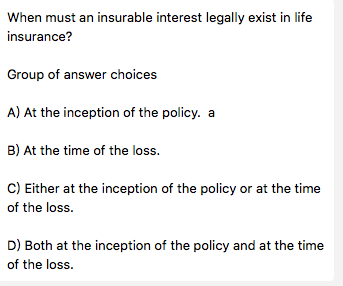
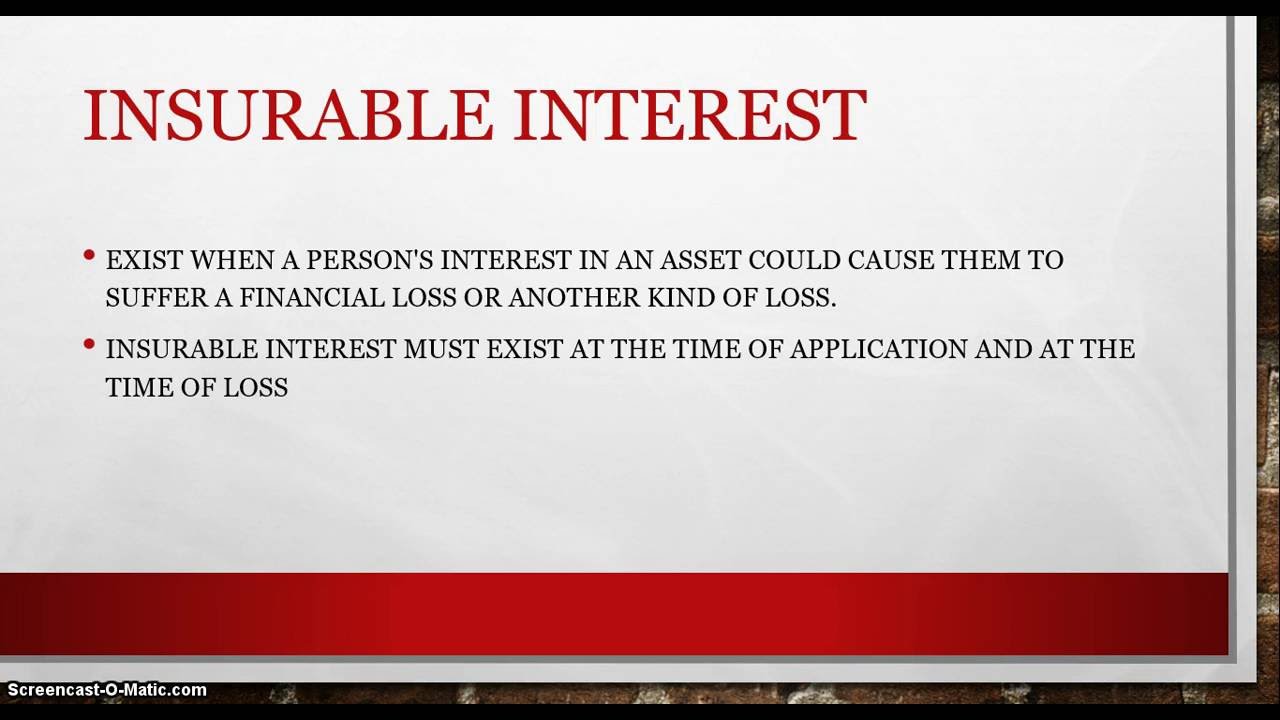
This is a common point of confusion. Insurable interest must exist at the time the policy starts—not necessarily at the time of death. If you had insurable interest when you bought the policy, it remains valid even if circumstances change later.
For example, suppose a wife buys insurance on her husband. If they divorce years later, the policy is still valid because insurable interest existed at the start.
Real-life Examples
Let’s look at some real cases:
- Husband and wife:
When a husband buys life insurance on his wife, he has a clear insurable interest.
- Business partners:
If two partners own a bakery, they can insure each other’s lives to protect the business.
- Lender and borrower:
A bank lends $100,000 to someone. It can buy life insurance on the borrower to cover the loan if the person dies.
But if you try to buy insurance on a stranger or a celebrity, the insurance company will refuse.
How Insurers Check For Insurable Interest
Insurance companies do not simply trust your word. They check documents, ask questions, and sometimes require proof. The process depends on the relationship:
- Family: Usually, a marriage certificate or birth certificate is enough.
- Business: Companies must show contracts, partnership agreements, or financial statements.
- Debts: Lenders must provide loan documents or promissory notes.
If the insurer cannot confirm insurable interest, they will reject your application.
Common Mistakes And Misunderstandings
Many beginners make mistakes. Here are a few:
1. Assuming All Relatives Qualify:
Not all relatives have automatic insurable interest. Distant cousins or in-laws may not qualify.
2. Ignoring Business Agreements:
Insuring a business partner needs written proof, not just a verbal agreement.
3. Trying To Insure Friends:
Friendship does not equal insurable interest unless there is financial dependence.
A less obvious mistake: Believing you can keep insurable interest forever. If you buy insurance as a lender, and the loan is repaid, your insurable interest ends. But the policy can still remain valid if it was bought for a fixed term.
Insurable Interest: Us Vs. Other Countries
Different countries have slightly different rules. In the US, insurable interest must exist at the start. In the UK, the rules are stricter for non-family members. Some countries allow more flexibility for business relationships.
Here’s a comparison:
| Country | Insurable Interest Timing | Family Coverage | Business Coverage |
|---|---|---|---|
| United States | At policy inception | Broad | Allowed with proof |
| United Kingdom | At inception & strict ongoing proof | Broad | More restrictions |
| Canada | At inception | Broad | Allowed with proof |
| India | At inception | Broad | Allowed for business partners |
If you live outside the US, check your country’s rules before buying a policy.
Insurable Interest And Policy Ownership
Who owns the policy matters. Sometimes, the person insured is not the owner. For example, a wife buys insurance on her husband. She is the owner, he is the insured. Insurable interest must exist between owner and insured.
Here’s a breakdown:
| Policy Owner | Insured Person | Insurable Interest Required? |
|---|---|---|
| Self | Self | No (always valid) |
| Spouse | Spouse | Yes |
| Parent | Child | Yes |
| Employer | Employee | Yes |
| Friend | Friend | No |
If you buy a policy on yourself, you do not need insurable interest—because you always have a reason to protect your own life.
Insurable Interest In Special Situations
There are some less obvious cases where insurable interest gets tricky:
- Adopted children:
Legal guardians have insurable interest, but proof of adoption is needed.
- Divorce:
After divorce, insurable interest may end, unless there are financial obligations like alimony.
- Business changes:
If a business partnership ends, insurable interest may no longer exist.
In these cases, consult with a lawyer or insurance expert before buying or keeping a policy.
What Happens If Insurable Interest Is Missing?
If a policy is issued without insurable interest, it can be canceled. The insurer may refuse to pay the death benefit. In some cases, the premiums may be returned, but not always.
Some famous court cases show how serious this is. In one US case, a man bought insurance on a distant relative without proper insurable interest. When the relative died, the insurance company refused to pay, and the contract was void.
Non-obvious insight: Even if the policy is old, lack of insurable interest can cause problems when you make a claim. Insurers check this at the start, but they may review again at payout time.
Insurable Interest And Contestable Period
Every life insurance policy has a contestable period, usually two years. During this time, the insurer can review and challenge any claims, including insurable interest. If you provided false information, the company can refuse to pay.
Here’s a quick look:
| Contestable Period | What Insurer Can Check | Possible Outcomes |
|---|---|---|
| First 2 years | Insurable interest, medical history, fraud | Claim denied, policy voided |
| After 2 years | Limited checks | Claim usually paid |
If you buy a policy, make sure all information is correct, especially about insurable interest.
Practical Tips To Prove Insurable Interest
If you want to buy life insurance, here are steps to show insurable interest:
1. Gather Documents:
Marriage certificates, birth certificates, loan agreements, or business contracts.
2. Explain Your Relationship:
Be ready to answer questions about how the person’s death would affect you.
3. Provide Financial Details:
Show your dependency or obligation, like shared bills or debts.
If you’re unsure, ask the insurance company what proof they need. This saves time and avoids delays.
Insurable Interest For Group Life Insurance
Group life insurance is often offered by employers. Insurable interest exists because the employer has a financial stake in employees’ lives. Employees can also add family members as beneficiaries, and insurable interest is usually presumed.
One less-known point: Some group policies cover retirees or ex-employees. In these cases, insurable interest may be weaker, but insurers often allow coverage to continue if it was valid at the start.
Why Insurable Interest Matters For You
Understanding insurable interest helps you avoid mistakes. It protects you from buying invalid policies. It also helps you choose the right people to insure.
If you want to protect your family, business, or financial interests, always check if insurable interest exists. If you are unsure, talk to an insurance advisor. Remember, this rule is not just paperwork—it keeps insurance honest and fair for everyone.
For more detailed legal background, you can read about insurable interest in life insurance at Wikipedia.
Frequently Asked Questions
What Is Insurable Interest In Simple Terms?
Insurable interest means you would suffer a real loss—financial or emotional—if the insured person dies. It is required so you cannot buy life insurance just to make money from someone else’s death.
Who Can I Buy Life Insurance For?
You can buy life insurance for people you have a strong connection to: spouse, parents, children, business partners, or someone who owes you money. Friends and distant relatives usually do not qualify unless there is clear financial dependence.
Do I Need Insurable Interest To Buy Insurance On Myself?
No. If you buy life insurance on yourself, you always have insurable interest. This is true in every country.
What Happens If Insurable Interest Is Missing?
If there is no insurable interest, the policy can be canceled and the insurance company may refuse to pay the death benefit. Sometimes, the premiums are returned, but not always.
Is Insurable Interest Checked Every Time A Claim Is Made?
Insurers check insurable interest when you buy the policy, but they may check again during the contestable period or if there are suspicious circumstances at claim time.
Understanding insurable interest is key to getting valid life insurance. With this knowledge, you can protect your loved ones, your business, and your financial future—without worry.