
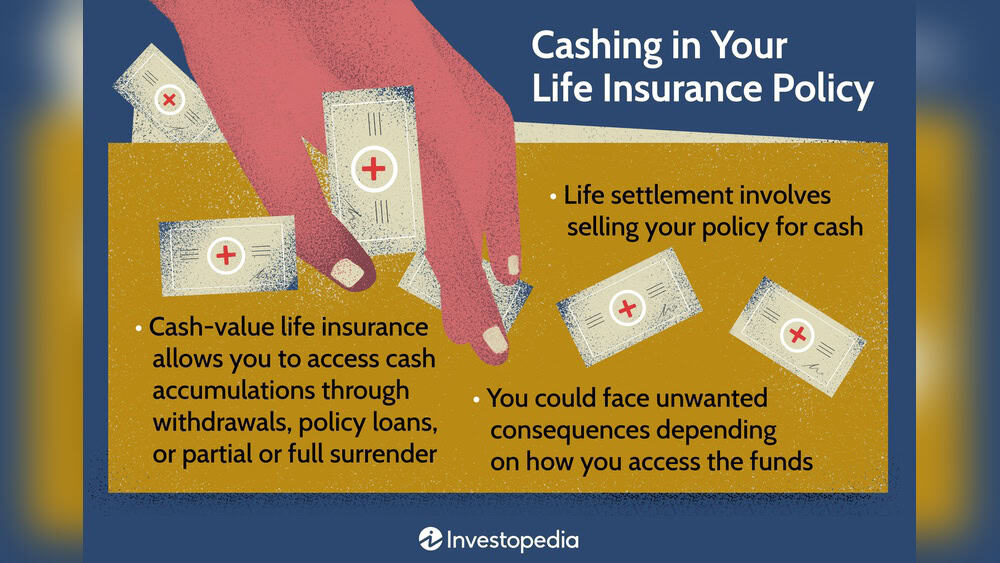
Life insurance is often seen as a safety net for your family after you die. But many people wonder if they can use the money from their life insurance while they are still alive. This question is important, especially if you face financial challenges or serious health issues.
The answer depends on the type of policy you have, the rules of your insurer, and your unique situation. Understanding when—and how—you can access life insurance money can help you make smarter choices for your finances and your loved ones.

This article explores the main ways to take out life insurance money, explains the differences between policy types, and highlights common mistakes. You’ll also see real examples, practical advice, and useful tables to help you decide if tapping into your life insurance is right for you.
Types Of Life Insurance: What Matters Most
Before you can take out money, you need to know what kind of life insurance you have. There are two main types:
- Term life insurance
- Permanent life insurance (such as whole life or universal life)
Each works differently.
Term Life Insurance
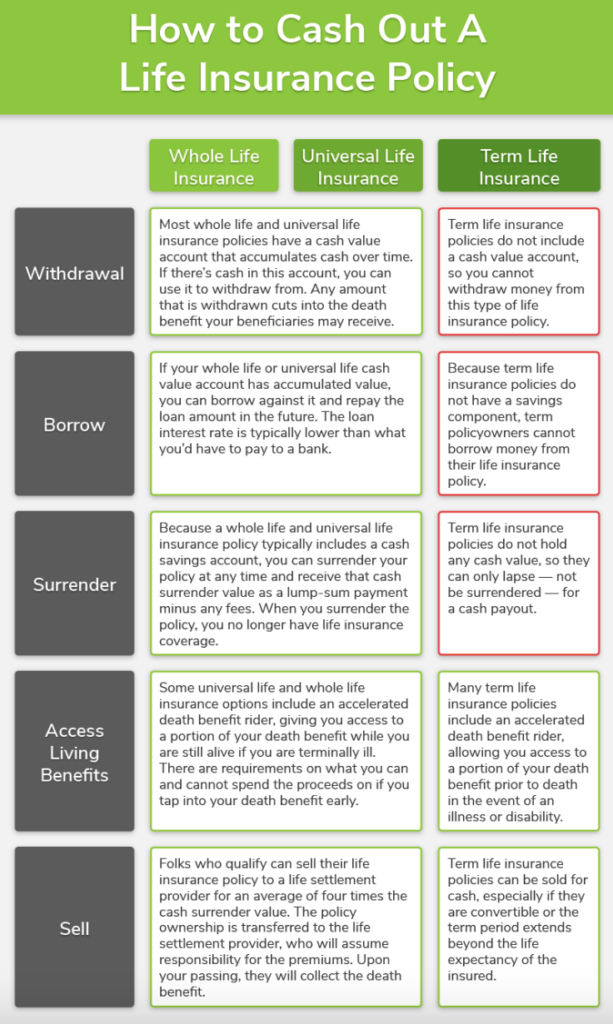
This is the simplest and most affordable kind. You pay a fixed premium for a set period, usually 10, 20, or 30 years. If you die during this term, your beneficiaries get the payout. If you survive, the policy ends, and usually, there’s no cash value to withdraw.
Key fact: With term life insurance, you cannot take out money while alive. There is no cash value.
Permanent Life Insurance
Permanent policies last your whole life, as long as you pay premiums. They also build up cash value over time. Examples include whole life, universal life, and variable life insurance.
This cash value is your “living benefit. ” You can borrow against it, withdraw it, or even surrender the policy for its cash value.
Key insight: Only permanent life insurance lets you take out money while living.
Here’s a comparison to make it clear:
| Policy Type | Cash Value | Can Withdraw Money? | Premium Cost |
|---|---|---|---|
| Term Life | No | No | Low |
| Whole Life | Yes | Yes | High |
| Universal Life | Yes | Yes | Medium-High |
Ways To Take Out Life Insurance Money
If you have a permanent policy, there are several ways to access your funds. Each method has its own rules, costs, and risks.
1. Cash Value Withdrawal
Permanent life insurance builds up cash value as you pay premiums. This is the amount you can withdraw directly.
- You can take out a portion, usually tax-free up to what you paid in premiums (your “basis”).
- If you withdraw more than you paid in, you may owe taxes on the profit.
- Taking money out reduces the death benefit for your beneficiaries.
Example: If you paid $20,000 in premiums and your cash value is now $30,000, you can withdraw $20,000 tax-free. The extra $10,000 may be taxed.
Common mistake: Many people think withdrawals are free. But they can lower your payout after death and sometimes trigger taxes.
2. Policy Loans
You can borrow money against your policy’s cash value. This is different from a withdrawal.
- Loans are tax-free as long as the policy stays active.
- You pay interest, usually 5-8% yearly.
- If you don’t pay back, the loan amount plus interest is subtracted from your death benefit.
Example: You borrow $10,000 against your $50,000 cash value. If you die with the loan unpaid, your beneficiaries get $40,000 minus any interest.
Non-obvious insight: Policy loans don’t require credit checks. But if the loan grows too large, your policy could lapse, and you may owe taxes.
3. Surrendering The Policy
You can cancel (“surrender”) your permanent policy and receive the surrender value. This is usually the cash value minus fees.
- You get a lump sum payment.
- You lose life insurance coverage.
- You may owe taxes on gains.
Typical surrender charges: Many policies have fees if you surrender early, often 10-20% of cash value in the first years.
4. Accelerated Death Benefit
Some policies let you take money early if you are terminally ill.
- Usually, you must have a diagnosis of less than 12-24 months to live.
- You receive a portion of the death benefit while alive.
- This reduces the payout for your beneficiaries.
Data point: About 80% of US life insurers now offer this feature, according to the American Council of Life Insurers.
5. Living Benefits Riders
Some policies add “living benefit” riders for extra cost. These let you access money for specific situations, such as critical illness or long-term care.
Example: If you have a heart attack, you can get part of your death benefit early to pay medical bills.
Non-obvious insight: Living benefit riders are sometimes free, but often cost extra. Always check your policy details.
| Withdrawal Method | Taxable? | Reduces Death Benefit? | Loses Coverage? |
|---|---|---|---|
| Cash Value Withdrawal | Sometimes | Yes | No |
| Policy Loan | No | Yes | No |
| Surrender | Yes | Yes (fully) | Yes |
| Accelerated Death Benefit | No | Yes | No |
How Cash Value Grows
Permanent life insurance cash value grows in several ways:
- Whole life policies use a fixed rate, often 2–5% yearly.
- Universal life may offer flexible rates, tied to market or insurer returns.
- Variable life lets you invest in stocks or bonds, but risk is higher.
Practical tip: Cash value grows slowly in the first years. Most policies don’t have much to withdraw until you’ve paid in for 10–15 years.
Example Calculation
Say you have a whole life policy:
- Annual premium: $2,000
- After 10 years: Cash value = $15,000
- After 20 years: Cash value = $40,000
You can usually take out some or all of this money, depending on policy rules.
Common Mistakes When Withdrawing Life Insurance Money
Many people make errors when trying to access life insurance funds. Here are a few to avoid:
- Ignoring tax consequences: Withdrawals or surrenders can trigger taxes.
- Forgetting about fees: Early surrender or withdrawals may have charges.
- Overborrowing: Large loans can cause your policy to lapse, costing coverage.
- Not checking policy terms: Some policies restrict how much or when you can withdraw.
- Assuming term life has cash value: Only permanent policies build cash value.
Non-obvious insight: If your policy lapses after taking loans, you may owe tax on the entire loan amount, not just the gains.
:max_bytes(150000):strip_icc()/How-can-i-borrow-money-my-life-insurance-policy_final-fa1474645da94b368bb3f5452392b0c0.png)
Real-life Scenarios
Let’s look at a few practical situations:
Early Withdrawal For Emergencies
You lose your job and need quick cash. You check your whole life policy and see $10,000 in cash value. You withdraw $5,000. Your death benefit drops by $5,000, but you keep the policy active.
Policy Loan For Home Repairs
Your house needs a new roof. You take a $12,000 loan from your universal life policy. You pay back $1,000 yearly. If you die before paying it off, your beneficiaries get less.
Surrender To Fund Retirement
You’re 65 and no longer need life insurance. Your policy has $50,000 cash value. You surrender and get $45,000 after fees. You use this for retirement. But you no longer have life insurance.
Important Steps Before Taking Out Money
If you are thinking about withdrawing money from your life insurance, follow these steps:
- Review your policy: Check the terms, fees, and cash value.
- Speak to your insurer: Ask about options and consequences.
- Talk to a financial advisor: Get advice on taxes and long-term impact.
- Compare alternatives: Sometimes, a personal loan is cheaper.
- Plan for your family: Know how withdrawals affect your beneficiaries.
Data point: In 2022, US life insurers paid out $90 billion in living benefits to policyholders, according to the National Association of Insurance Commissioners.
Comparing Life Insurance Withdrawal Methods
Here’s a quick summary to help decide which method fits your needs:
| Method | Best For | Downsides |
|---|---|---|
| Cash Value Withdrawal | Quick cash for emergencies | Reduces death benefit, may trigger taxes |
| Policy Loan | Large expenses, flexible payback | Interest charges, risk of policy lapse |
| Surrender | Retirement, no need for insurance | Loss of coverage, surrender fees |
| Accelerated Death Benefit | Serious illness, medical bills | Lower payout for beneficiaries |
When You Cannot Take Out Life Insurance Money
There are situations where you cannot access funds:
- Term life insurance: No cash value, no withdrawals.
- Policy too new: Permanent policies need time to build cash value.
- No living benefit riders: If your policy does not include them, you can’t access money early.
- Policy lapsed: If you stop paying premiums, you lose access.
Non-obvious insight: Some group life insurance (from employers) may not allow withdrawals at all.

Tax Implications: What You Need To Know
Life insurance withdrawals and loans can be tax-friendly, but not always.
- Withdrawals: Tax-free up to basis (amount you paid). Gains are taxed as ordinary income.
- Loans: Usually tax-free, but if policy lapses, taxes apply.
- Surrender: Tax on gains, plus possible surrender fees.
- Accelerated death benefits: Usually tax-free if you are terminally ill.
Practical tip: Always keep records of your premiums and withdrawals for tax purposes. If unsure, consult a tax professional.
How To Start The Process
If you’re ready to take out money, here’s how:
- Call your insurer or log in to your account.
- Request a policy illustration to see your cash value and options.
- Fill out withdrawal or loan forms.
- Wait for approval and payment, usually within 1–2 weeks.
- Keep track of how withdrawals affect your policy.
If you need help understanding your policy, you can visit Insurance Information Institute for detailed guides and support.
Frequently Asked Questions
Can I Take Money From Term Life Insurance?
No. Term life insurance does not build cash value. You can only receive money if you die during the term, and your beneficiaries get the payout.
How Long Does It Take To Access Cash Value?
Usually, you can access cash value after your policy has been active for several years (often 5–10). Early withdrawals may face fees and lower cash value.
Is It Better To Take A Loan Or Withdraw Cash?
Loans are tax-free and flexible but charge interest. Withdrawals may trigger taxes and reduce your death benefit more directly. Compare both options with your insurer.
Will Taking Money Affect My Family’s Payout?
Yes. Any withdrawal or loan reduces your death benefit. If you surrender your policy, your family loses all life insurance coverage.
Are Withdrawals Always Tax-free?
No. Only withdrawals up to your premium payments are tax-free. Gains above this are taxed as ordinary income. Loans are tax-free if the policy stays active.
Taking out life insurance money can help you in tough times, but it also affects your coverage and your family’s future. Always check your policy, talk to experts, and weigh your options before making a move. Knowing when—and how—you can access life insurance money will help you make the best financial decisions.