
Life insurance is more than just a contract between a person and an insurance company. For students in Class 11, understanding its essential elements can help you see how life insurance protects families, creates financial safety, and supports long-term planning.
While the topic may seem complex, breaking it into simple, clear parts makes it much easier to understand. In this article, you’ll learn the key elements that make up a life insurance policy, why they matter, and how they work together.

What Is Life Insurance?
Life insurance is a contract in which an insurance company promises to pay a certain amount of money (called the sum assured) to the policyholder’s family or nominee if the policyholder dies during the policy term. In exchange, the policyholder pays regular payments called premiums. Life insurance helps families recover financially after the loss of a loved one, especially if that person was the main earner.
The Essential Elements Of Life Insurance
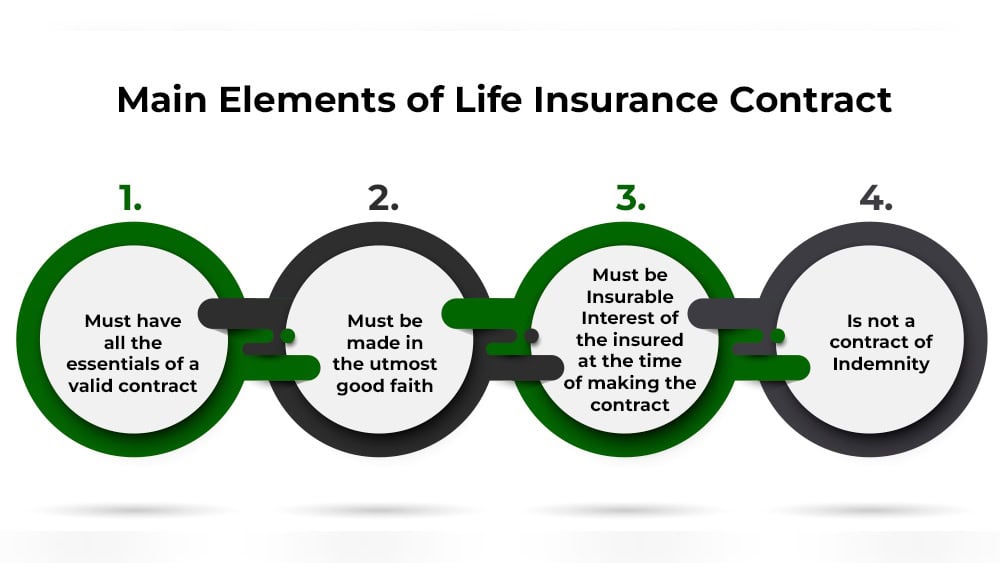
Each life insurance policy is built on several important elements. These form the foundation of any valid contract and are necessary for the insurance to work as intended.
1. The Parties Involved
There are usually three main parties in a life insurance policy:
- Insurer: The insurance company that provides the policy and pays the claim.
- Insured (Life Assured): The person whose life is covered by the policy.
- Policyholder: The person who buys the policy and pays the premiums. Sometimes, the policyholder and the insured are the same, but not always.
- Nominee/Beneficiary: The person who receives the sum assured if the insured dies.
2. Offer And Acceptance
For a life insurance contract to begin, the policyholder makes an offer by filling out an application and paying the first premium. The insurance company reviews the application and decides whether to accept it. If the company agrees, the policy starts. Without clear offer and acceptance, the contract is not valid.
3. Consideration (premium Payment)
Consideration means both parties must give something of value. The policyholder pays regular premiums (monthly, quarterly, yearly, or as a single payment), and the insurer promises to pay the sum assured if a claim occurs. If the premiums are not paid, the policy can lapse, and coverage ends.
4. Insurable Interest
The person buying the policy must have a financial interest in the insured’s life. This means the policyholder would lose financially if the insured dies. For example, a husband can insure his wife, or a business partner can insure another partner. Without insurable interest, the contract is not legal.
5. Utmost Good Faith (uberrimae Fidei)
Both the insurer and the policyholder must act in utmost good faith. The policyholder must give true and complete information about age, health, habits, and income. If any facts are hidden or false, the insurer can reject the claim. The insurer must also explain all the terms and conditions clearly.
6. Free Consent
A valid life insurance contract requires free consent. Neither party should be forced, misled, or under undue influence. The agreement should be voluntary and based on full understanding.
7. Legal Object
The purpose of the life insurance contract must be legal. For example, insurance cannot be taken out for illegal activities or for someone with no insurable interest.
8. Policy Document
The policy document is the written proof of the agreement between the insurer and policyholder. It contains all terms, conditions, exclusions, sum assured, premium details, and the claim process. It’s a legal document and must be kept safe.
9. Sum Assured
The sum assured is the guaranteed amount the insurer pays if the insured dies during the policy term. It should be enough to support the family’s needs, pay debts, or fund children’s education.
10. Policy Term
The policy term is the period for which the insurance is active. It can range from a few years to the insured’s whole life. If the insured survives the term, some policies (like endowment plans) may pay a maturity benefit.
11. Premium Payment
Premiums are the regular payments made by the policyholder. The amount depends on the sum assured, policy term, age, health, and type of policy. Missing payments can cause the policy to lapse, but some policies allow a grace period.
12. Nomination And Assignment
- Nomination: The policyholder can name a nominee who will get the sum assured if the insured dies.
- Assignment: The policyholder can transfer the policy to someone else, such as a bank for a loan.
13. Surrender Value And Paid-up Value
- Surrender Value: If the policyholder ends the policy before maturity, they may get a part of the money paid as the surrender value.
- Paid-up Value: If premiums are not paid after a certain period, the policy can continue with a lower sum assured, called the paid-up value.
:max_bytes(150000):strip_icc()/WholeLifeInsurance-273c776c0b234dbbb2bbfef4f71954de.jpg)
Comparison Of Policy Types Based On Essential Elements
Life insurance offers different types of policies. Each type has unique features based on the essential elements discussed above. Here is a simple comparison:
| Element | Term Insurance | Whole Life Insurance | Endowment Plan |
|---|---|---|---|
| Policy Term | Fixed (10-40 years) | Lifetime | Fixed (10-30 years) |
| Sum Assured | Paid on death | Paid on death | Paid on death or maturity |
| Maturity Benefit | No | No | Yes |
| Premium | Lowest | Medium | Higher |
How The Elements Work Together: An Example
Imagine a 35-year-old man, Raj, buys a 20-year term insurance policy with a sum assured of $100,000. He pays a yearly premium of $400. Raj names his wife as the nominee. If Raj dies during these 20 years, his wife receives $100,000.
If he survives, there is no payout.
In Raj’s case:
- The insurer is the insurance company.
- Raj is both the policyholder and insured.
- His wife is the nominee.
- He pays the premium on time (consideration).
- He fills the proposal form honestly (utmost good faith).
- He has insurable interest (his family depends on him).
- The policy is for a legal purpose.
- All these elements together create a valid life insurance contract.
Non-obvious Insights Students Often Miss
Many students think that once a policy is bought, the job is done. But that’s not true. Here are two important points:
- Regular Review is Crucial: Life changes—marriage, children, or a new job—can mean your sum assured is no longer enough. You should review your coverage every few years.
- Exclusions Matter: Not all causes of death are covered. Some policies exclude deaths from risky activities, suicide within the first year, or war. Always check the exclusions in the policy document.
Key Differences Between Life And General Insurance
To better understand life insurance, it helps to see how it differs from general insurance.
| Aspect | Life Insurance | General Insurance |
|---|---|---|
| Insured Subject | Human life | Property, health, vehicles |
| Policy Term | Long-term | Usually 1 year |
| Claim Event | Death or maturity | Loss or damage |
| Sum Assured | Fixed, pre-agreed | Based on loss amount |
| Premium | Higher (long-term) | Lower (short-term) |
:max_bytes(150000):strip_icc()/Life-Insurance-a8aee8e3024145a8b454ea19df030418.png)
The Claim Process: How Families Get Support
When the insured person dies, the nominee files a claim with the insurance company. The process usually involves:
- Informing the insurer as soon as possible.
- Submitting the death certificate and policy documents.
- Providing any extra documents requested.
- Waiting for the insurer to verify the claim and make the payment.
If all essential elements are in place and there is no fraud, the insurer pays the sum assured quickly, often within 30 days.
Why Understanding Essential Elements Matters
Knowing these elements helps in several ways:
- Choosing the Right Policy: Understanding terms like sum assured, policy term, and exclusions helps you pick the right plan for your family.
- Avoiding Mistakes: Many claims are rejected because of false information or missing insurable interest. Knowing what matters can help avoid these problems.
- Financial Planning: Life insurance is a key part of long-term financial planning. It not only provides security but also helps with saving and investment goals.
Common Mistakes To Avoid
- Ignoring the Fine Print: Always read the policy document carefully.
- Underinsuring: Choosing a low sum assured may not cover your family’s real needs.
- Missing Premiums: Not paying premiums on time can lead to policy lapse.
- Not Updating Nominee: Life events change; update your nominee details as needed.
Real-world Data: Life Insurance Penetration
According to the Insurance Regulatory and Development Authority of India (IRDAI), life insurance penetration in India was 3.2% of GDP in 2021, showing steady growth. But many families are still underinsured, highlighting the need for better awareness about essential elements and the right coverage. For more global data, you can visit the Statista Life Insurance page.

Frequently Asked Questions
What Is The Most Important Element Of A Life Insurance Policy?
The sum assured is often seen as the most important because it is the actual amount paid to the family. But all elements—like premium, term, and insurable interest—are necessary for the policy to work.
Can The Policyholder And Insured Be Different People?
Yes, the policyholder (who pays the premium) and the insured (whose life is covered) can be different. For example, a parent can buy a policy for a child.
What Happens If I Stop Paying Premiums?
If you stop paying premiums, the policy may lapse, and you lose coverage. Some policies offer a grace period or convert to paid-up value after a certain time.
Is Life Insurance Only For Earning Members Of A Family?
No, life insurance can cover anyone with insurable interest. For example, you can insure a homemaker whose loss would create financial or emotional difficulties.
Can I Change The Nominee After Buying The Policy?
Yes, you can change the nominee by filling out a simple form with your insurer. It’s important to keep nominee details updated after life changes like marriage or childbirth.
Life insurance is not just a legal document—it’s a powerful tool for protecting your family’s future. Understanding its essential elements helps you make smart choices, avoid costly mistakes, and give your loved ones peace of mind. Take the time to learn, ask questions, and choose your policy wisely.