

Life insurance is often seen as something only useful after death. Many people buy a policy, pay monthly or yearly premiums, and forget about it—expecting their loved ones to benefit only when they pass away. But is that really all life insurance can do?
Should you wait until you’re gone for your policy to help anyone, or can you use its benefits while still alive? Understanding the real power of life insurance can help you make smarter decisions for your financial security.

This article explores how life insurance works, the options for using it while you are still alive, and the practical realities most people miss. If you want to make the most of your insurance, or you’re just curious about what’s possible, keep reading.
You may be surprised at how flexible life insurance can be.
How Life Insurance Policies Work
To understand if you can use life insurance while alive, it’s important to know how policies function. In simple terms, life insurance is a contract between you and an insurance company. You pay a premium, and the insurer promises to pay a lump sum (the death benefit) to your beneficiaries if you die while the policy is active.
There are two main types:
- Term life insurance: Offers coverage for a set period, like 10, 20, or 30 years. If you die during the term, your family receives the payout. If you outlive the term, the policy ends with no value.
- Permanent life insurance: Includes whole life, universal life, and similar products. These last your entire life (if you keep paying) and build up a cash value you can access while alive.
The key difference is that only permanent policies have a cash value component, which is the foundation for using life insurance benefits before death.
Using Life Insurance While Alive: The Main Options
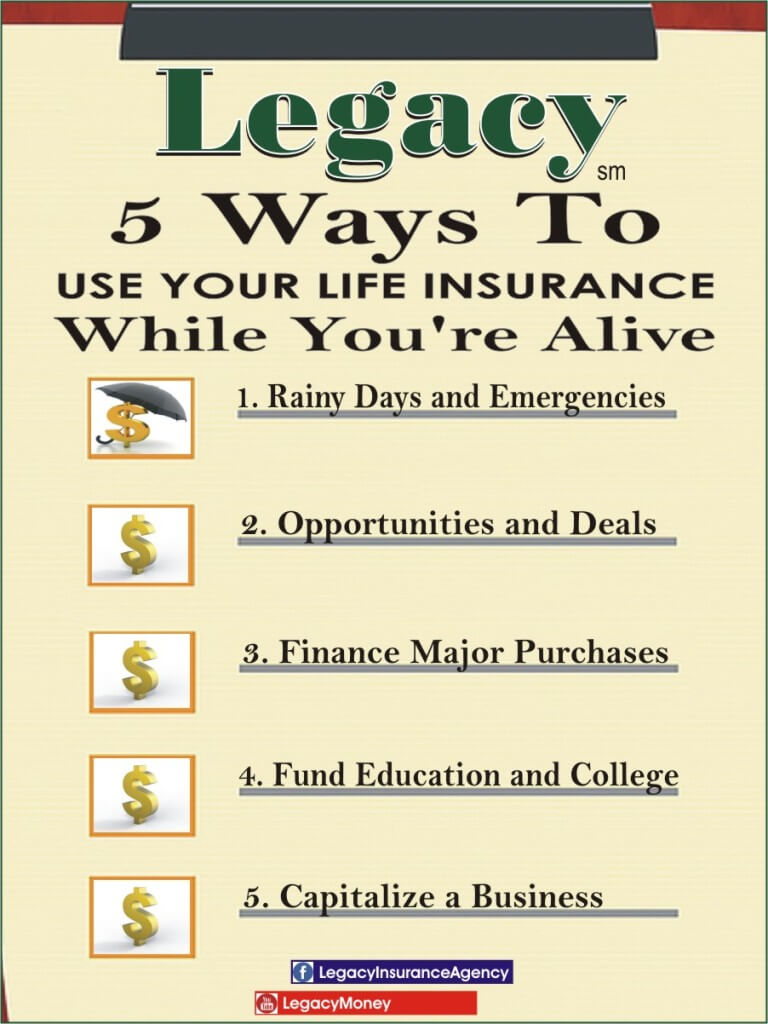
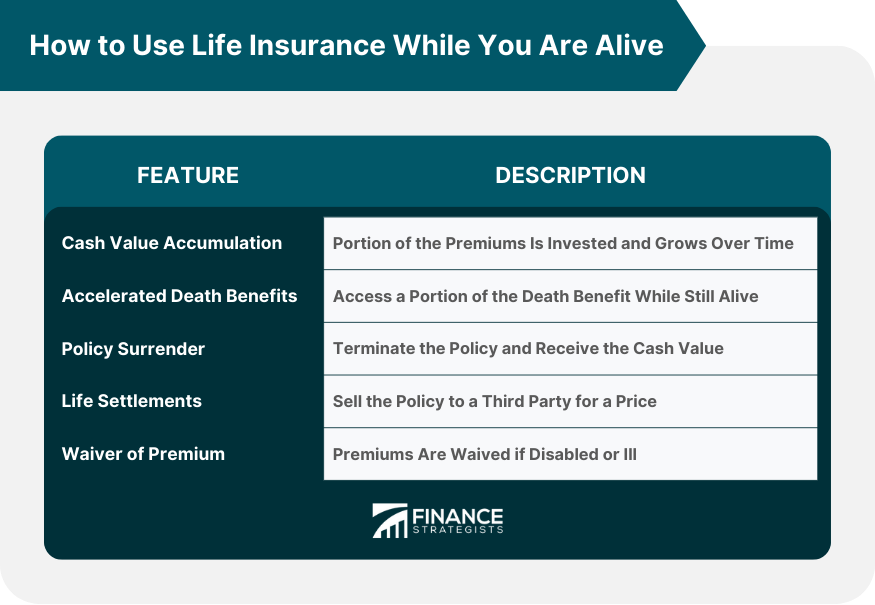
You might be surprised to learn that certain life insurance features can be used before you pass away. Here are the main ways:
1. Cash Value Withdrawals And Loans
Permanent life insurance policies, especially whole life and universal life, build up a cash value over time. This is a savings-like portion that grows tax-deferred.
- Withdrawals: You can take out money from the cash value. This reduces your death benefit, but the cash is yours to use for any purpose—medical bills, college tuition, or emergencies.
- Loans: You can borrow from the cash value, usually at a low interest rate. The money isn’t taxed (unless the policy lapses or you withdraw more than you paid in). However, unpaid loans reduce the death benefit.
Example
Suppose you have a whole life policy with $50,000 in cash value. You need $20,000 for a medical emergency. You can withdraw or borrow this amount. If you die before repaying, the insurer will subtract the loan from the death benefit.
2. Living Benefits (accelerated Death Benefits)
Most modern life insurance policies include living benefits or accelerated death benefits. These allow you to get part of your death benefit early if you are diagnosed with a terminal illness, chronic illness, or sometimes a critical illness.
- For example, if your doctor says you have less than 12 months to live, you could access up to 80% of your policy’s death benefit now, while you’re alive.
- The money can be used for any expenses—treatment, travel, or even to enjoy time with family.
3. Policy Dividends
Some whole life policies (especially from mutual insurers) pay dividends. These are not guaranteed, but many companies have a long history of paying them.
- You can take dividends as cash, use them to pay premiums, buy more coverage, or leave them to grow interest inside your policy.
4. Surrendering The Policy
If you no longer need your policy, you can surrender it to the insurance company. They pay you the cash value, minus fees and any outstanding loans. You lose coverage, but get a lump sum you can use.
5. Life Settlements
Older policyholders may also consider a life settlement—selling their policy to a third party for more than its cash value, but less than the death benefit. The buyer pays the premiums and collects the benefit when you die. This can provide more money than simply surrendering the policy, but comes with tax and privacy considerations.
Which Types Of Life Insurance Offer Living Benefits?
Not all policies offer living benefits. Here’s a quick comparison:
| Policy Type | Cash Value | Withdrawals/Loans | Accelerated Benefits |
|---|---|---|---|
| Term Life | No | No | Sometimes* |
| Whole Life | Yes | Yes | Yes |
| Universal Life | Yes | Yes | Yes |
| Variable Life | Yes | Yes | Yes |
*Some term policies have “terminal illness riders” for living benefits, but no cash value.
When Should You Use Life Insurance While Alive?
Accessing life insurance benefits while alive is not always the best move. Here’s when it makes sense:
- You have high medical bills due to critical or terminal illness.
- You face a major financial emergency and have no other assets.
- You need funds for a unique opportunity (e.g., starting a business, paying for a child’s education), and other borrowing options are worse.
- You no longer need the coverage (children are grown, you have enough savings).
But using your policy’s cash value or benefits early reduces the amount your loved ones receive after you die. It’s important to weigh your options carefully and consider the long-term impact.
What Most People Miss About Using Life Insurance Early
Many people overlook these details:
- Loans are not free money. If you borrow from your cash value, the insurance company charges interest. If you don’t repay, your death benefit is reduced—sometimes sharply.
- Withdrawals can trigger taxes. If you take out more than you paid in premiums, you might owe income tax on the gain.
- Living benefits may be limited. Some policies only allow living benefits for terminal illness, not chronic or critical illness. Check your policy wording.
- Surrender charges can eat into your cash value, especially in the early years of a policy.
- Loss of coverage. If you surrender your policy or take large loans, your family may be left unprotected.
- Policy loans don’t require credit checks. Unlike a bank loan, you can borrow without affecting your credit score or needing approval.
- Dividends are not guaranteed. Just because your policy has paid them before doesn’t mean it always will.
Real-world Examples
Here are two practical scenarios:
Example 1: Using Living Benefits For Terminal Illness
Sarah, age 60, has a $250,000 whole life policy. She is diagnosed with cancer and her doctor gives her less than 12 months to live. She activates the accelerated death benefit and receives 75% of her policy’s value—$187,500—while alive. She uses it to pay for treatment and spend time with her family.
When she passes away, her beneficiaries receive the remaining $62,500.
Example 2: Borrowing For College Tuition
John has built up $40,000 in cash value in his universal life policy. His daughter is accepted to college, and he needs funds for tuition. He borrows $20,000 from his policy. If he repays it, his death benefit is restored.
If he doesn’t, the death benefit is reduced by $20,000 plus interest.
These examples show how life insurance can be a flexible financial tool, not just a safety net for loved ones after death.
Comparing Cash Value Growth Vs. Other Savings
Some people wonder if it’s better to save money elsewhere, instead of in a life insurance policy. Here’s a basic comparison:
| Account Type | Growth Rate | Tax Benefits | Liquidity | Risk Level |
|---|---|---|---|---|
| Whole Life Cash Value | 2–5% (typical) | Tax-deferred | Loans/withdrawals possible | Low |
| Bank Savings Account | 0.5–1.5% | Taxable interest | Easy access | Very low |
| 401(k)/IRA | 5–8% (average) | Tax-deferred/tax-free | Penalties before age 59½ | Medium |
Cash value grows slowly but steadily, and is less likely to lose value than stocks or mutual funds. However, it’s not the best place for high returns. The main advantage is the mix of insurance coverage and savings.
Common Mistakes When Using Life Insurance Early
Avoid these errors:
- Forgetting about taxes and fees. Cash value withdrawals and policy surrenders can have tax consequences and surrender charges.
- Draining the policy. Taking out too much cash or borrowing without a repayment plan can cause your policy to lapse, leaving you with nothing.
- Not reading the fine print. Living benefits and cash value access rules vary by policy and insurer.
- Ignoring better alternatives. Sometimes a home equity loan or retirement account withdrawal is smarter or cheaper than tapping life insurance cash value.
- Assuming term insurance has cash value. Most term policies do not—don’t expect to withdraw or borrow from them.
Tips For Making The Right Choice
Here’s how to decide if and when to use life insurance while alive:
- Check your policy details. Not all policies allow withdrawals, loans, or living benefits. Read your contract or ask your agent.
- Compare costs and benefits. Consider interest rates, taxes, and surrender charges before taking money out.
- Consult a financial advisor. They can help you see the big picture and avoid costly mistakes.
- Consider your family’s needs. Using benefits early can mean less for your loved ones later. Think about who relies on you.
- Look for alternative sources. Sometimes, savings or credit lines offer better terms.
- Plan repayments if you borrow. Policy loans don’t have strict repayment schedules, but unpaid loans reduce your death benefit.
Frequently Asked Questions
Can I Use My Term Life Insurance While I’m Alive?
Usually, term life insurance does not have a cash value, so you cannot withdraw or borrow money from it. Some term policies include a terminal illness rider, which lets you access part of the death benefit early if you’re diagnosed as terminally ill.
Is The Cash Value From A Whole Life Policy Taxable If I Withdraw It?
Cash value withdrawals are generally tax-free up to the amount you paid in premiums. If you withdraw more than you paid, the excess may be taxed as income. Loans are not taxed unless the policy lapses.
What Is An Accelerated Death Benefit?
An accelerated death benefit is a feature in many modern life insurance policies that allows you to receive a portion of your death benefit while you are still alive if you are diagnosed with a terminal or critical illness. The remaining benefit goes to your beneficiaries when you pass away.
Does Taking A Loan From My Life Insurance Affect My Credit Score?
No, policy loans do not show up on your credit report and do not affect your credit score. The loan is against your own cash value, not from a bank or lender.
Where Can I Learn More About Life Insurance Options?
You can find more details on life insurance types, features, and regulations at the National Association of Insurance Commissioners website.
Life insurance can do much more than most people realize. With the right knowledge, you can use it as a living resource for emergencies, opportunities, or even peace of mind in difficult times. Just remember to read your policy, consider your family’s needs, and get advice before making big decisions.
The right move today can protect both your present and your future.