

Life insurance plays a crucial role in the financial security of families and individuals. In South Africa, the life insurance market is both large and complex, reflecting the country’s unique economic, cultural, and social landscape. Many people wonder: How many South Africans actually have life insurance, and what drives these numbers? Understanding this can help you make informed decisions about your own coverage and see how you fit into the bigger picture.
Life Insurance Penetration In South Africa
South Africa is known for its advanced insurance industry compared to other African countries. According to the Association for Savings and Investment South Africa (ASISA), about 16.7 million South Africans had some form of individual life insurance by the end of 2022. This includes both pure life cover and combined products like funeral or credit life insurance.

With a population of roughly 60 million, this means about 28% of South Africans have life insurance. It’s important to note that this figure includes both formal and informal insurance products. The actual coverage rate for comprehensive, long-term life insurance is lower, since many policies focus mainly on funeral expenses.
For comparison, here’s how South Africa’s life insurance penetration stacks up against a few other countries:
| Country | Population (Millions) | Life Insurance Penetration (%) |
|---|---|---|
| South Africa | 60 | 28 |
| United States | 332 | 54 |
| India | 1,400 | 3.2 |
| Brazil | 213 | 12 |
| United Kingdom | 67 | 46 |
As the table shows, South Africa stands out for Africa, but still lags behind developed countries. The high rate compared to peers is due in part to the popularity of funeral insurance, which is deeply rooted in local culture.
Types Of Life Insurance Policies Held
Not all life insurance is the same. In South Africa, people often buy different types of policies depending on their needs and what they can afford. The main categories are:
- Funeral insurance: Covers funeral costs, usually pays out quickly. Very common, especially among lower-income groups.
- Term life insurance: Offers cover for a set period, such as 10 or 20 years. Cheaper, but only pays out if the insured dies during the term.
- Whole life insurance: Lasts for the policyholder’s lifetime, with higher premiums and sometimes a cash value.
- Credit life insurance: Required by lenders when you take out a loan. Pays off the debt if you pass away.
According to ASISA, funeral policies make up more than half of all life insurance policies in force. Here’s a breakdown:
| Policy Type | Percentage of All Policies |
|---|---|
| Funeral Insurance | 55% |
| Term Life | 18% |
| Whole Life | 16% |
| Credit Life | 11% |
This shows that funeral insurance is by far the most popular. Many people hold more than one funeral policy, often from different providers, which can inflate the number of active policies compared to the number of unique policyholders.
Demographics: Who Has Life Insurance?
Ownership of life insurance in South Africa varies by age, income, education, and location. Here are some key patterns:
- Age: Most policyholders are between 30 and 55 years old. Younger adults often delay buying life insurance due to cost or lack of awareness.
- Income: People with higher incomes are more likely to have comprehensive life insurance. Lower-income groups focus on funeral cover.
- Urban vs Rural: Urban residents are more likely to have any life insurance. In rural areas, informal funeral societies may be preferred.
- Education: Higher education usually means a greater understanding of insurance, leading to higher uptake.
Interestingly, South Africa also has a strong market for group life insurance provided by employers. This means that even people who don’t buy their own policies may have some cover through their jobs.
Why Do So Many South Africans Have Funeral Insurance?
Funeral insurance is a unique part of the South African insurance landscape. It’s common for families to spend significant amounts on funerals, which are important cultural events. The costs can quickly add up, covering items like transport, catering, tents, and traditional rituals.
For many, funeral insurance is seen as a necessity rather than an option. Some reasons why it’s so popular:
- Quick payout: Claims are paid within a few days, so families can cover costs immediately.
- Low premiums: Affordable for most people, with flexible payment options.
- No medical exam: Easier to qualify, especially for older or sick individuals.
- Cultural importance: Funerals are major social events, and people want to avoid leaving families in financial trouble.
Because of these factors, it’s common for one person to have multiple funeral policies, sometimes covering extended family members.
Main Providers And Market Structure
South Africa’s life insurance sector is dominated by a handful of large companies, along with many smaller, specialized firms. The main players include:
- Sanlam
- Old Mutual
- Liberty
- Momentum Metropolitan
- Discovery Life
- Hollard
- Assupol
These companies offer a wide range of products, from basic funeral cover to complex investment-linked policies.
There is also a large informal sector, especially in funeral insurance, made up of burial societies and community groups. While these are not always regulated, they fill an important gap in areas where formal insurance is hard to access.
Reasons For The Life Insurance Gap
Despite South Africa’s relatively high penetration rate, many people remain uninsured or underinsured. The main reasons are:
- Cost: For low-income families, even small premiums can be a stretch.
- Lack of knowledge: Many people don’t understand how life insurance works or why it matters.
- Trust issues: Some distrust insurance companies due to past scandals or slow claims.
- Complexity: The range of products can be confusing, leading to fear of making mistakes.
- Preference for informal cover: Burial societies are seen as more personal and reliable in some communities.
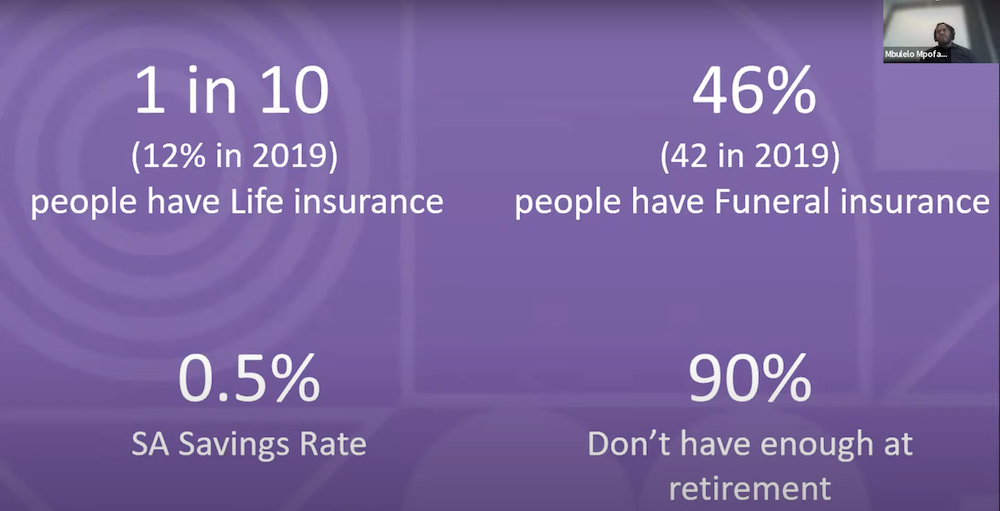
A survey by the Financial Sector Conduct Authority (FSCA) found that while more than half of South African adults had some form of funeral cover, only 18% had comprehensive life insurance.

Trends Shaping The Market
The South African life insurance market is always changing. Some trends to watch include:
- Digital adoption: More people are buying life insurance online. This reduces costs and makes it easier to compare options.
- Microinsurance: Small, flexible policies targeting low-income earners are growing fast.
- Regulation: The government is working to improve consumer protection and crack down on fake or unlicensed providers.
- Product innovation: Companies are offering more flexible products, including cover for pandemics and disability.
These trends are expected to increase access and trust over time, though challenges remain.
How South Africans Choose Life Insurance
Choosing the right life insurance policy can be difficult. Most people consider:
- Affordability: Monthly premium versus cover amount.
- Claim payout speed: Especially for funeral policies.
- Reputation of provider: Track record for paying claims.
- Extras: Some policies include cashbacks or add-ons like disability cover.
It’s common for consumers to ask family or friends for advice, or to use financial advisers. However, many still rely on direct sales from agents or brokers, which can lead to people buying unsuitable products.
Real-life Example: The Impact Of Life Insurance
To see the impact of life insurance, consider the case of Thandi, a 40-year-old mother from Soweto. She bought a funeral policy for R100 a month. When she passed away, her family received R30,000 within a week. This allowed them to cover all funeral costs and avoid debt.
In another case, Sipho, a factory worker, had group life insurance through his employer. After a workplace accident, his family received a lump sum that helped pay off their home loan.
These stories highlight how life insurance can provide financial stability during difficult times.
How To Check If You Have Enough Cover
Many South Africans do not have enough life insurance to cover their family’s needs. To check if you’re properly covered:
- Calculate your debts: Include your mortgage, car loan, and other obligations.
- Estimate living expenses: How much would your family need each month if you were gone?
- Factor in education costs: For children or dependents.
- Subtract existing cover: Include employer policies or informal arrangements.
A simple way is to aim for cover equal to 10–12 times your annual income. This gives your family time to adjust and plan for the future.

Common Mistakes South Africans Make
It’s easy to make mistakes when buying life insurance. Some common ones include:
- Buying only funeral cover: This may not be enough for long-term needs.
- Over-insuring: Having more policies than necessary, especially with funeral insurance.
- Not updating beneficiaries: Failing to change details after marriage, divorce, or the birth of a child.
- Ignoring small print: Not reading exclusions or waiting periods.
- Relying only on employer cover: If you lose your job, you may lose your cover too.
Taking time to review your needs and policies can prevent costly surprises.
The Role Of Government And Regulators
South Africa’s government and regulators play an important role in protecting consumers and promoting fair access. The Financial Sector Conduct Authority (FSCA) monitors the industry and sets rules for product disclosure, claims handling, and treating customers fairly.
Recent efforts include:
- Cracking down on unlicensed providers: Especially in the funeral insurance market.
- Improving education: Campaigns to teach people about insurance basics.
- Simplifying products: Making it easier for consumers to compare options.
These steps are slowly increasing trust in the sector.
The Future Of Life Insurance In South Africa
The life insurance market in South Africa is expected to grow, driven by:
- Rising middle class: More people can afford comprehensive cover.
- Greater awareness: Education campaigns and digital tools help people understand their options.
- Innovation: New products to meet changing needs, like cover for pandemics or flexible payment plans.
However, challenges remain. High unemployment, economic shocks, and inequality make it difficult for some people to access or keep life insurance. The market will need to keep adapting to serve all South Africans fairly.
For more in-depth industry data, you can visit the ASISA website.
Frequently Asked Questions
How Many South Africans Have Comprehensive Life Insurance?
About 18% of South African adults have comprehensive life insurance, while around 28% have some form of life insurance, including funeral cover. The majority of policies are focused on funeral expenses rather than long-term financial protection.
Why Is Funeral Insurance More Popular Than Other Types?
Funeral insurance is popular because it pays out quickly, is affordable, and matches cultural expectations around funerals. Many families see it as essential, while other types of life insurance are often viewed as less urgent.
Can You Have More Than One Life Insurance Policy?
Yes, it’s common for people to hold multiple funeral policies or combine funeral cover with other types of life insurance. However, over-insuring can lead to wasted money, so it’s important to review your real needs.
What Happens If You Only Have Group Life Insurance From Work?
Group life insurance offers valuable cover but usually only while you are employed. If you change or lose your job, you may lose your cover. It’s smart to have at least one individual policy as backup.
How Can I Tell If A Life Insurance Company Is Legitimate?
Check if the provider is registered with the FSCA. Official websites and the ASISA membership list are good places to start. Avoid providers who cannot show proof of registration or have no physical address.
South Africa’s life insurance sector is both advanced and unique. While millions have some form of cover, there is still a gap in comprehensive protection. Understanding the numbers, trends, and pitfalls can help you make better decisions for your future and your family’s security.