
Life insurance is often seen as a smart way to protect your family. But there’s another side many people overlook: tax benefits. In some cases, life insurance can be tax deductible. If you know how the rules work, you can save money while securing your loved ones’ future. This article explains when life insurance premiums are tax deductible, who can benefit, and how to avoid common mistakes. You’ll see real examples, clear comparisons, and answers to the most asked questions.
Understanding Life Insurance And Taxes
When you pay for life insurance, you usually do it with after-tax income. That means you do not get a tax deduction for your premiums. For most people, this is true. But there are exceptions, especially for businesses or self-employed people. Knowing these exceptions is important so you don’t miss any opportunity.

Types Of Life Insurance
There are two main types:
- Term life insurance: Only covers a set period (like 10 or 20 years).
- Permanent life insurance: Includes whole life and universal life; lasts your entire life and often builds cash value.
Most tax rules apply to both types, but some business policies have special rules.
When Life Insurance Is Tax Deductible
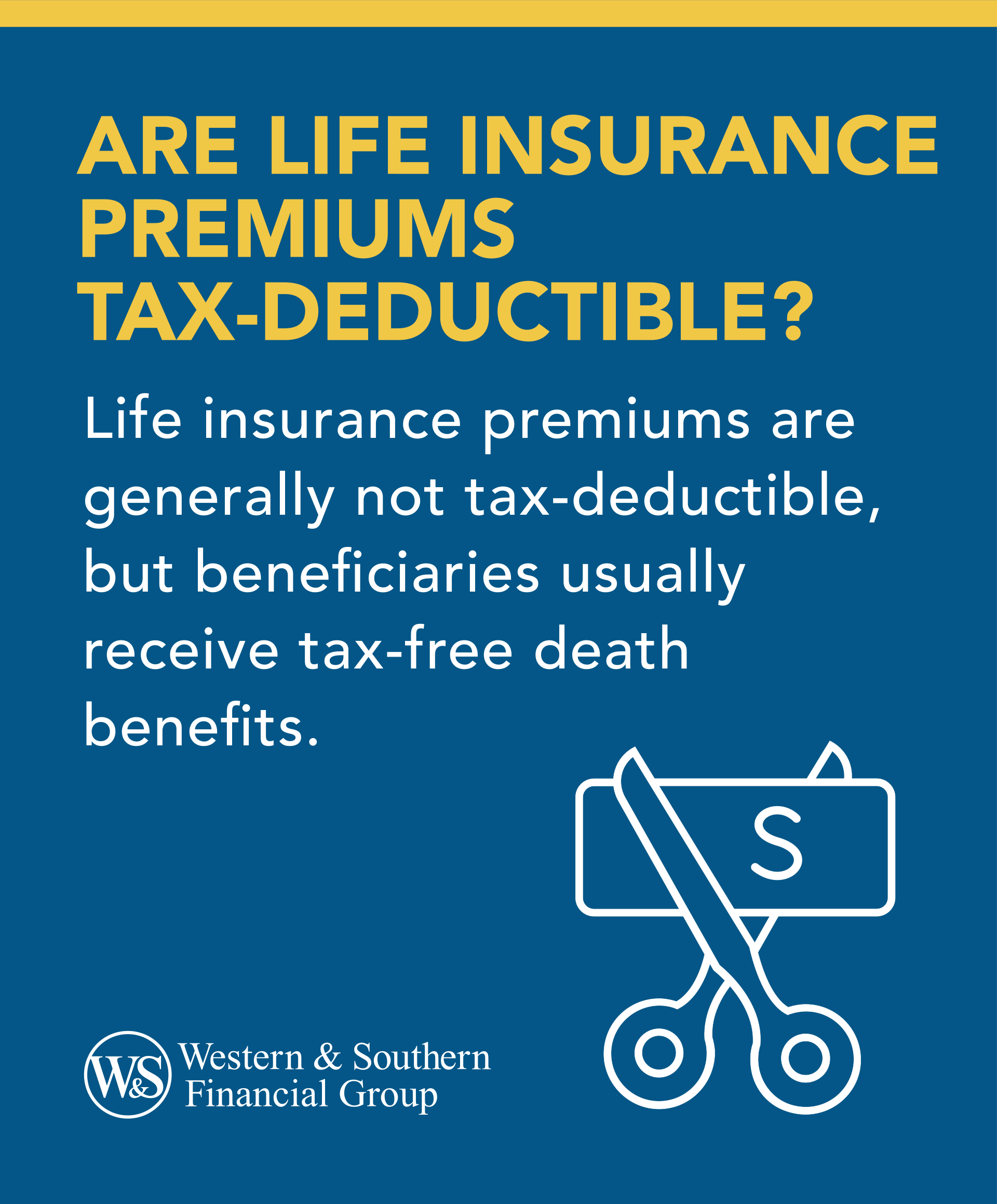
Most individuals cannot deduct their life insurance premiums from their taxes. The IRS views life insurance as a personal expense. But there are important situations where life insurance is deductible:
Businesses And Self-employed
Business owners can sometimes deduct life insurance premiums if the policy is for business reasons. Here are the most common cases:
- Group life insurance: Employers who provide group life insurance to employees can deduct premiums as a business expense, but only up to $50,000 in coverage per employee.
- Key person insurance: Businesses buy this to protect themselves if a key employee dies. Premiums are not deductible, but if the policy is for employee benefit (not business benefit), it may be.
- Split-dollar life insurance: Some companies share costs with employees. The business can sometimes deduct its part.
| Policy Type | Tax Deductible? | Who Benefits? |
|---|---|---|
| Personal Term Life | No | Individuals |
| Group Life (up to $50,000) | Yes | Employers |
| Key Person Insurance | No* | Businesses |
| Split-Dollar | Sometimes | Employers & Employees |
*Key person insurance premiums are not deductible if the business is the beneficiary.
Self-employed Individuals
If you’re self-employed and buy life insurance for your employees, you can deduct premiums as a business expense. But if you buy a policy for yourself, it’s not deductible.
Charitable Donations
If you donate a life insurance policy to a charity, you may get a deduction for the policy’s value or premiums paid. The charity must be a qualified organization.
Comparing Individual Vs Business Policies
Let’s see how individual and business life insurance policies compare on tax deductibility:
| Feature | Individual Policy | Business Policy |
|---|---|---|
| Deductible Premiums | No | Yes (conditions apply) |
| Beneficiary | Family or heirs | Employee, business, or charity |
| Taxable Payout | No (usually) | No (usually) |
| IRS Restrictions | Few | Many |
Practical Examples
Let’s look at real-life scenarios:
- John owns a small business. He buys group life insurance for his staff. He can deduct premiums up to $50,000 coverage per person.
- Sarah is self-employed. She buys life insurance for herself. She cannot deduct her premiums.
- Tech firm buys key person insurance. The policy protects the company if their lead engineer dies. The premium is not deductible.
Common Mistakes To Avoid
- Assuming all life insurance is deductible: Most personal policies are not.
- Mixing personal and business coverage: Keep records clear.
- Missing IRS rules: The IRS requires special paperwork for business policies.
- Incorrect beneficiary: If the business is the beneficiary, premiums may not be deductible.
Important Irs Guidelines
The IRS has strict rules on tax deductibility for life insurance. Here are key points:
- Only business-related policies are sometimes deductible.
- Deduction is limited to coverage provided for employees (not owners).
- Policies must not benefit the business directly in most cases.
For official guidance, visit the IRS website or review their rules in detail at IRS Business Expense Deductions.
How To Maximize Tax Benefits
If you want to get the most tax benefit from life insurance:
- Buy group policies for employees if you run a business.
- Consider charitable donation of a policy if you don’t need it anymore.
- Keep good records and make sure policies meet IRS requirements.
- Work with a tax professional to avoid mistakes.
| Action | Tax Benefit | Notes |
|---|---|---|
| Provide group insurance to employees | Deduct premiums | Up to $50,000 coverage |
| Donate policy to charity | Deduct value/premiums | Must be qualified charity |
| Buy policy for self | No deduction | Personal expense |
What Beginners Often Miss
- Taxable benefit for employees: If coverage is more than $50,000, the extra is taxed as income.
- Deduction limits: Only premiums paid for employees can be deducted, not for owners or partners.
Key Takeaways
- Most personal life insurance is not tax deductible.
- Business policies can be deductible, but strict rules apply.
- Always check IRS guidelines before claiming a deduction.
- Mistakes can lead to denied deductions or IRS penalties.
By understanding these rules, you can make smart choices and avoid costly errors.
Frequently Asked Questions
Is Personal Life Insurance Ever Tax Deductible?
No, personal policies are not deductible. Only business-related policies may be.
Can Business Owners Deduct Life Insurance For Themselves?
No, owners and partners cannot deduct premiums for their own coverage.
What Happens If Coverage Exceeds $50,000 For Employees?
The excess coverage is taxed as income for the employee.
Are Life Insurance Death Benefits Taxable?
Usually, life insurance payouts are tax-free for beneficiaries.
Can I Deduct Premiums If I Donate A Policy To Charity?
Yes, you can deduct the policy’s value or premiums paid if the charity is qualified.
Choosing the right life insurance policy and knowing the tax rules can save money and offer peace of mind. If you’re unsure, always ask a tax professional before making decisions.