If you have a life insurance policy, you might wonder, “Can I cancel life insurance and get money back? ” This question is more common than you might think. Life changes—maybe you no longer need the coverage, or you want to cut monthly expenses.
Sometimes, people feel stuck with a policy they do not want or do not understand what happens if they quit. The answer depends on the type of life insurance you own and how long you have had it. Knowing your options and the possible consequences can help you make the right financial decision.

This article will explain what happens when you cancel life insurance, when you might get money back, and what to watch out for. We will look at term and permanent life insurance, common mistakes, and even show you how the cash value works.
You will find clear examples, practical tips, and answers to questions many people ask. By the end, you will know if canceling makes sense for you—and how to avoid costly surprises.
How Life Insurance Works: The Basics
Before talking about canceling, it helps to understand the two main types of life insurance. This is important because whether you get money back depends a lot on your policy type.
Term Life Insurance
Term life insurance is simple. You pay a set amount every month or year (the premium) for a certain number of years—usually 10, 20, or 30. If you die during the term, your family gets a payout (the death benefit). If you outlive the term, the policy ends, and usually, you get nothing back.
Permanent Life Insurance
Permanent life insurance lasts your whole life, as long as you pay the premiums. There are different types, like whole life, universal life, and variable life. These policies cost more, but they build up a cash value over time. Cash value works like a savings account inside your policy—you can borrow from it or, in some cases, get it back if you cancel.
Can You Cancel Life Insurance?
Yes, you can cancel almost any life insurance policy. But what happens next depends on your policy type and timing.
- With term life, most of the time, you simply stop paying, and the coverage ends.
- With permanent life, you have more options and may get some money back.
Let’s look at each in detail.
Canceling Term Life Insurance: What Happens?
Most people choose term life insurance because it is affordable and easy to understand. If you cancel a term policy, you usually do not get your premiums back. It is like car insurance—if you never file a claim, you do not get refunded.
When Do You Get Money Back From Term Life?
There is one main exception: return of premium term life. This special type of term policy costs more, but if you outlive the term, the company gives back all the premiums you paid—without interest.
Here is a simple comparison:
| Type of Term Life | Premium Cost | Money Back if You Cancel? |
|---|---|---|
| Standard Term Life | Low | No |
| Return of Premium Term Life | High | Yes, if you finish the term |
Important Insight: Many people buy standard term life without realizing most policies do not refund premiums—even if you cancel early. If you are thinking about canceling, check your policy type and ask your insurer about any possible refund.
Canceling Permanent Life Insurance: What To Expect
Permanent life insurance is more complicated. Because it builds cash value, you might get money back if you cancel. But how much? That depends on a few key things:
- The policy’s surrender value
- How long you have had the policy
- Any surrender charges
What Is Cash Value?
When you pay premiums for permanent life insurance, a part goes toward the death benefit, and a part goes into the cash value. Over time, this cash value grows—usually slowly at first, then faster as years go by. You can use this cash value in a few ways:
- Borrow against it with a policy loan
- Withdraw part of it (in some policies)
- Get the cash value if you surrender (cancel) the policy
Surrendering Your Policy: How Much Do You Get?
When you cancel a permanent life policy, you do not always get the full cash value. Insurers often subtract a surrender charge—a fee for canceling early. This fee is highest in the first years and usually drops over time.
Here’s what a typical surrender value might look like:
| Year Policy Held | Cash Value | Surrender Charge | Amount You Get |
|---|---|---|---|
| Year 2 | $4,000 | $2,500 | $1,500 |
| Year 5 | $10,000 | $1,000 | $9,000 |
| Year 10 | $21,000 | $0 | $21,000 |
Non-obvious insight: If you cancel in the first few years, you might get much less than you expect. Some people are surprised to find their “savings” have been eaten up by surrender fees.
Outstanding Loans And Taxes
If you borrowed money from your policy and did not pay it back, that amount is subtracted from your cash value when you cancel. Also, if you get back more than you paid in, you might owe income taxes on the gain.
Tip: Always ask your insurance company for an “in-force illustration” before you surrender. This document shows exactly how much you will receive after all fees and loans.
Common Reasons People Cancel Life Insurance
Canceling life insurance is a big decision. Some typical reasons include:
- Policy no longer needed: Children are grown, or your mortgage is paid off.
- Cannot afford premiums: Your financial situation has changed.
- Better coverage elsewhere: You found a cheaper or more suitable policy.
- Bought by mistake: You realized you do not need permanent life insurance.
Expert insight: Sometimes, people cancel for the wrong reason—like not understanding their policy’s benefits. Before making a move, talk to a trusted advisor or insurance agent.
How To Cancel Life Insurance Correctly
If you decide to cancel, it is important to do it the right way to avoid mistakes and keep yourself protected.
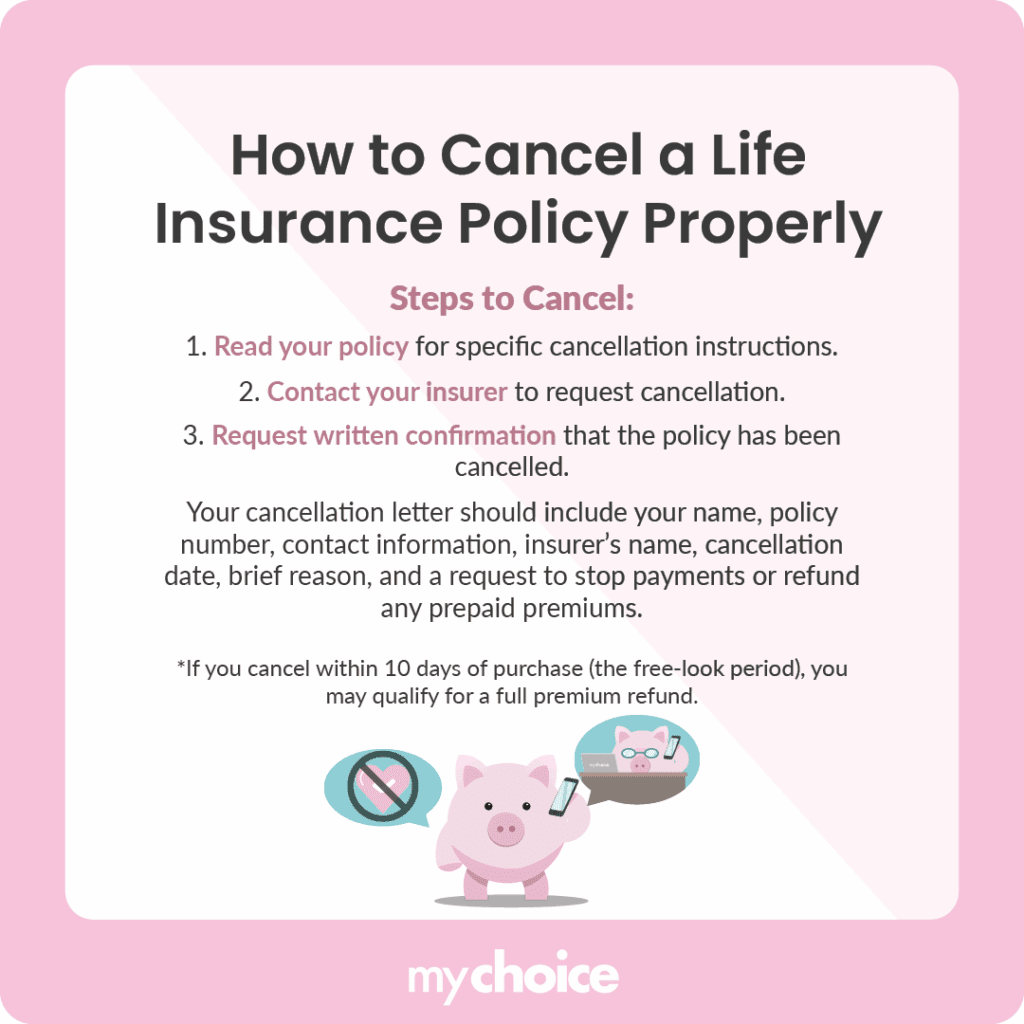
Steps To Cancel Your Policy
- Contact your insurance company: Call or write to your insurer. Do not just stop paying—this can hurt your credit (with permanent life) or waste your cash value.
- Request cancellation forms: Most companies require a signed form.
- Ask about final cash value: Get a written estimate of what you will receive.
- Check for alternatives: Sometimes, you can lower premiums, reduce coverage, or convert your policy instead of canceling.
- Wait for confirmation: Make sure you receive written proof that your policy is canceled and your refund (if any) is processed.
What To Watch Out For
- New coverage gap: If you still need life insurance, get new coverage before canceling. Health changes can make new policies expensive or impossible.
- Taxes: You may owe taxes on gains from your policy’s cash value.
- Lost benefits: Some permanent life policies have features like long-term care riders or living benefits. Canceling means losing these.
Alternatives To Canceling
Canceling is not always your only option. Consider these alternatives:
- Reduce the death benefit: This can lower your premium while keeping some coverage.
- Use policy loans: Borrow against the cash value to cover short-term needs.
- Withdraw part of the cash value: Some policies let you take a partial withdrawal.
- Convert to paid-up insurance: In some cases, you can stop paying premiums but keep a smaller, permanent benefit.
Here’s a quick view:
| Alternative Option | How It Works | Main Benefit |
|---|---|---|
| Reduce Coverage | Lower the death benefit | Lower premiums |
| Policy Loan | Borrow from cash value | Access cash, keep coverage |
| Partial Withdrawal | Take out part of cash value | Get cash, may reduce benefit |
| Paid-Up Policy | Stop paying, keep smaller benefit | No more premiums owed |
Non-obvious insight: Sometimes, the best move is not to cancel but to change how your policy works. Many people never ask their insurer about these options, missing out on solutions that fit their needs.
Real-world Examples
Let’s look at two real-life situations.
1. Term Life Policyholder Cancels Early
Maria, age 35, bought a 20-year term policy for $250,000. After 7 years, she cancels because she got divorced and has no dependents. She paid $18 per month for 7 years—a total of $1,512. Because it’s standard term life, she gets nothing back, and her coverage ends.
2. Whole Life Policyholder Surrenders After 12 Years
Dave, age 50, bought whole life insurance at 38. He’s paid $2,400 per year. After 12 years, his cash value is $23,500. The surrender charge is now $0. He cancels and receives the full $23,500. He paid $28,800 in, so he actually gets less than he paid—but had he canceled earlier, surrender charges would have reduced his payout.
Key Mistakes To Avoid
Canceling life insurance is a big step. Here are common mistakes—and how to avoid them:
- Not checking the cash value or surrender charges: People often guess their payout and are disappointed.
- Canceling before new coverage is active: This leaves you unprotected if your health worsens.
- Ignoring tax consequences: If your payout is higher than what you paid in, you may owe taxes.
- Overlooking policy features: Riders or benefits like accelerated death benefits are lost when you cancel.
When Getting Money Back Makes Sense
Getting money back from canceling life insurance can help in some situations:
- You have enough savings and no longer need insurance.
- You want to use the cash value for retirement or emergencies.
- Your policy is performing poorly, and you want to invest the money elsewhere.
However, if you still need coverage for loved ones, canceling may not be the best choice.
What To Do Before Canceling
- Review your policy: Look at the cash value, surrender charges, and benefits.
- Talk to a professional: A financial advisor or insurance agent can explain your options.
- Consider your future needs: Health and family situations can change—think ahead.
If you need more details on types of life insurance and cash value, you can visit the Investopedia guide for an in-depth explanation.
Frequently Asked Questions
Can I Get A Refund If I Cancel Term Life Insurance?
Usually, no. Standard term life insurance does not refund your premiums when you cancel. The only exception is “return of premium” term life, which costs more but pays back your premiums if you finish the term.
How Much Money Will I Get If I Cancel Whole Life Insurance?
You can get the policy’s cash value, minus any surrender charges and outstanding loans. The amount depends on how long you have held the policy and how much cash value has built up.
Will I Have To Pay Taxes If I Get Money Back From My Life Insurance?
You may owe taxes if the cash value you receive is more than the total premiums you paid in. For most people, taxes only apply to the “gain” above what you contributed.
Can I Cancel My Life Insurance At Any Time?
Yes, you can cancel at any time. For term life, you usually just stop paying. For permanent life, contact your insurer to complete the right forms. Be sure you have new coverage in place if you still need protection.
What Happens To The Cash Value If I Stop Paying Premiums But Don’t Cancel?
With permanent life policies, your insurer may use the cash value to pay your premiums for a while. When the cash value runs out, the policy will lapse. You could lose your coverage and any remaining value.
Canceling life insurance is a personal decision with lasting effects. Make sure you understand your policy, the possible payout, and what you might lose. Think about your family’s needs and your own future. It often helps to get advice from a trusted expert before making your final choice.