
When you first buy life insurance, you might not think much about the end date. Most people focus on getting coverage and making sure their family is protected. But what happens when your policy reaches its end? Understanding what happens when life insurance expires is important for your financial planning and peace of mind. This guide explains everything you need to know in simple language.
What Does It Mean For Life Insurance To Expire?
Life insurance is a contract. You pay regular premiums, and in exchange, the insurance company promises a death benefit if you die while the policy is active. But not all life insurance lasts forever.

Term life insurance has a set length, such as 10, 20, or 30 years. When this period ends, the policy “expires.” This means your coverage stops, and your beneficiaries will not receive any payout if you die after the expiration date.
Permanent life insurance (like whole life or universal life) does not expire if you keep paying premiums, but it can still lapse if you miss payments or borrow too much against it.
This article focuses mostly on term life insurance expiration, since this is the most common situation where coverage ends.
What Happens Immediately When A Policy Expires?
When a term life insurance policy expires, several things happen:
- Coverage ends—You no longer have life insurance protection.
- No payout—If you die after expiration, your beneficiaries do not get the death benefit.
- No refunds—The premiums you paid are not returned, unless you purchased a special type of policy.
This can be surprising if you expect some return on your premiums. Most term policies are like car insurance: you pay for protection, not for a savings plan.
What Options Do You Have When Your Policy Expires?
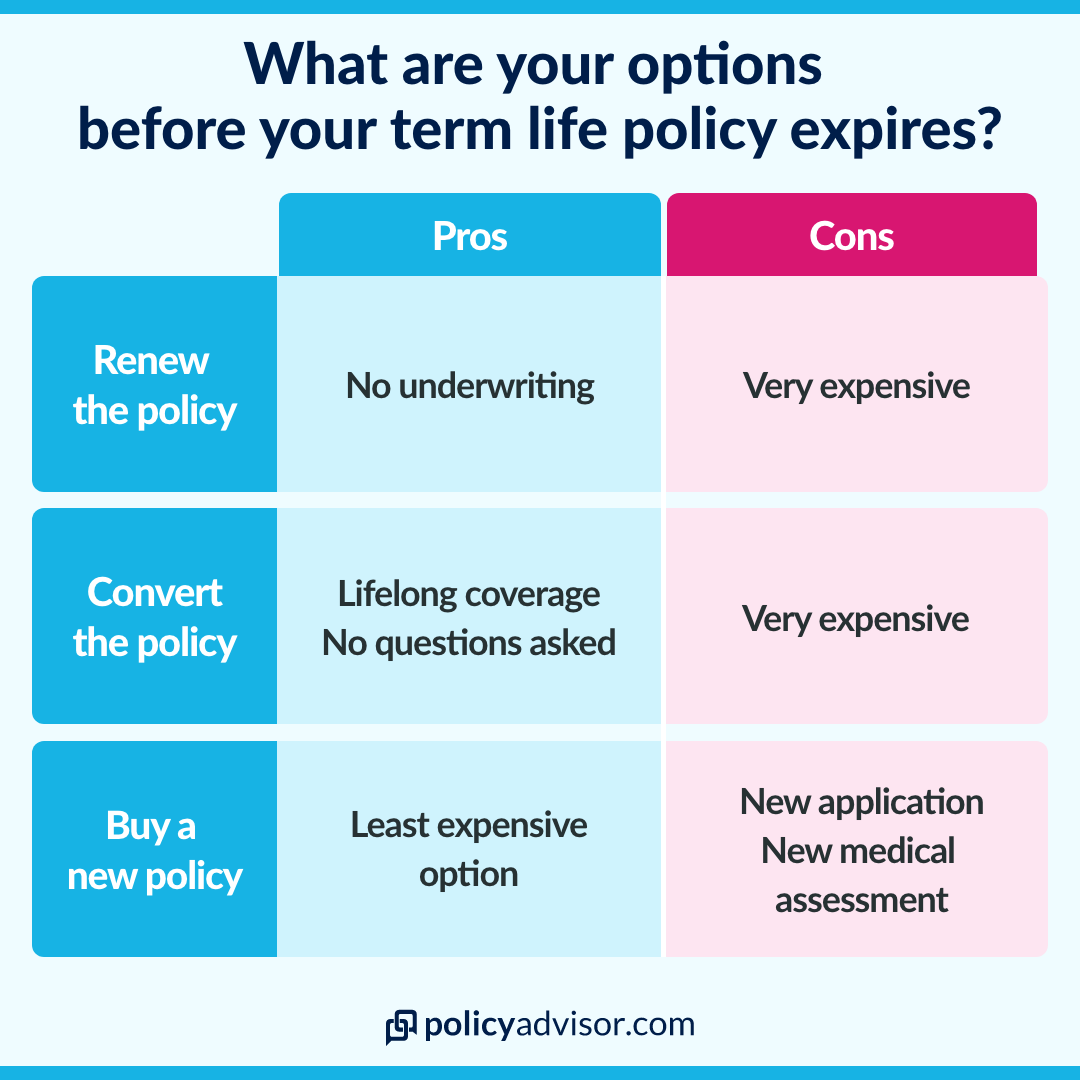
You do not have to simply lose coverage. Here are the main options people consider:
1. Renew The Policy
Some term life insurance policies offer a renewal option. This lets you extend your coverage for another period, usually one year at a time.
- Pros: You keep coverage without a new medical exam.
- Cons: Premiums usually rise sharply, often doubling or tripling.
2. Convert To Permanent Insurance
Many term policies allow you to convert to a permanent policy (like whole life) before the term ends.
- Pros: You get lifelong coverage and may avoid a new health exam.
- Cons: Permanent insurance costs much more than term coverage.
3. Buy A New Policy
You can apply for a new term or permanent policy.
- Pros: You might get better features or fit your current needs.
- Cons: You must go through underwriting again. If your health has worsened, you may pay higher rates or be denied.
4. Let Coverage End
Some people choose to let their insurance end, especially if their children are grown or their financial needs have changed.
- Pros: You save money on premiums.
- Cons: Your family loses the safety net of a death benefit.
Comparing Options After Expiry
Here is a comparison of what usually happens with each choice:
| Option | Coverage Length | Premium Cost | Medical Exam Needed? | Common Use Case |
|---|---|---|---|---|
| Renew Existing Policy | 1 Year (Usually) | High | No | Short-term need, health changes |
| Convert to Permanent | Lifetime | Very High | No | Need lifelong coverage |
| Buy New Policy | 10–30 Years (or Lifetime) | Depends on Age/Health | Usually Yes | Healthy, new financial needs |
| Let Coverage End | None | None | No | No dependents, self-insured |

What If You Outlive Your Policy?
If you outlive your term policy, you join the majority. For example, less than 2% of term life insurance policies ever pay a death claim, according to industry data. This means most people do not “use” their insurance, but they still gain peace of mind while it’s active.
Some people worry about “wasting money.” But remember: insurance protects against risk, not as an investment. You don’t “lose” if you don’t die during the term; you simply paid for protection during a risky period (like raising children or paying a mortgage).
Return Of Premium Policies
There is a special type of term life called Return of Premium (ROP). With this policy, if you outlive the term, you get back all or part of the premiums you paid. However, these policies cost much more—often 50% to 100% higher.
Here’s a quick comparison:
| Policy Type | Premium Cost | Premiums Refunded? | Death Benefit? |
|---|---|---|---|
| Standard Term | Lower | No | Yes (if death during term) |
| Return of Premium (ROP) | Higher | Yes (if outlive term) | Yes (if death during term) |
In most cases, standard term life is a better value, but ROP can be attractive if you want a forced savings plan.

What Happens With Permanent Life Insurance?
Permanent life insurance (like whole life or universal life) is designed to last your entire life, as long as you pay the premiums. However, these policies can lapse (end) if you stop paying, or if the policy’s cash value is used up.
If your permanent policy lapses:
- You lose the death benefit.
- You may get some cash value back (called the “surrender value”).
- Any loans against the policy must be repaid from the cash value.
This situation is rare if you keep up with payments, but it’s important to review your policy each year.
How Policy Expiry Affects Your Family
The main risk when life insurance expires is that your family may lose a financial safety net. Here’s what could change:
- Loss of death benefit: If you die after expiry, your family gets nothing from the old policy.
- New coverage may cost more: Buying new insurance at an older age or with health issues can be expensive or impossible.
- Debts may be unprotected: If you still have a mortgage, loans, or dependents, your family could face financial stress.
Many people do not realize how quickly life can change. Even if you think you will not need insurance after age 60, unexpected events like a late-in-life child, divorce, or new debts can happen.
Signs It’s Time To Review Your Coverage
You should not wait until your policy expires to think about your options. Review your coverage if:
- You are within five years of policy expiry.
- Your health has changed.
- You have new financial responsibilities (like grandchildren).
- You paid off major debts and your children are financially independent.
Common Misunderstandings About Policy Expiry
1. “I get my money back if I don’t die.”
Most term life insurance policies do not refund premiums. Only a special “return of premium” policy does this.
2. “I can always renew at the same price.”
Renewal premiums are almost always much higher, because you are older and the risk to the insurer is higher.
3. “I don’t need insurance after my kids are grown.”
This may be true for some, but others still have spouses, debts, or other obligations. Review your needs carefully.
Non-obvious Insights About Expiry
Many people overlook two important points:
- Some policies have a grace period after expiry, usually 30–31 days, where you can still renew or convert. Don’t ignore mail from your insurer.
- If you develop a serious illness shortly before your policy expires, you may be able to convert to permanent insurance without a new health check. Act quickly—conversion windows often close a few months before expiry.
How To Plan Ahead For Policy Expiry
Being proactive is key. Here’s how to prepare:
- Know your policy’s end date. Mark it on your calendar at least a year before expiry.
- Review your life situation. Are your dependents still relying on you? Do you have debts?
- Talk to your insurance agent or advisor. Ask about your renewal and conversion options.
- Shop around. Compare new policies from different companies. Rates and features can change over time.
- Act early. Waiting until your policy expires can limit your options, especially if your health changes.
Alternatives To Life Insurance
If you no longer need life insurance, you may be ready to self-insure. This means you have enough savings, investments, or other assets to provide for your family without insurance. Other options include:
- Savings accounts or retirement funds
- Annuities that pay income for life
- Trusts or other estate planning tools
Each has pros and cons. A financial advisor can help you decide what is best for your situation.
The Role Of Age And Health
Age and health play a big role in what happens after your policy expires. The older you are, or the more health issues you have, the harder and more expensive it can be to get new coverage.
A 40-year-old in good health might easily get a new 20-year term policy at a low rate. But a 60-year-old with health problems may only qualify for expensive, limited coverage.
According to the Insurance Information Institute, a healthy 40-year-old man might pay around $30/month for a $500,000, 20-year term policy. At age 60, that same policy could cost over $200/month—or may not be available at all.
Can You Buy Life Insurance After Expiry?
Yes, but it’s not always easy or affordable. Some insurers offer “guaranteed issue” policies, which do not require a medical exam. These are usually small policies with high premiums, meant for final expenses.
Another option is simplified issue life insurance, with a short health questionnaire but no full exam. Coverage is limited, and rates are higher.
In both cases, coverage is much less than a standard term or whole life policy.
Real-life Example: John’s Story
John, age 55, had a 20-year term life policy that expired when he turned 56. He thought he didn’t need coverage anymore, since his kids were grown. But after a late divorce and remarriage, he had a new baby at age 58.
When he tried to buy new life insurance, he found the premiums had increased by more than four times, and he had developed high blood pressure. In the end, he could only afford a small policy.
This example shows how life events can change, and why it’s smart to plan before your policy ends.
The Bottom Line
When life insurance expires, you lose the safety net it provides. For most people with term life, this is expected, and they do not receive any money back. But the end of a policy is an important time to review your financial situation and decide what you need next.
To avoid surprises, know your options—renew, convert, buy new, or let coverage end. Start reviewing your choices at least a year before your policy expires. And remember: the purpose of life insurance is peace of mind, not investment returns.
For more detailed industry data, you can explore the Insurance Information Institute.
Frequently Asked Questions
What Happens If I Die After My Term Life Insurance Expires?
If your policy has expired, your beneficiaries will not receive a death benefit. You must have active coverage at the time of death for the policy to pay out.
Can I Renew My Life Insurance After It Expires?
Some term policies allow renewal for short periods, but premiums are usually much higher. You may also have a short grace period to renew or convert, but options vary by insurer.
Do I Get My Premiums Back When My Policy Expires?
With standard term life insurance, you do not get your premiums back. Only “return of premium” policies refund your payments if you outlive the term, but these are much more expensive.
Is It Possible To Convert My Expiring Term Policy To A Permanent One?
Yes, many term policies allow you to convert to permanent life insurance before expiry, often without a new health exam. Check your policy for deadlines and rules.
What Are My Options If I Can’t Afford New Life Insurance After Expiry?
You can consider smaller policies, “guaranteed issue” or “simplified issue” insurance, or focus on building savings and other assets to cover your family’s needs.
Life insurance is a key part of financial protection, but your needs change over time. By understanding what happens when life insurance expires, you can make smart choices for your future and your family.