
Life insurance gives peace of mind. You pay a premium, and if you pass away, your family receives money. But what happens if you miss payments and your policy lapses? Many people are surprised by the consequences. This article explains what occurs when life insurance lapses, what you can do after, and how to avoid it. Understanding this can save you and your loved ones from financial stress.
What Does “lapse” Mean In Life Insurance?
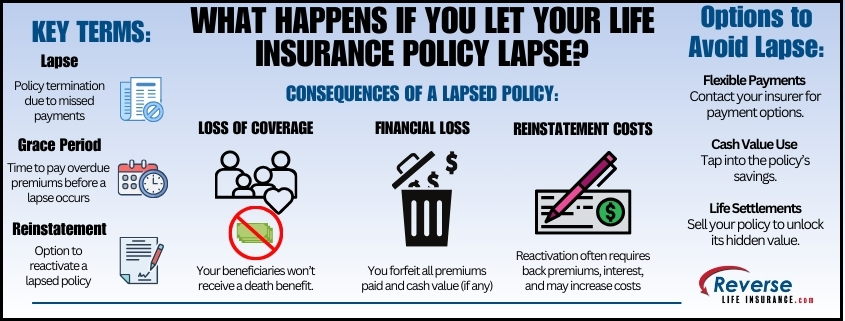
A life insurance policy “lapses” when you stop paying your premium, and the grace period ends. After a lapse, your coverage stops. This means if you die, your family will not get the death benefit.

Most insurers give a grace period of 30 or 31 days after a missed payment. If you pay within this time, your policy stays active. If not, the insurer cancels your policy.
Example:
Suppose you pay $40 per month for a term life insurance policy. You forget to pay in May. The insurer gives you 30 days to catch up. If you pay within those 30 days, your policy continues. If you miss it, your policy lapses, and you lose your coverage.
What Happens Immediately After A Life Insurance Lapse?
When a policy lapses, several things happen quickly:
- Coverage Ends: Your loved ones lose protection right away.
- No Death Benefit: If you pass away after the lapse, your family gets nothing.
- Possible Cash Value Loss: For whole or universal life insurance, you may lose the cash value you built up.
- Notification: Insurers must notify you before and after the lapse. They often send letters, emails, or phone calls.
- Credit Impact: Life insurance lapses do not show up on your credit report. But, unpaid loans against the policy may impact your credit if left unpaid.
The Financial Consequences Of A Lapsed Policy
Letting your life insurance lapse can cause financial harm, sometimes in ways you might not expect.
Loss Of Death Benefit
The biggest risk is that your beneficiaries lose the payout. Even if you missed the payment by one day after the grace period, your family will not receive the money if you die.
Wasted Premiums
All the money you paid before the lapse is usually lost. You cannot get a refund for those premiums.
Cash Value Forfeiture
If you have a whole life or universal life policy, some of your premiums go into a cash value account. After a lapse, you may lose this value, or the insurer may use it to cover unpaid premiums until it runs out.
Higher Reinstatement Costs
If you want to reinstate your policy after a lapse, insurers may ask for:
- Back premiums
- Interest
- Proof of good health
If your health has declined, you may not qualify for the same coverage or rates.
Loss Of Riders
Riders are extra features (like accident coverage or child protection). When a policy lapses, these are also lost, and you may not be able to add them back later.
How Lapse Rules Differ By Policy Type
The impact of a lapse depends on your policy type. Here’s a comparison:
| Policy Type | Grace Period | What Happens on Lapse | Chance to Reinstate |
|---|---|---|---|
| Term Life | 30–31 days | Coverage ends, no cash value | Usually within 5 years |
| Whole Life | 30–31 days | Cash value may cover premiums | Possible, but may need proof of health |
| Universal Life | 30–61 days | Cash value used to pay premiums | Possible, if cash value remains |
Non-obvious insight:
Some whole and universal life policies will use your cash value to pay missed premiums automatically. You may not even realize your policy is still active, but your cash value is shrinking fast. Always check your statement if you miss a payment.
Can You Reinstate A Lapsed Policy?
Most insurers allow you to reinstate a lapsed policy, but there are rules:
- Time Limit: Usually 3–5 years from the lapse.
- Proof of Health: You may need a new medical exam.
- Pay Back Premiums: You must pay all missed premiums plus interest.
- New Contestability Period: After reinstatement, the policy is contestable again (usually for 2 years). This means the insurer can deny a claim if you gave wrong information.
Steps To Reinstate
- Contact your insurer right away.
- Complete a reinstatement application.
- Undergo a health check if required.
- Pay missed premiums and any interest.
Tip:
If your health is worse now, reinstating may cost more, or you might not qualify. Sometimes, buying a new policy is a better choice, but new policies may be more expensive due to your age.
What If You Die During The Grace Period?
If you pass away during the grace period, most insurers will still pay the death benefit. However, they will deduct the unpaid premium from the payout.
Example:
If your premium is $50 and you pass away 10 days into the grace period, your family will get the full payout minus $50.
What Happens To Cash Value After A Lapse?
With permanent life insurance (whole or universal), your policy builds cash value over time. If the policy lapses:
- The insurer may use the cash value to cover unpaid premiums until it’s gone.
- If the cash value is used up, the policy ends with no value left.
- Some policies let you claim the remaining cash value, minus fees, if you act quickly.
Here’s a breakdown:
| Scenario | Cash Value Outcome |
|---|---|
| Policy lapses with cash value left | You may receive the remaining cash value (less fees) |
| Cash value used to pay premiums until gone | No payout; policy ends |
| Loan against cash value unpaid at lapse | Outstanding loan is deducted from any payout |
Non-obvious insight:
If you have taken a loan against your policy and it lapses, you may owe taxes on the loan amount if it is more than the premiums you have paid.
Can You Get A New Policy After Lapse?
You can always apply for a new life insurance policy after a lapse, but:
- You may pay higher premiums because you are older.
- If your health has changed, you may not qualify for the same coverage.
- Any new policy will have a new contestability period.
If you had a special policy (like group life insurance through your job), you may not be able to replace it if you leave your job.
How To Avoid A Life Insurance Lapse
Prevention is better than cure. Here are some practical tips:
- Set up automatic payments from your bank account.
- Read all insurer emails or letters—these often warn about missed payments.
- Update your contact information with your insurer to avoid missed notices.
- Review your policy annually to make sure you can still afford it.
- If you can’t pay, call your insurer. Some can adjust payment dates or offer a temporary break.
- Check if your policy has a non-forfeiture option. This may let you keep some benefits, like a smaller paid-up policy.
Pro tip:
If you have cash value in your policy, ask your agent if it can be used to cover missed premiums for a short time. This can buy you time while you get your finances in order.
Real-world Example
Consider Sarah, age 45, who had a $200,000 term life policy. She lost her job and missed three months of premiums. She ignored warning letters, thinking she would sort it out later. Her policy lapsed. A few months later, she wanted to reinstate but needed a medical check.
Her recent health issues raised her premiums by 35%. If she had acted within the grace period, she would have kept her old rate.

How Insurers Handle Lapse Notices
Insurers must follow state laws for notifying you about a missed payment and potential lapse. Usually, you’ll get:
- A reminder before the grace period ends
- A final lapse notice after the policy ends
If you move or change your email, always update your insurer so you don’t miss these notices.
Key Differences: Lapse Vs. Surrender
People sometimes confuse a policy lapse with policy surrender. They are not the same.
| Feature | Policy Lapse | Policy Surrender |
|---|---|---|
| Who initiates? | Unintentional (missed payments) | Intentional (you request to cancel) |
| Cash value | May lose it entirely | May get “surrender value” (minus fees) |
| Death benefit | Ends immediately | Ends immediately |
| Chance to reinstate | Possible, usually within 3–5 years | Very rare; surrender is usually final |
Frequently Asked Questions
What Is The Grace Period For Life Insurance?
Most policies offer a grace period of 30 or 31 days after the due date. If you pay within this period, your policy stays active. If not, it lapses.
Can I Get My Money Back After My Policy Lapses?
Usually, you cannot get back the premiums you paid if the policy lapses. However, if you have a permanent policy with cash value left, you may receive the remaining amount minus fees.
Does A Lapsed Life Insurance Policy Affect My Credit Score?
No, a lapsed policy does not impact your credit score directly. But if you had a policy loan you did not repay, that unpaid debt could be sent to collections, which would affect your credit.
Can I Reinstate My Policy After A Lapse?
Yes, most insurers allow reinstatement within a few years. You must pay all missed premiums, possible interest, and may need to prove your health.
What If I Cannot Afford My Life Insurance Premium?
Contact your insurer right away. They may offer to lower your coverage, change payment dates, or use built-up cash value to help. Do not ignore missed payment notices.
Missing payments on your life insurance can have serious effects. Understanding what happens when your policy lapses helps you make better choices and protect your loved ones. Always keep your insurance up to date, and contact your provider if you have trouble paying. For more details on life insurance rules, visit the National Association of Insurance Commissioners website. Taking action early is the best way to keep your family protected.