
Life insurance is an important tool to protect your family’s financial future. But many people wonder, “Can I make my life insurance premiums tax deductible?” This question is more common than you think. For most people, life insurance premiums are not tax-deductible. However, there are certain exceptions, strategies, and unique cases where you can deduct premiums or use life insurance for tax benefits. Understanding these possibilities can help you save money and plan better.
Let’s break down how the rules work, who qualifies, and what you can do to maximize your tax advantages. This guide will make the subject clear, even if you’re not a tax expert.

Understanding Life Insurance Premiums And Taxes
Life insurance is a contract where you pay regular premiums to an insurance company. In return, your loved ones receive a payout after your death. Premiums are the payments you make, usually monthly or yearly.
For most Americans, life insurance premiums are treated as a personal expense. The IRS does not allow you to deduct them on your tax return. This is because life insurance is seen as a personal protection, not a business expense. But there are important exceptions and strategies you should know.
Key Terms To Know
- Premiums: Payments made for your life insurance policy.
- Tax Deductible: An expense you can subtract from your income on your tax return.
- Beneficiary: The person who receives the life insurance payout.
When Are Life Insurance Premiums Tax Deductible?
While personal policies are not deductible, certain situations make premiums deductible. Let’s look at the main exceptions:
1. Business-owned Life Insurance
If you own a business, you may be able to deduct life insurance premiums under specific conditions. For example, if your company buys a policy to protect against the loss of a key employee, the premiums can be tax deductible in some cases.
| Policy Type | Deductible? | Who is Beneficiary? |
|---|---|---|
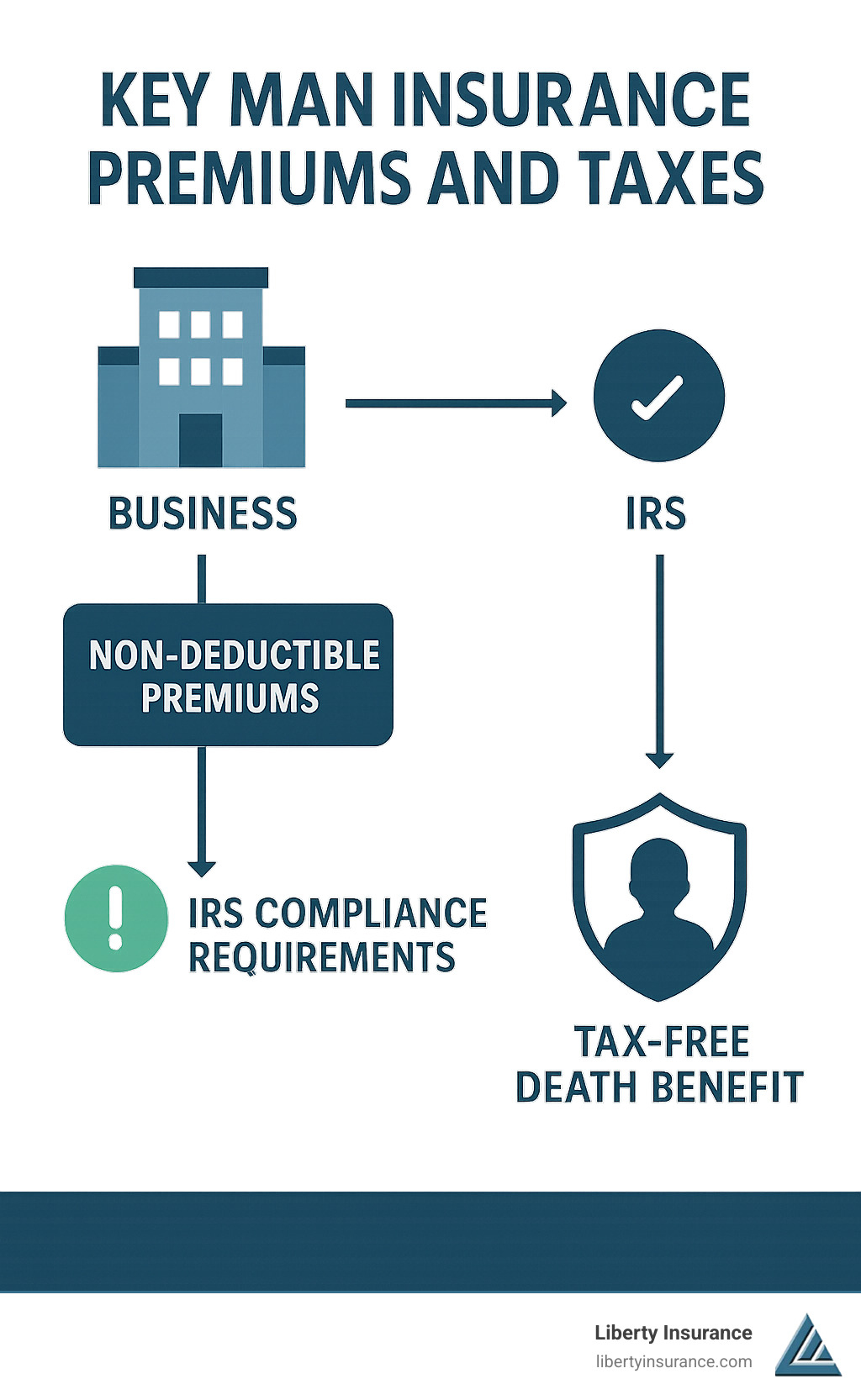
| Key Person Insurance | No* | Business |
| Group Term Life (Employees) | Yes (up to $50,000 coverage) | Employee/Family |
| Executive Bonus Plan | Yes (as compensation) | Employee |
*In most cases, key person insurance premiums are not deductible if the business is the beneficiary. But group term life insurance premiums paid for employees can be deductible as a business expense, up to certain limits.
2. Group Term Life Insurance For Employees
If you’re an employer providing group term life insurance as an employee benefit, you can usually deduct premiums paid for up to $50,000 of coverage per employee. This is considered a regular business expense.
- Example: If your company has 10 employees and you pay $30 per month per employee for $50,000 coverage, you can deduct $3,600 per year.
Anything above $50,000 coverage is considered taxable income for the employee.
3. Life Insurance As Part Of An Executive Compensation Plan
Some companies use life insurance in executive bonus plans. Here, the employer pays premiums as part of the executive’s compensation. These premiums are tax deductible to the employer, but are taxable income to the employee.
4. Charitable Contributions
If you donate a life insurance policy to a registered charity, you may be able to deduct the premiums. The IRS has strict rules here:
- The charity must be the owner and beneficiary.
- You must not retain any rights to the policy.
| Donation Type | Deductible? | Requirements |
|---|---|---|
| New Policy | Yes | Charity owns/benefits |
| Existing Policy | Yes | Transfer ownership |
| Premium Payments | Yes | After transfer |
- Example: If you transfer a $100,000 policy to a charity and continue paying $500/year premiums, you can deduct the $500 as a charitable donation.
5. Alimony And Divorce Agreements
Rarely, a court may require you to buy life insurance as part of a divorce or alimony agreement. In some cases, these premiums can be tax deductible if they are considered part of the alimony payment.
- Important: This only applies if the payment qualifies as alimony under IRS rules, which changed after 2019.
6. Self-employed Health Insurance Plans
Some self-employed people try to deduct life insurance premiums as part of health insurance costs. The IRS does not allow this. Only health, dental, and qualified long-term care premiums are deductible.

Strategies To Make Life Insurance Premiums Tax Deductible
If you want to make your premiums tax deductible, you need to plan carefully and follow IRS rules. Here are practical strategies:
1. Provide Group Term Life Insurance
If you own a business, offer group term life insurance to employees. Premiums paid for coverage up to $50,000 per employee are deductible.
- Tip: Keep coverage at or below $50,000 to maximize deductions.
2. Use Executive Bonus Plans
For business owners, consider an executive bonus plan. The company pays the premium, and the employee pays taxes on the bonus. This is deductible for the business.
- Tip: Structure the plan carefully to avoid IRS penalties.
3. Donate Life Insurance To Charity
If you have an old policy you no longer need, transfer ownership to a charity and continue paying premiums. These payments are deductible as charitable contributions.
- Non-obvious insight: If you donate a policy with cash value, you can also deduct the cash value as a one-time charitable gift.
4. Include Life Insurance In Divorce Settlements
If your divorce settlement requires you to buy life insurance for your ex-spouse or children, talk to a tax professional. Sometimes, these premiums are deductible as alimony.
- Tip: Make sure the agreement meets IRS rules for alimony deductibility.
5. Avoid Common Mistakes
Many people try to claim personal life insurance premiums as deductible, but the IRS will reject this. Only follow the exceptions listed above.
Comparison Of Deductible Vs Non-deductible Premiums
To make it easier, here’s a simple comparison:
| Policy Owner | Premiums Deductible? | Notes |
|---|---|---|
| Individual | No | Personal protection |
| Business (Group Term) | Yes* | Up to $50,000 coverage per employee |
| Business (Key Person) | No | Business is beneficiary |
| Charity | Yes | Charity owns policy |
| Divorce Agreement | Sometimes | Only if premiums are alimony |
*Employers can deduct premiums for group term life insurance, but coverage above $50,000 is taxable to employees.

Tax Benefits Of Life Insurance Beyond Premiums
Even if premiums are not deductible, life insurance has other tax advantages:
- Death benefits are usually tax-free for beneficiaries.
- Cash value growth inside permanent life insurance is tax-deferred.
- You can borrow against the cash value tax-free (if structured properly).
Example: Using Cash Value For Tax-free Loans
Suppose you own a whole life policy with $50,000 cash value. You can borrow up to $50,000 tax-free, as long as the policy stays active. This is a way to access funds without creating taxable income.
- Non-obvious insight: If you surrender your policy, the portion above your premiums paid may become taxable income.
How To Document And Claim Life Insurance Premiums
If you qualify for a deduction, keep careful records:
- Save premium payment receipts.
- Keep documentation showing the policy is part of a deductible plan (such as group insurance or charitable donation).
- For charity donations, get a letter from the charity confirming ownership.
- Attach supporting documents to your tax return if required.
Working With A Tax Professional
Tax law is complex. If you think your premiums qualify for a deduction, always consult a tax advisor or accountant. They can help you avoid mistakes and maximize your deduction.
- Tip: Ask your advisor about IRS Form 8283 for charitable donations of life insurance.
Real-life Examples
- Small Business Owner: Linda owns a bakery with five employees. She buys group term life insurance for each, $40,000 coverage. Her premiums are $1,200 per year. Linda deducts the full amount as a business expense.
- Charity Donor: Mike has an old whole life policy. He transfers it to a local charity and continues paying $600 per year in premiums. Mike deducts $600 each year as a charitable gift.
- Divorce Settlement: Susan’s divorce agreement requires her to buy a $100,000 policy for her ex-spouse. Her lawyer confirms the premium qualifies as alimony. Susan deducts the premium as alimony on her tax return.
The Irs And Tax Deductibility
The IRS is strict about life insurance deductions. For more details, you can read their official guidance at IRS Publication 535. This resource explains what business expenses are deductible, including life insurance in certain cases.
Frequently Asked Questions
Is Personal Life Insurance Tax Deductible?
No, premiums for personal life insurance are not deductible. Only specific cases like business policies, charity donations, or some divorce agreements qualify.
Are Employer-paid Life Insurance Premiums Deductible?
Yes, if you provide group term life insurance up to $50,000 coverage per employee, premiums are deductible as a business expense.
Can I Deduct Life Insurance Premiums If I’m Self-employed?
No, self-employed people cannot deduct premiums for their own life insurance. Only health, dental, and long-term care insurance qualify.
What Happens If I Donate A Life Insurance Policy To Charity?
If the charity is both owner and beneficiary, you can deduct the premiums as a charitable donation. Make sure to transfer ownership fully and keep documentation.
Are Life Insurance Death Benefits Taxable?
Usually, death benefits are tax-free for beneficiaries. But if the policy was transferred for value or certain exceptions apply, it could be taxable.
Making life insurance premiums tax deductible is possible, but only in specific situations. For most people, the premiums are not deductible. Business owners, charity donors, and people with special divorce agreements have options. If you want to use these strategies, plan carefully and get professional advice.
Understanding the rules can help you protect your family and save money at the same time.