
When you think about protecting your family, life insurance often comes to mind. But when it’s about your spouse, how much coverage is truly enough? For many couples, this question brings worry and confusion. You want to keep your loved ones secure, but you also want to avoid overpaying for something you might not need.
Finding the right amount of life insurance for your spouse is a big decision—one that depends on your family’s unique needs, dreams, and even your day-to-day expenses.

In this guide, you’ll discover how to decide the right coverage for your spouse, what factors matter most, and real examples to help you feel confident about your choice. Whether your spouse is the main earner, a stay-at-home parent, or shares financial responsibilities, you’ll find practical advice here.
Let’s explore what goes into choosing the right life insurance amount for your spouse and how it can give your family peace of mind.
Why Life Insurance For A Spouse Matters
Life insurance for a spouse is not just for families with one breadwinner. Both partners usually play key roles—financial, emotional, or both. If your spouse were to pass away, the financial impact could be serious, even if they don’t bring in a paycheck.
For example, a stay-at-home parent provides childcare, cooking, cleaning, and many other services that would cost thousands of dollars to replace.
Life insurance helps cover:
- Lost income if your spouse works
- Childcare costs if your spouse is a caregiver
- Household expenses and daily needs
- Debts, such as a mortgage or car loan
- Final expenses, including funeral costs
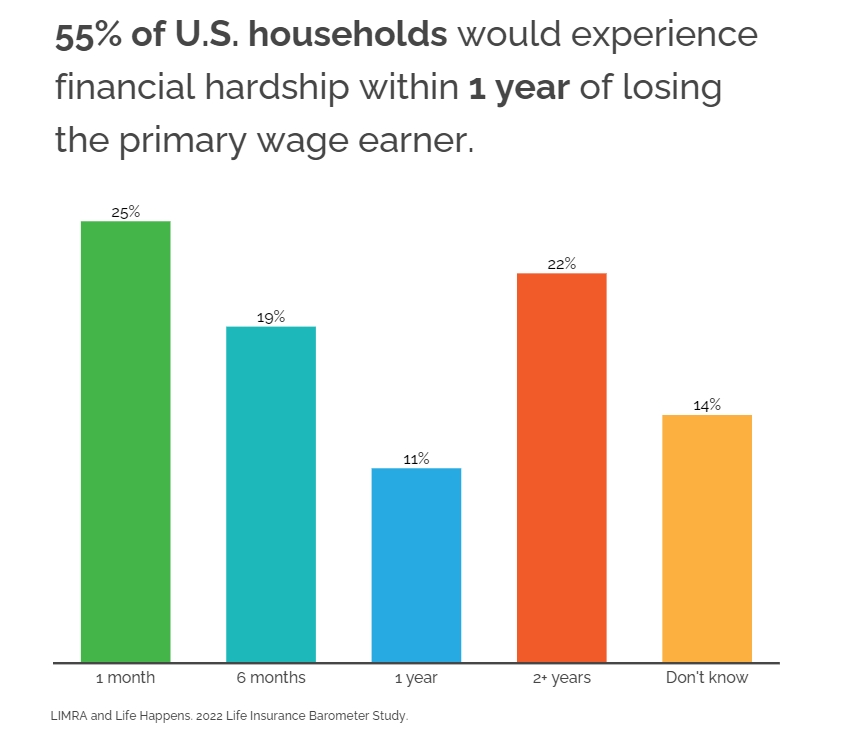
A 2023 study by LIMRA found that 44% of U.S. households would face financial hardship within six months if the main wage earner died. But even in families where both partners work, losing either person can mean a big change in lifestyle, savings, or future goals.
Key Factors To Consider
Choosing how much life insurance your spouse needs starts with looking at your whole family situation. Here are the most important things to think about:
1. Income Replacement
If your spouse earns money, the most common rule is to replace their income for a certain number of years. Many experts suggest 7 to 10 times your spouse’s annual income. For example, if your spouse earns $50,000 a year, you might consider a policy between $350,000 and $500,000.
2. Unpaid Work Value
If your spouse is a stay-at-home parent, think about what their work is worth. According to Salary.com, the value of a stay-at-home parent’s work is over $184,000 per year when you count childcare, cleaning, driving, cooking, and more. If you needed to hire help for these tasks, the costs add up fast.
3. Debts And Future Expenses
Count all debts in your spouse’s name (student loans, car loans, credit cards) and shared debts like a mortgage. Also, plan for big expenses like college for your children or future healthcare costs. A simple rule: add up all debts and future needs, then subtract any savings or assets.
4. Funeral And Final Costs
Funeral costs can range from $7,000 to $12,000 in the US. Life insurance can make sure you’re not left with sudden bills during a difficult time.
5. Your Family’s Long-term Plans
Do you plan to move, have more children, or save for college? These choices affect how much insurance is right. Think ahead, not just about today.

Simple Formulas To Estimate Coverage
There’s no one-size-fits-all answer, but a few methods can help you estimate:
Method 1: Income Multiplier
Multiply your spouse’s annual income by 7–10. This is a fast way, but it doesn’t fit everyone.
Example:
$60,000 Salary × 10 = $600,000 Policy
Method 2: Dime Formula
DIME stands for Debt, Income, Mortgage, Education. Add up these four areas for a more detailed look.
- Debt: All loans, except your mortgage
- Income: Years of income to replace
- Mortgage: Remaining balance
- Education: Estimated future college costs
Example:
Debt: $20,000
Income: $60,000 × 10 = $600,000
Mortgage: $200,000
Education: $100,000 (per Child) × 2 = $200,000
Total: $1,020,000
Method 3: Needs-based Approach
List all yearly expenses your spouse covers (or would cover by their work at home). Multiply by the number of years you want protection.
Example:
Childcare: $18,000/year
Housekeeping: $7,000/year
Meals: $5,000/year
Total Yearly: $30,000 × 10 Years = $300,000
Comparing Common Coverage Amounts
To help you see what different policy sizes might cover, here’s a practical comparison:
| Policy Amount | What It Can Cover | Best For |
|---|---|---|
| $100,000 | Funeral, small debts, short-term expenses | Single-income families, older couples |
| $250,000 | Funeral, some debt, 2-3 years of income | Young couples, no kids |
| $500,000 | Mortgage, funeral, debts, 5-7 years of income | Families with children |
| $1,000,000+ | All debts, college, 10+ years of income | High earners, large families |
How Your Needs Change Over Time
Life insurance isn’t a “set it and forget it” decision. Your needs change as your family grows, your income increases, or your debts shrink. Review your coverage when you:
- Have a new child
- Buy or pay off a home
- Change jobs
- Start or close a business
- Send kids to college
You don’t need to buy the same amount forever. Many families buy term life insurance for 10, 20, or 30 years to cover the most expensive years (raising kids, paying off a mortgage).
Mistakes To Avoid When Choosing Life Insurance For Your Spouse
Many people make the same errors when buying life insurance for a spouse. Here are some to watch out for:
- Underestimating the value of unpaid work. Stay-at-home spouses often do tasks worth much more than you think.
- Basing coverage only on current income. If your spouse just started a new career or plans to go back to work, think ahead.
- Ignoring inflation. Costs for education and childcare rise. Choose a policy that keeps up with the times.
- Not updating policies. Don’t forget to review coverage after big life changes.
- Choosing the lowest premium. Cheap policies may not offer enough protection.
- Relying only on employer-provided insurance. This often ends if your spouse leaves their job.

Real-life Examples
Example 1: Dual-income, No Kids
Jane and Mark both work and have no children. Mark earns $70,000, Jane earns $60,000. They have a $250,000 mortgage and $20,000 in shared credit card debt.
- Coverage for Mark: $70,000 × 7 = $490,000
- Coverage for Jane: $60,000 × 7 = $420,000
- Add mortgage and debts: $250,000 + $20,000 = $270,000
Each should consider a policy of at least $700,000 to cover lost income and debts.
Example 2: Stay-at-home Parent
Tom works full-time, and his wife Sara stays home with their three kids. They have a $300,000 mortgage and want to pay for college ($100,000 per child).
- Value of Sara’s work: $50,000 (childcare, cleaning, etc.) × 10 years = $500,000
- Mortgage: $300,000
- College: $100,000 × 3 = $300,000
Sara should have at least an $800,000 policy to cover her work and future needs.
Example 3: Older Couple, Grown Children
Lisa and George are in their 60s. Their children are independent, and their mortgage is paid off. They want to cover final expenses and leave a small legacy.
- Funeral: $12,000
- Medical bills: $8,000
- Legacy: $30,000
A $50,000 policy may be enough for their goals.
Comparing Term Vs. Whole Life Insurance
Choosing the right type of insurance is as important as choosing the amount. Here’s a quick look at how term life and whole life insurance compare:
| Type | Term Life | Whole Life |
|---|---|---|
| Cost | Lower | Higher |
| Coverage Length | 10, 20, or 30 years | Lifetime |
| Cash Value | No | Yes |
| Best For | Temporary needs | Permanent coverage, estate planning |
Term life is usually best for most families because it’s affordable and covers the years you need it most.
How To Buy Life Insurance For Your Spouse
The process is easier than you might think:
- Calculate your needs. Use the formulas above.
- Research companies. Look for strong ratings and customer reviews.
- Get quotes. Compare costs for different policy sizes and types.
- Complete the application. This may include a health check.
- List beneficiaries. Make sure your family is protected.
Some companies offer joint policies, but it’s often better for each spouse to have their own policy. This way, each person’s needs are covered, and you have more flexibility.
Non-obvious Insights Most People Miss
Many people think only the main breadwinner needs coverage. But if a stay-at-home spouse dies, the surviving partner might need to pay for childcare, cut back hours at work, or even relocate to be closer to family. These costs can be much higher than most people expect.
Also, some debts (like private student loans) do not disappear when a spouse dies. Be sure to check what you’re responsible for in your state.
It’s wise to review your insurance every few years. Life changes fast, and your coverage should keep up.
Frequently Asked Questions
How Do I Know If My Spouse Needs Life Insurance?
If your spouse’s death would cause a financial problem for your family—whether through lost income or the need to pay for household services—they should have life insurance.
What If We Can’t Afford Much Coverage Right Now?
Even a small policy is better than none. Start with what you can afford, and increase coverage as your finances improve. Look for term life insurance for lower rates.
Should A Stay-at-home Parent Get Life Insurance?
Yes. The value of their unpaid work is high. Life insurance can help cover costs for childcare, cleaning, and other services if something happens to them.
What Happens To My Spouse’s Life Insurance If We Divorce?
After a divorce, you may need to update beneficiaries or change your policy. Sometimes, divorce agreements require you to keep coverage for child support or alimony. Always review your policy after a major life change.
Where Can I Find More Information About Life Insurance Options?
A good place to start is the Insurance Information Institute, which offers detailed guides and calculators.
Choosing the right amount of life insurance for your spouse isn’t just about numbers—it’s about protecting your loved ones and giving yourself peace of mind. By thinking through your family’s needs and avoiding common mistakes, you’ll make a decision you can feel confident about for years to come.