
Life insurance is often seen as a safety net for loved ones after a person dies. But did you know that your life insurance policy can also help you while you are still alive? Many people are surprised to learn that life insurance can be used as collateral for a loan. This strategy can open up new financial options, especially if you need funds for a big purchase, business investment, or to handle an emergency. Used correctly, it allows you to access cash without selling valuable assets or disrupting your long-term plans.
If you are not familiar with this idea, you might have questions. How does it work? What types of life insurance are eligible? What are the risks and benefits? And what should you watch out for? In this article, you will find clear, easy-to-understand answers to all of these questions.

You will also discover real examples, key steps, and mistakes to avoid. Whether you are a business owner, an investor, or just someone looking for flexible financial tools, understanding how to use life insurance as collateral could make a big difference in your financial planning.
What Does It Mean To Use Life Insurance As Collateral?
When you use life insurance as collateral for a loan, you are promising your policy’s value to a lender as a guarantee. This means if you fail to repay the loan, the lender can claim the money from your policy’s payout—either from its cash value or the death benefit. Collateral makes lenders more comfortable giving you money, especially for larger amounts or if you have limited credit history.
Main Types Of Policies Used
Not all life insurance policies can be used as collateral. The two main types you will see are:
- Whole life insurance: This is a type of permanent life insurance that builds cash value over time. The cash value is what you can borrow against.
- Universal life insurance: Another permanent policy that grows cash value, often with flexible premiums.
- Term life insurance: Usually does *not* qualify, because it has no cash value. However, sometimes, the death benefit can be assigned as collateral, but only for the loan’s duration.
How Lenders View Life Insurance As Collateral
Lenders like policies that have a stable cash value, because this is an actual asset they can claim if needed. With term policies, lenders may accept a collateral assignment (more on this later), but it is less common, as there is no cash value and the coverage only lasts for a set period.
Why Use Life Insurance As Collateral?
There are several reasons why using life insurance as collateral can be attractive:
- Faster loan approval: Pledging life insurance can help you get approved for loans, even if your credit is not perfect.
- Lower interest rates: Lenders often offer better rates when you provide strong collateral.
- No need to sell assets: You can borrow money without selling property, investments, or other assets.
- Useful for business loans: Many business owners use this strategy to secure working capital or expansion funds.
- Estate planning: This can be part of tax or inheritance planning, as the policy can cover debts if you pass away before the loan is repaid.
A less obvious benefit: when you use life insurance as collateral, your policy can remain in force—it does not get canceled or cashed out, unless you default on the loan and the lender claims it.
How The Collateral Assignment Process Works
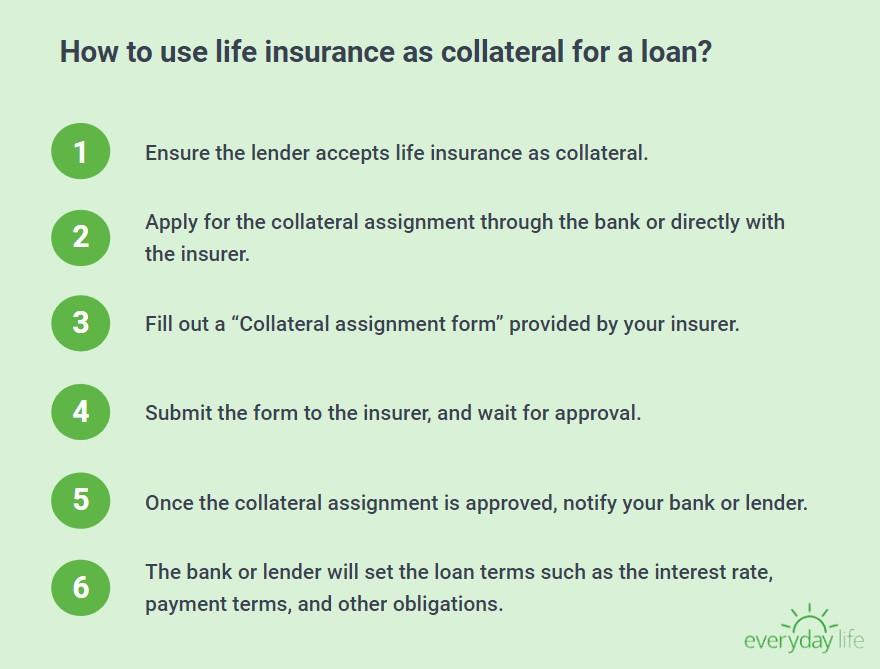
The process of using life insurance as collateral involves a few clear steps. Here’s a breakdown:
- Choose the right policy: Make sure your policy has enough cash value (for permanent policies) or a large enough death benefit (for term).
- Apply for a loan: Tell your lender you want to use your life insurance policy as collateral.
- Collateral assignment: You and your insurer fill out a form that “assigns” the policy as collateral to the lender.
- Lender’s rights: The lender now has the right to claim the policy’s value if you do not repay the loan.
- Loan is granted: Once the assignment is in place, the lender gives you the loan.
- Loan repayment: You make regular payments to the lender. If you repay fully, the assignment is removed.
- If you pass away: The lender is paid first from the policy’s death benefit, and any remainder goes to your chosen beneficiaries.
Example Scenario
Suppose you have a whole life insurance policy with a $150,000 death benefit and $25,000 in cash value. You want a $20,000 business loan. The bank agrees to lend you the money, but only if you use your policy as collateral. You complete a collateral assignment form, and the loan is issued. If you pay off the loan, your policy is free again. If you pass away before repayment, the bank receives $20,000 from the policy, and your family gets the remaining $130,000.
Collateral Assignment Vs. Absolute Assignment
There are two main types of policy assignments:
- Collateral assignment: The lender’s rights are limited to the loan amount. Your beneficiaries still get the rest.
- Absolute assignment: Transfers full ownership of the policy. Usually not used for loans, as it removes all your rights.
Collateral assignment is almost always the safer and preferred method for personal and business loans.
Types Of Loans You Can Secure With Life Insurance
You can use life insurance as collateral for several types of loans, depending on your needs:
1. Business Loans
Banks often ask small business owners for collateral. If you do not want to risk your house or other assets, life insurance is an alternative.
2. Personal Loans
If you need a large sum for education, medical bills, or other big expenses, a lender may accept your life insurance as security.
3. Mortgages And Real Estate Loans
In some cases, especially for commercial properties, life insurance can be used to secure a mortgage—usually to make sure the loan is paid off if you pass away.
4. Lines Of Credit
Some lenders offer lines of credit against the cash value of your policy, letting you borrow as needed.
5. Sba Loans
The Small Business Administration (SBA) often requires life insurance as collateral for certain business loans. This protects the lender if the business owner dies before the loan is paid.

Requirements And Eligibility
Not everyone will qualify to use life insurance as collateral. Here are some key requirements:
- Policy type: Must be a permanent policy (whole or universal) with cash value, or a term policy with a large death benefit.
- Policy status: Premiums must be up to date. The policy cannot be about to lapse.
- Lender approval: The lender must agree to accept the policy as collateral.
- Assignment form: You and your insurer must complete and sign a collateral assignment form.
- Loan-to-value ratio: Lenders will not let you borrow the full value. They usually allow 80-90% of the cash value for permanent policies.
Typical Lender Requirements
Here is a quick comparison of what lenders look for:
| Requirement | Permanent Policy | Term Policy |
|---|---|---|
| Eligible as collateral? | Yes | Sometimes (death benefit only) |
| Cash value required? | Yes | No |
| Assignment process | Collateral assignment | Collateral assignment |
| Loan amount | Up to 90% of cash value | Depends on death benefit |
Step-by-step: Using Life Insurance As Collateral
If you are ready to use your policy for a loan, follow these steps:
1. Review Your Policy
Check your policy’s type, cash value, and death benefit. If you have a permanent policy, ask your insurer for the current cash value.
2. Talk To Your Lender
Ask if they accept life insurance as collateral, and what their requirements are. Not all banks or credit unions offer this option.
3. Get The Assignment Form
Your insurance company will provide a collateral assignment form. This legal document gives the lender certain rights over your policy.
4. Complete The Paperwork
Fill out and sign the form with both your lender and your insurer. Make sure all details are correct—mistakes can cause delays or problems later.
5. Wait For Confirmation
The insurance company will process the assignment and notify both you and your lender when it is complete.
6. Receive Your Loan
Once the assignment is official, the lender will release the loan funds to you.
7. Repay The Loan
Make regular payments. Once you pay off the loan, ask your insurer to remove the collateral assignment.
8. Keep Your Policy Active
Continue paying premiums on your policy. If your policy lapses, the lender may claim the cash value or death benefit.
Practical Example
Maria owns a universal life insurance policy with a $50,000 cash value. She needs a $40,000 loan to expand her restaurant. Her bank agrees, using her policy as collateral. Maria keeps paying her insurance premiums and makes loan payments. She pays off the loan after three years, and the bank removes the assignment. Her policy stays in force, and her beneficiaries remain protected.
Benefits And Drawbacks
Using life insurance as collateral has unique advantages, but also some risks. Consider both sides before making a decision.
Key Benefits
- Access to large sums: Permanent policies with high cash value can secure large loans.
- Preserve investments: You do not need to sell stocks or real estate.
- Flexible use: Funds can be used for almost any purpose.
- Keeps insurance active: If managed well, your policy remains in place.
- Business continuity: If a business owner dies, the policy can pay off the loan and keep the company running.
Possible Drawbacks
- Policy at risk: If you default, you may lose your policy or reduce the benefit to your heirs.
- Premiums must continue: You have to keep paying for the policy, even during financial hardship.
- Loan limits: Lenders rarely let you borrow the full value of your policy.
- Complex paperwork: The process is more complicated than a normal loan.
- Tax impact: In rare cases, if the loan is not repaid and the lender claims the policy, there could be tax consequences.
Table: Pros And Cons At A Glance
| Benefit | Drawback |
|---|---|
| Access to large loans | Risk of losing policy |
| Lower interest rates | Have to pay premiums |
| No need to sell assets | Loan limits apply |
| Flexible use of funds | Process can be complex |
What You Need To Watch Out For
Even experienced borrowers make mistakes when using life insurance as collateral. Here are a few non-obvious issues to watch out for:
- Policy lapses: If you forget to pay your premiums, your policy could lapse. The lender might then claim the cash value, leaving your beneficiaries with nothing.
- Mismatched loan and policy terms: If your loan is for 20 years, but your term policy only lasts 10, the lender is unprotected for the final 10 years.
- Over-assigning: Assigning a policy to more than one lender can cause legal confusion or disputes if you die before all loans are paid.
- Insufficient coverage: If your loan grows (for example, with interest) and your policy does not keep up, the lender may not be fully protected.
- Failure to notify beneficiaries: Your family might not know that the lender will be paid first from your policy, leading to unexpected surprises.
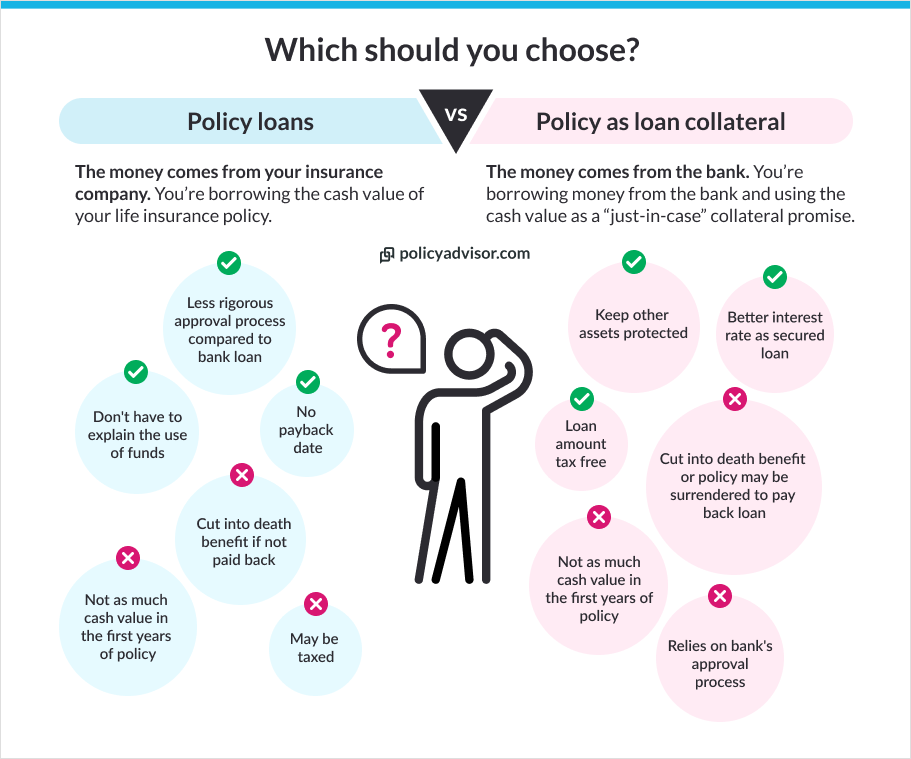
Alternatives To Using Life Insurance As Collateral
If you are not sure this strategy is right for you, consider these alternatives:
- Personal loan: Use your credit score and income instead of collateral.
- Home equity loan: Borrow against your house if you have enough equity.
- Pension or retirement account loan: Some retirement plans let you borrow against your balance.
- Business assets: Use equipment, inventory, or other business assets as collateral.
- Secured credit card or line of credit: For smaller amounts, this can be a simpler option.
Each alternative has its own risks and benefits. For example, borrowing against your home can put your property at risk, while using a retirement account could hurt your long-term savings.
Tax And Legal Considerations
Most people do not face taxes when using life insurance as collateral, but there are exceptions:
- If the lender claims the cash value and it is more than what you have paid in premiums, you may owe taxes on the gain.
- If the assignment changes the ownership of the policy, it could impact estate taxes.
- Laws vary by state and country—always check with a tax professional.
Also, make sure all paperwork is correct and keep copies for your records. Legal mistakes can cause delays or disputes.
For more detailed information on policy assignment and legal aspects, you can visit the Investopedia guide on collateral assignment.
Who Should Consider Using Life Insurance As Collateral?
This strategy is best for people who:
- Own a permanent life insurance policy with significant cash value
- Need a large, flexible loan
- Want to avoid selling other assets
- Are confident they can keep paying premiums
- Have clear communication with their beneficiaries
Business owners often use this approach to secure loans for expansion or working capital. It is also popular among investors who want to keep their money in the market, rather than cash out to cover big expenses.
Two Insights Most Beginners Miss
- Assignment is not permanent: Many people think using life insurance as collateral means losing control of their policy forever. In reality, once the loan is repaid, you can remove the assignment and regain full control.
- Policy performance matters: If you are using a permanent policy, remember that the cash value may change based on dividends or investment returns. Always check how your policy is performing before and during the assignment period.
Frequently Asked Questions
What Happens To My Life Insurance Policy If I Die Before Repaying The Loan?
If you die before the loan is paid off, the lender is paid first from the policy’s death benefit, up to the amount you owe. Any leftover money from the death benefit goes to your named beneficiaries.
Can I Use A Term Life Policy As Collateral?
Usually, only the death benefit of a term life policy can be used as collateral, not the cash value (because term policies do not have one). The lender’s protection lasts only as long as the policy is active.
Is My Credit Score Important If I Use Life Insurance As Collateral?
Your credit score still matters, but lenders may be more flexible because they have a valuable asset as collateral. However, they will still check your credit and may have minimum requirements.
Can I Assign One Life Insurance Policy To More Than One Lender?
It is possible, but risky. Over-assigning a policy can cause confusion and legal problems. Most insurers recommend using only one policy per lender, or getting legal advice if you must assign to multiple lenders.
Will My Beneficiaries Be Notified If My Policy Is Used As Collateral?
Your beneficiaries will not always be notified automatically. It is your responsibility to tell them, so they understand the lender will be paid first if you die before repaying the loan.
Using life insurance as collateral for a loan is a powerful, flexible financial tool, but it is not right for everyone. Take time to review your policy, talk to your lender, and understand the risks before making a decision. With the right planning, this strategy can help you unlock cash when you need it most, without sacrificing your long-term financial security.