
Choosing the right kind of insurance can feel confusing, especially when you hear terms like life insurance and health insurance. Both sound important, but they serve different purposes. Many people, especially those new to insurance, mix them up. If you want to protect yourself and your family, understanding the difference is key. This article explains what makes each type unique, how they work, and helps you decide what fits your needs best.
What Is Life Insurance?
Life insurance is a contract between you and an insurance company. You pay a certain amount, called a premium, and in return, the company promises to pay your family or chosen person (the beneficiary) a sum of money if you die during the policy period. The main goal is to support loved ones financially when you are no longer there.

Most people buy life insurance to make sure their family can pay for things like daily expenses, debts, children’s education, or funeral costs if they die. Life insurance is not for you, but for the people who depend on you.
Types Of Life Insurance
There are several types of life insurance, but the most common are:
1. Term Life Insurance
This covers you for a fixed period, like 10, 20, or 30 years. If you die during this time, your beneficiary gets paid. If you live past the term, the policy ends and no money is paid out. Term life is usually cheaper than other types.
2. Whole Life Insurance
This lasts your entire life, as long as you keep paying. It also has a cash value part that grows over time. You can sometimes borrow from this cash value.
3. Universal Life Insurance
This is flexible. You can change your premium or coverage amount as your life changes. It also builds cash value.
How Life Insurance Works
You choose a policy, pay regular premiums, and name your beneficiary. If you die while the policy is active, your beneficiary claims the money by submitting a death certificate and some forms. The insurance company checks the claim, and if everything is correct, pays the benefit.
Some policies have extra features, like riders. For example, you can add a rider that pays money if you become seriously ill.
Real-life Example
Imagine you are the main earner in your family. If you die suddenly, your family could struggle to pay rent, loans, or children’s school fees. A life insurance payout can give them money to cover these costs during a hard time.
What Is Health Insurance?
Health insurance is a contract that helps pay for your medical costs. When you get sick, injured, or need medical care (like doctor visits, surgery, or medicine), health insurance covers part or all of the bill. Without health insurance, you may have to pay large hospital bills yourself.
Health insurance is for you and sometimes your family members. It makes medical care more affordable and helps you get treatment when you need it.
Types Of Health Insurance
1. Individual Health Insurance
You buy this for yourself or your family. It covers a range of medical services.
2. Group Health Insurance
This is offered by employers to their workers. Usually, a group plan is cheaper and covers more people.
3. Government Health Insurance
Programs like Medicare and Medicaid in the US help older people, low-income families, or people with disabilities.
4. Critical Illness Insurance
This pays a lump sum if you are diagnosed with a serious illness, like cancer or a heart attack.
How Health Insurance Works
You pay a premium, and sometimes you pay a part of the cost when you get care (this is called a copay or deductible). The insurance company pays the rest. Some plans have a network of hospitals or doctors you must use for lower costs.
For example, if you need surgery, health insurance can pay most of the hospital and doctor fees, so you only pay a smaller part.
Real-life Example
Let’s say you break your arm and need surgery. Without insurance, the bill could be $10,000 or more. With health insurance, you might only pay $1,000, and the insurance pays the rest. This protects you from big financial losses because of health problems.
Key Differences Between Life Insurance And Health Insurance
Though both are types of insurance, their purposes, benefits, and how they work are very different. Let’s break down the main differences:
| Feature | Life Insurance | Health Insurance |
|---|---|---|
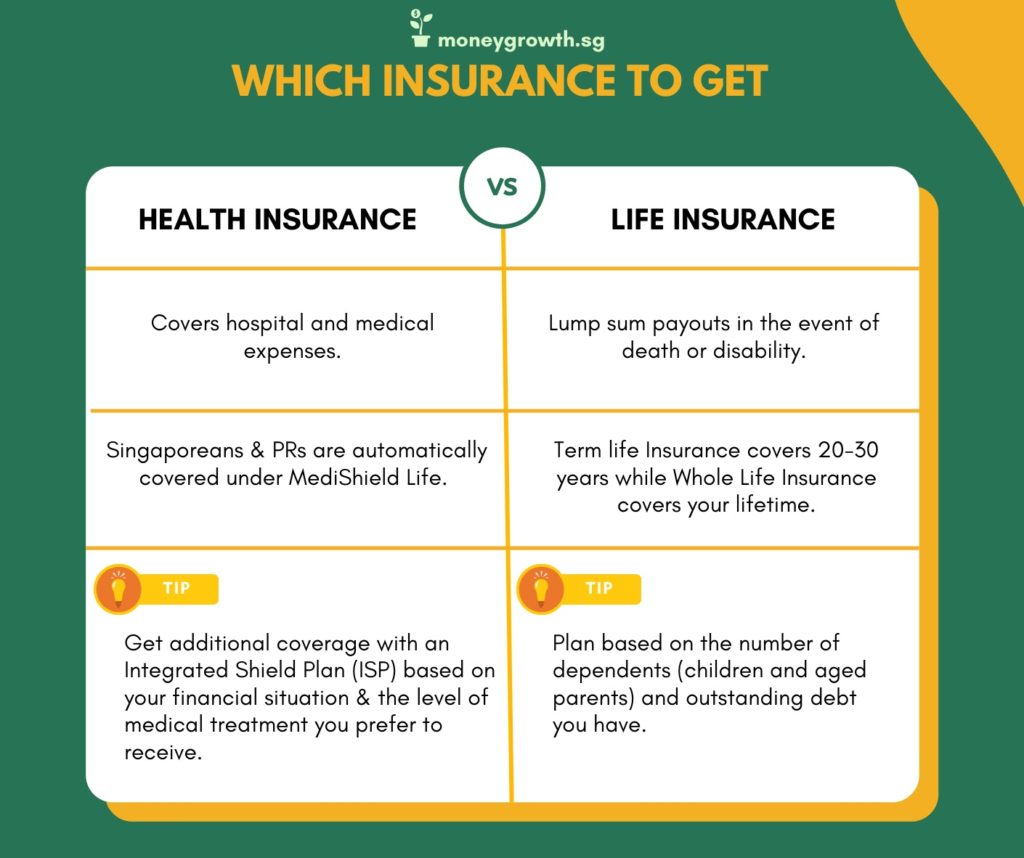
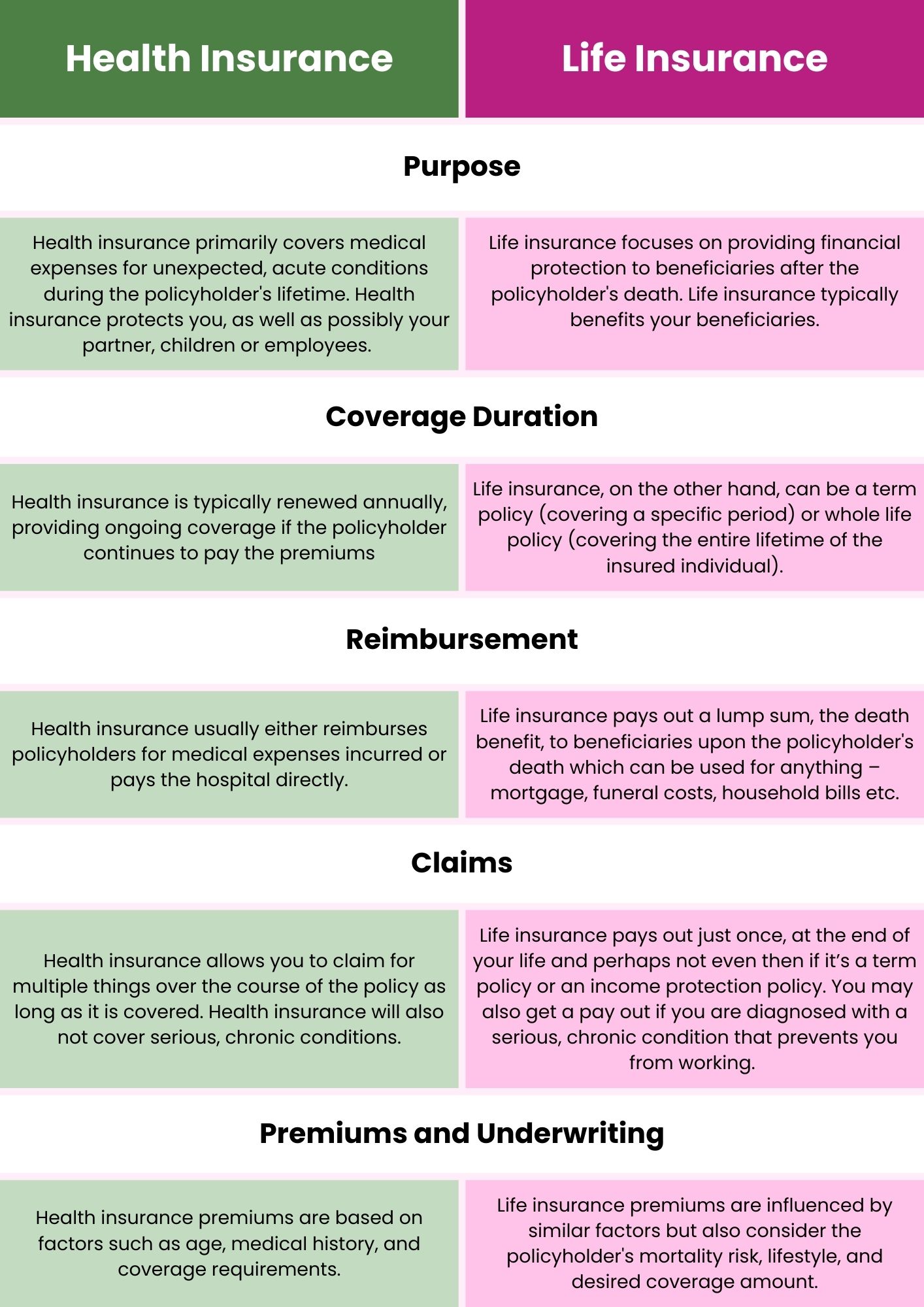
| Main purpose | Protects family after your death | Pays for medical costs while you are alive |
| Who benefits | Your beneficiary (family or person you choose) | You (and sometimes your family) |
| When money is paid | After your death | When you need medical care |
| Type of benefit | Lump sum payment | Direct payment or reimbursement for bills |
| Duration | Term (fixed years) or whole life | Usually yearly contracts, can renew |
| Premiums | Fixed or flexible (long-term) | Yearly, can change based on age or health |
Purpose And Benefit
The core difference is this: life insurance protects your family’s future if you die, while health insurance helps you pay medical bills while you are alive.
Payment Structure
Life insurance pays a single lump sum after death. Health insurance pays for medical services, either by paying doctors directly or reimbursing you.
Who Needs It Most
People with dependents (spouse, children, parents) need life insurance to protect them. Everyone, no matter their age or family, benefits from health insurance because anyone can get sick or injured.
Cost Differences
Life insurance is often cheaper for young, healthy people, especially term life. Health insurance costs more as you age, or if you have health problems, because you are more likely to use it.
Claim Process
Life insurance claims are made after death. Health insurance claims are made whenever you get medical care.
Why People Confuse Life And Health Insurance
Many people, especially beginners, think both insurances do the same thing: they “help in hard times.” But the key confusion points are:
- Both require regular premiums.
- Both are often sold by the same companies.
- Both can be part of a benefits package at work.
However, the reasons for buying them, and the way they pay, are not the same. Understanding this difference helps you choose the right policy and avoid costly mistakes.
How To Decide Which Insurance You Need
Choosing between life and health insurance depends on your personal situation, age, health, and family needs. Here’s how to think about it:
1. Do You Have Dependents?
If yes, life insurance is important. If you die, your family may lose income and need help.
2. Are You Worried About Medical Bills?
Health insurance protects you from high costs if you get sick or injured.
3. Can You Afford Both?
If possible, having both gives full protection.
4. Are You Young And Single?
Health insurance is more urgent, since you may not have people depending on your income yet.
5. Are You The Main Earner?
Life insurance should be a priority.
6. Is Your Workplace Offering Insurance?
Some jobs give health or life insurance as a benefit. Check what is covered, and if you need extra coverage.
Example Scenarios
- A 30-year-old with a family: Needs both. Life insurance protects the family, health insurance covers medical costs.
- A 25-year-old single worker: Health insurance is key. Life insurance can wait unless parents or others rely on their income.
- A retiree: Health insurance is critical, as medical needs increase. Life insurance may help cover funeral costs or leave money for heirs.
Common Myths And Mistakes
Many people make mistakes when buying insurance. Here are some common myths and facts:
1. Myth: Life Insurance Gives Money If I Get Sick.
Fact: Standard life insurance pays only after death. For illness, you need a rider or a separate critical illness policy.
- Myth: Health insurance is not needed if I am healthy.
Fact: Accidents or sudden illness can happen anytime. Without insurance, bills can be huge.
3. Myth: Insurance Through Work Is Always Enough.
Fact: Many work policies have low coverage or end if you leave the job. Check your policy details.
4. Myth: Life Insurance Is Too Expensive.
Fact: Term life insurance can be affordable, especially if you buy when young.
5. Myth: I Can Buy Insurance When I Get Older.
Fact: The older you get, the higher the premium. Health problems can even make you uninsurable.
Non-obvious Insights
- Many people do not realize that life insurance payouts are usually tax-free for beneficiaries, while health insurance benefits depend on the country’s tax laws.
- Some health insurance plans have waiting periods before they cover certain treatments (like maternity or pre-existing diseases), so buying early helps.
What Affects Insurance Premiums?
Both types of insurance use risk to set your premium. Here’s how:
Life Insurance Premium Factors
- Age: Younger people pay less.
- Health: Smokers or people with health problems pay more.
- Occupation: Risky jobs (pilot, construction) cost more.
- Coverage amount: Higher benefit means higher premium.
- Policy type: Term is cheaper than whole life.
Health Insurance Premium Factors
- Age: Older people pay more.
- Medical history: Chronic diseases mean higher costs.
- Location: Medical costs in your area affect premiums.
- Family size: Covering a family is more expensive.
- Coverage type: Plans with more benefits cost more.
Key Benefits Of Life Insurance
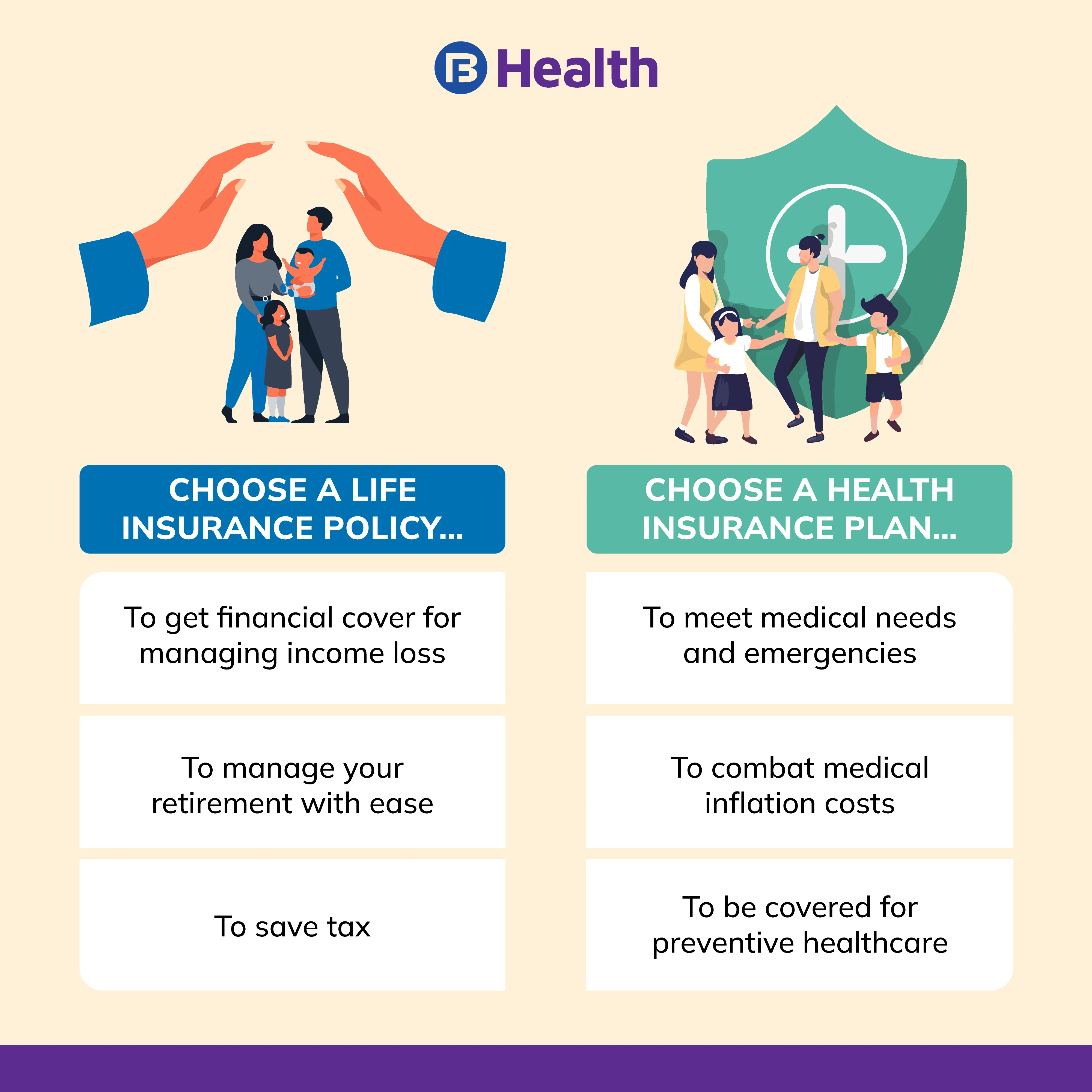
Why do people buy life insurance? Here are some reasons:
- Financial security for family: Replaces lost income after death.
- Pays off debts: Mortgage, loans, or credit card debts do not burden your family.
- Education expenses: Pays for children’s school or college.
- Covers funeral costs: Funerals can be expensive.
- Creates an inheritance: Leaves money for loved ones or charity.
Key Benefits Of Health Insurance
Why is health insurance important? Some main benefits:
- Reduces medical bills: Pays for hospital stays, surgery, medicine, and more.
- Access to better care: Many hospitals require insurance for cashless treatment.
- Covers preventive care: Some plans pay for checkups, vaccines, and screenings.
- Protects savings: Prevents you from using up all your money for health emergencies.
- Covers family members: Family plans protect your spouse and children too.
How Claims Are Paid: A Closer Look
Understanding how claims work helps you avoid surprises.
Life Insurance Claims
- After the policyholder’s death, the beneficiary submits a claim form and the death certificate.
- The insurance company checks the documents.
- If the claim is valid, payment is made in a lump sum.
- If death happens soon after buying, some companies check more closely to avoid fraud.
Health Insurance Claims
- You get treated at a hospital or doctor’s clinic.
- You pay a part (copay or deductible), and the rest is billed to the insurer.
- Some plans use a cashless system, where you do not pay upfront at partner hospitals.
- For non-network hospitals, you pay first and then claim reimbursement.
Comparing Life And Health Insurance: Quick Reference
The table below summarizes key points for easy reference.
| Aspect | Life Insurance | Health Insurance |
|---|---|---|
| Who should buy | Main earners, people with dependents | Everyone, especially those with high medical costs |
| Tax benefits | Yes, on premiums and payouts (in many countries) | Yes, on premiums (in many countries) |
| Cash value | Only in whole/universal life | Usually none |
| Coverage for illness | Only with riders/add-ons | Core purpose |
| Renewal | Term: fixed; Whole: lifelong | Usually yearly |
Should You Have Both Life And Health Insurance?
Ideally, yes. Life and health insurance solve different problems. Life insurance ensures your family is safe if you die early. Health insurance keeps you and your family protected from big medical bills. If you must choose only one, consider your current needs—family support or personal health risk.
Some employers give basic coverage, but it is often not enough. Review your policies once a year to make sure they still fit your situation.
Special Types: Riders And Add-ons
Both types of insurance offer riders or add-ons for extra protection.
- Life insurance riders: Critical illness, accidental death, waiver of premium, disability.
- Health insurance add-ons: Maternity cover, hospital cash, critical illness cover.
These cost extra but can fill important gaps in coverage. Always read the terms carefully.
Global Differences In Insurance
Insurance rules and products vary by country. For example:
- In the US, Medicare and Medicaid help seniors and low-income people.
- In some countries, health insurance is provided for all by the government.
- Life insurance products may have different tax rules or payout conditions.
Always check local laws and available products before buying.
How To Choose A Good Policy
Making the right choice takes a bit of research. Here are tips:
- Assess your needs: List your family’s needs and your health risks.
- Compare plans: Look at coverage, exclusions, claim process, and premium.
- Check financial strength: Choose insurers with good claim records and financial health.
- Read the fine print: Understand what is covered and what is not.
- Ask about waiting periods: Some benefits start only after a few months.
- Get advice: A trusted agent or financial advisor can help, but always do your homework.
Non-obvious Insight
- Many people forget to update their beneficiary when life changes (marriage, divorce, children). Always keep your policy details current.
Case Study: How Insurance Helped
Consider Priya, a 35-year-old mother of two. She bought health insurance after seeing a friend struggle with hospital bills. When Priya had to have surgery, her health insurance paid 80% of the costs, saving her savings. Later, her husband died in an accident.
Because he had life insurance, Priya received a lump sum that helped her pay for their home and children’s education. This real story shows why both types matter.
Frequently Asked Questions
What Is The Main Difference Between Life Insurance And Health Insurance?
The main difference is that life insurance pays your family if you die, giving them financial support. Health insurance pays for your medical costs when you are sick or hurt.
Can One Insurance Policy Cover Both Life And Health Risks?
Some insurance companies offer combo policies that cover both, but usually with separate rules and limits. Make sure you understand what each part covers before buying.
Do Life And Health Insurance Have Tax Benefits?
In many countries, premiums for both types can be claimed as tax deductions. Also, life insurance payouts are often tax-free for beneficiaries. Always check local tax rules or talk to a tax expert.
What Happens If I Stop Paying Premiums?
If you stop paying, your insurance may lapse (end). For life insurance, this means your family gets nothing if you die. For health insurance, you lose medical coverage and must pay all bills yourself.
How Do I Pick The Right Insurance Company?
Look for companies with a strong financial rating, good customer reviews, easy claim processes, and clear policies. You can check official ratings and reviews online, such as on National Association of Insurance Commissioners.
Making the right choice between life and health insurance is an important step in protecting your future. Now that you understand the differences, you can make a confident decision for yourself and your loved ones. Remember: life changes, and so do your insurance needs. Review your coverage regularly to keep your protection strong.