
Life insurance is usually seen as something for adults. But more parents today are thinking about life insurance for kids. Why would someone buy insurance for a child who does not earn money or support a family? The answer is not simple. There are several reasons parents or grandparents consider this, and not all are obvious. This article explains the main benefits, gives real examples, and helps you decide if this step is right for your family. We’ll use simple language and clear examples, so even if you’re new to this topic, you’ll understand the key points.
What Is Life Insurance For Kids?
When people talk about life insurance for kids, they usually mean a policy a parent or grandparent buys for a child. The adult is the owner and pays the bills (called premiums). The child is the person insured. If the child dies, the insurance company pays out a fixed amount of money, called a death benefit, to the policy owner.

Most child policies are a type called whole life insurance. This means they last for the child’s entire life, as long as someone keeps paying the premiums. Some companies also offer term life insurance for children, but this is less common.
One key point: the main reason for buying insurance for a child is not income replacement, but other benefits you’ll discover below.
Main Benefits Of Life Insurance For Kids
Many parents have never thought about insuring their children. Here are the main reasons people do this—and how it may help your family.
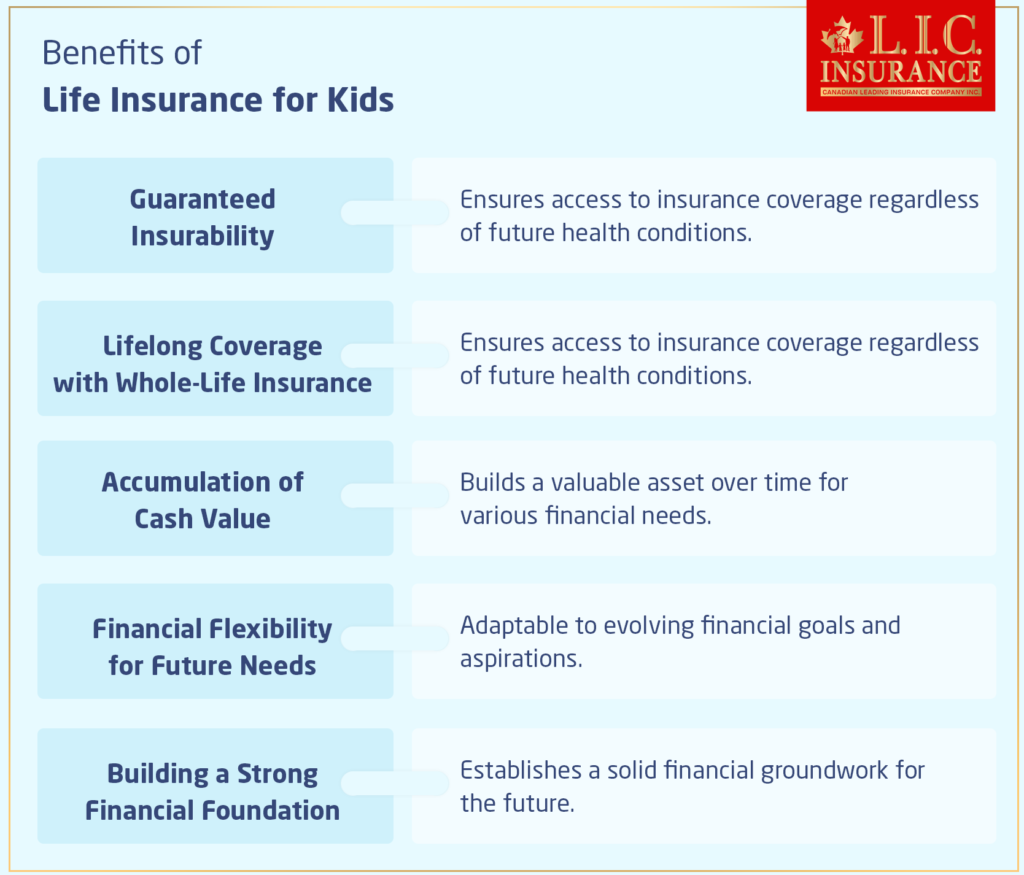
1. Guaranteed Insurability
One of the biggest benefits is guaranteed insurability. This means your child can keep their life insurance even if their health changes later. If you buy a policy when your child is healthy, it cannot be taken away if they develop a health problem.
Some policies even let your child buy more insurance as an adult, no matter their health. For example, if your child develops diabetes or another serious illness later, they may not qualify for new insurance as an adult. But with a child policy, they have coverage for life.
Non-obvious insight: Many adults are denied life insurance or pay much higher prices because of health problems that started in childhood. Early coverage protects against this risk.
2. Cash Value Growth
Whole life insurance for kids builds cash value over time. Cash value is like a small savings account inside the policy. Each time you pay your premium, a part goes into this account. The money grows slowly, and you can borrow or withdraw it later.
Here’s a simple example:
- A parent buys a $25,000 whole life policy for a newborn
- After 15 years, the policy may have $3,000 or more in cash value
- The child (or parent) can borrow this money for education or emergencies
This is not the same as a regular savings account, because the money grows slowly and you may pay a fee to access it. Still, it is a unique benefit.
Non-obvious insight: Cash value in a child’s policy grows tax-deferred, meaning you do not pay taxes on the growth unless you take money out.
3. Low Premiums For A Lifetime
Life insurance is cheapest when you are young and healthy. By starting a policy for a child, you lock in a very low premium forever. For example, a $50,000 policy for a newborn might cost $20 per month, while the same coverage for a 30-year-old could cost $50 per month or more.
This can save your child money in the long term, especially if they keep the coverage as an adult.
4. Financial Help For Final Expenses
It’s hard to think about, but sometimes children do pass away. Funeral costs can be high—often $7,000 to $10,000 or more in the US. Life insurance can help cover these costs, so families do not face a large bill during a difficult time.
5. Building A Financial Foundation
Some parents use life insurance as a way to start a child’s financial future. When the child becomes an adult, they can take over the policy. They now have life insurance, plus a cash value that can be used for major expenses like college, a wedding, or a down payment on a house.
Types Of Life Insurance For Kids
There are two main types of policies for children:
| Type | How It Works | Key Features |
|---|---|---|
| Whole Life Insurance | Covers the child for life if premiums are paid | Builds cash value, fixed premium, can be transferred to child |
| Term Life Rider | Added to a parent’s policy, covers child for a set time | Lower cost, no cash value, expires after a certain age |
Whole life is most common for kids. A term rider is an add-on to a parent’s policy that gives short-term coverage for all children in the family. It is cheaper but does not build cash value or last forever.
How Much Does Life Insurance For Kids Cost?
The cost depends on the child’s age, the type of policy, and the amount of coverage. Here is a simple comparison for a $25,000 whole life policy:
| Child’s Age | Monthly Premium | Guaranteed Cash Value at Age 18 |
|---|---|---|
| Newborn | $15 – $20 | $3,000 |
| 5 years | $20 – $25 | $2,000 |
| 10 years | $25 – $30 | $1,200 |
Premiums are lowest for newborns and rise as the child gets older. Cash value also grows more for policies started early.
Real-life Examples
Let’s look at two families who bought life insurance for their kids:
Example 1:
Maria buys a $50,000 whole life policy for her son, Alex, when he is 2 weeks old. She pays $22 per month. When Alex turns 21, the policy has grown to over $5,000 in cash value. Alex uses part of it to help pay for college.
Example 2:
James adds a child term rider to his own life insurance when his twins are born. He pays $50 per year for $10,000 of coverage for each twin until they turn 25. When his daughter is diagnosed with asthma at age 12, she can still be covered, and later convert her policy to permanent insurance, even with her health condition.
Pros And Cons
It’s important to look at both the good and bad sides.
Pros
- Guarantees insurability for the child, even with future health problems
- Builds cash value that can be used later
- Low, fixed premiums for life
- Helps pay for funeral costs if the worst happens
- Can be a gift for the child’s future
Cons
- Not always needed—most children do not have dependents
- Slow cash value growth compared to other savings options
- Better uses for money—some families may prefer a college savings plan or emergency fund
- Not a substitute for adult life insurance—children will still need their own coverage as adults
Common Mistakes To Avoid
Many parents buy child life insurance for the wrong reasons. Here are a few mistakes to watch out for:
- Thinking it’s a good investment: Life insurance is not meant to grow money quickly. Other tools, like 529 college savings plans, often have better returns.
- Buying too much coverage: Most experts recommend $10,000 to $50,000. Larger policies may not add much value.
- Not checking policy details: Some companies add extra fees, or the policy may not allow increases later.
- Forgetting to transfer ownership: When your child becomes an adult, make sure you change the policy owner to them.
When Does Life Insurance For Kids Make Sense?
Not every family needs this kind of policy. It can be a good choice if:
- Your family has a history of health problems, making future insurance hard to get
- You want to start a small financial gift for your child’s future
- You want to lock in low premiums for life
- You want peace of mind for funeral and other costs
But if your budget is tight, or you have other priorities, it may be better to focus on your own life insurance and savings first.
Life Insurance For Kids Vs. Other Savings Options
How does child life insurance compare to other ways to save for your child’s future? Here is a simple side-by-side look:
| Option | Main Benefit | Main Downside |
|---|---|---|
| Whole Life for Kids | Guaranteed coverage, cash value | Slow cash growth, fees |
| 529 College Plan | Tax-free growth for education | Must be used for school, investment risk |
| Savings Account | Easy to access, safe | Low interest, no insurance |
Most families use a mix of these tools. Life insurance can be one piece of the puzzle, but not the only answer.
How To Choose The Right Policy
If you decide to buy life insurance for your child, follow these steps:
- Compare companies: Look for a trusted insurer with strong ratings.
- Check fees and rules: Some policies have extra costs or limits.
- Pick the right amount: $10,000–$50,000 is enough for most families.
- Ask about riders: Some policies let you add benefits, like letting your child buy more insurance later.
- Read the fine print: Make sure you understand how cash value works, when you can take money out, and if premiums can rise.
A smart buyer takes their time and asks questions. If you’re not sure, talk to a financial advisor or insurance expert.

Frequently Asked Questions
Is Life Insurance For Kids A Good Investment?
Life insurance for children is not the best way to grow money. The cash value grows slowly, and there may be fees. It is mainly for insurance protection, not investing. For higher returns, consider a 529 college plan or a regular savings account.
Can I Buy Life Insurance For Any Child?
Usually, parents, grandparents, or legal guardians can buy life insurance for children under 18. The adult is the policy owner. Some companies allow coverage for children as young as 14 days old.
What Happens When My Child Turns 18 Or 21?
Most whole life policies stay in force for life. You can transfer ownership to your child when they become an adult. They will then control the policy and can use the cash value or keep the coverage.
Will My Child Need More Life Insurance As An Adult?
Yes. Child life insurance is a good start, but most adults need more coverage, especially if they have a family. The policy gives them a base, but they may need to buy more later.
Where Can I Learn More About Child Life Insurance?
For more details and unbiased advice, check the National Association of Insurance Commissioners (NAIC). They offer consumer guides and tips.
Thinking about life insurance for your child is a big step. It is not right for everyone, but it can offer peace of mind and a small financial head start. Before you decide, look at your family’s needs, your budget, and other ways to save.
The best choice is the one that helps your family feel secure and ready for the future.