
Life insurance can sound complicated, but it’s one of the most useful financial tools for protecting your loved ones. Many people wonder if life insurance is really necessary or what features matter most. If you’re thinking about buying a policy, understanding its important features is key to making a smart choice.
This guide breaks down the most important aspects in simple, friendly language, so you feel confident and informed.

Why Life Insurance Matters
Life is unpredictable. If something happens to you, a life insurance policy can provide money to your family. This payment, called the death benefit, helps cover things like funeral expenses, debts, or daily living costs. Without life insurance, your family might struggle financially.
But life insurance is more than just money after death. Some policies also help you save, invest, or plan for the future. That’s why it’s important to understand the key features before you choose a plan.
Types Of Life Insurance
Before looking at features, let’s quickly cover the main types. Knowing the difference will help you understand why certain features matter.
| Type | Main Feature | Who Should Consider |
|---|---|---|
| Term Life Insurance | Coverage for a set period (10, 20, or 30 years) | People wanting affordable protection for a specific time |
| Whole Life Insurance | Coverage for your entire life, plus a cash value | People wanting lifelong protection and savings |
| Universal Life Insurance | Flexible coverage and cash value | People wanting flexibility and investment options |
| Variable Life Insurance | Cash value invested in stocks and bonds | People comfortable with investment risk |
Most people start with term life insurance because it’s simple and affordable. But if you want coverage for your whole life or a way to save money, permanent types like whole or universal life may be better.
Key Features Of Life Insurance
Understanding the main features will help you compare different policies and choose the right one.
1. Death Benefit
This is the amount of money your beneficiary (like your spouse or children) receives if you die while the policy is active. It’s usually paid as a lump sum, tax-free. You can choose how much coverage you want, from $50,000 to several million dollars.
Why it matters: The death benefit should be enough to cover your family’s needs. Think about things like mortgage payments, education costs, debts, and everyday expenses.
Non-obvious tip: Some people buy too little coverage because it’s cheaper. But if your family depends on your income, don’t underinsure. Carefully calculate what they’d need for at least 5–10 years.
2. Premiums
The premium is the amount you pay (monthly or yearly) to keep your policy active. Premiums depend on your age, health, lifestyle, and the type and amount of coverage.
- Term life premiums are lower, especially if you’re young and healthy.
- Permanent life premiums are higher because they last your whole life and have a cash value.
Missing payments can cause your policy to lapse, so always choose a premium you can afford long term.
3. Policy Term
For term life insurance, the policy term is the length of time you’re covered—usually 10, 20, or 30 years. After that, the policy ends. You can renew, but the price will go up as you age.
Example: If you buy a 20-year term policy at age 30, you’re covered until age 50. If you want coverage after that, you’ll pay more.
Insight: Many people buy a term that matches their main financial responsibilities. For example, if you have a 20-year mortgage, you might pick a 20-year term.
4. Beneficiary Options
A beneficiary is the person (or people) who gets the death benefit. You can name one or more beneficiaries, like your spouse, children, or even a charity.
You can also choose:
- Primary beneficiary: Gets the payout first.
- Contingent beneficiary: Gets the money if the primary beneficiary can’t (for example, if they have passed away).
Non-obvious tip: Always update your beneficiaries after life changes (like marriage, divorce, or a new child). Outdated choices can cause legal problems or delays.
5. Cash Value (permanent Policies)
Some life insurance policies, like whole life or universal life, build up a cash value over time. This is a savings part of the policy you can borrow against, withdraw, or even use to pay premiums.
How it works:
- A portion of your premium goes into the cash value account.
- It grows over time, tax-deferred.
- You can access the money while you’re alive, but it may reduce the death benefit.
Example: After 10 years, you might have $10,000 in cash value. You could take a loan from this amount for emergencies.
Insight: Cash value is not “free money.” Loans must be repaid, or your beneficiaries get less. But it’s a helpful feature if you need cash later.
6. Riders And Add-ons
Riders are extra features you can add to your policy for more coverage or flexibility. They cost more, but can be valuable.
Some common riders:
- Accidental death rider: Pays more if you die in an accident.
- Waiver of premium rider: Stops your payments if you become disabled.
- Critical illness rider: Pays a benefit if you’re diagnosed with a serious illness.
- Child rider: Covers your children for a small extra fee.
Not all riders are available with every policy, and they may have special rules. Ask for details before adding them.
7. Policy Loans And Withdrawals
For policies with cash value, you can often borrow money against your account. This can be useful for emergencies, education costs, or other needs.
- Loans usually have low interest rates.
- If not repaid, the loan amount is subtracted from your death benefit.
You can also make withdrawals from your cash value (but this can lower your payout or end the policy).
Example: You have $20,000 in cash value and borrow $5,000. If you die with the loan unpaid, your family gets $5,000 less.
8. Surrender Value
If you decide to cancel a permanent life insurance policy, you may get some cash back, called the surrender value. This is the cash value minus any fees or loans.
- Surrendering early often means a low payout.
- Fees are highest in the first years of the policy.
Tip: Only surrender if you really need the cash, as you’ll lose coverage.
9. Guaranteed Vs Non-guaranteed Features
Some features are guaranteed (promised by the insurance company), while others can change.
- Guaranteed death benefit: Your beneficiaries always get a set amount.
- Non-guaranteed dividends or returns: Some policies may pay extra, but it’s not certain.
Always check what’s guaranteed and what’s not.
10. Underwriting And Medical Exams
Most life insurance requires underwriting—the process where the insurer checks your health, age, and lifestyle.
- You may need a medical exam (blood test, questions about health).
- Some policies, called “no-exam,” cost more but skip this step.
Insight: Being honest during underwriting is critical. Hiding health problems can lead to denied claims.
Comparing Key Features At A Glance
To help you visualize, here’s how term and whole life insurance features compare.
| Feature | Term Life | Whole Life |
|---|---|---|
| Death Benefit | Yes | Yes |
| Cash Value | No | Yes |
| Premiums | Lower | Higher |
| Coverage Length | Set term (10, 20, 30 years) | Lifelong |
| Policy Loans | No | Yes |
| Surrender Value | No | Yes |
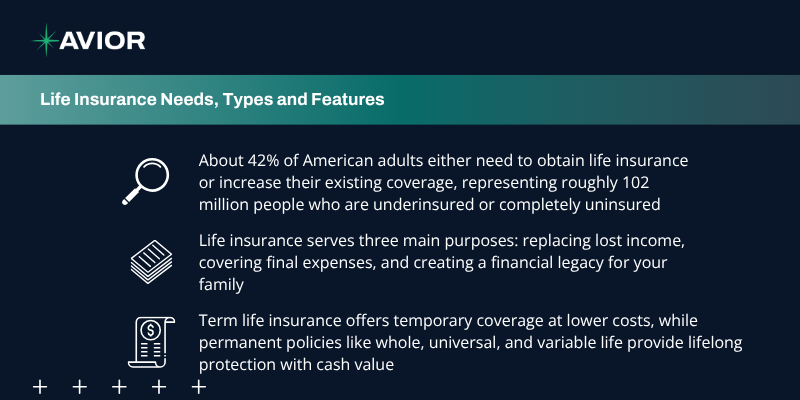
Credit: avior.com
Common Mistakes When Choosing Life Insurance
Many people get confused or make mistakes when picking a policy. Here are two big ones:
- Not reviewing coverage regularly: Your needs change with marriage, kids, or a new home. Update your policy as your life changes.
- Choosing based only on price: Cheap policies may not provide enough coverage or the features you need. Look at the full picture, not just the premium.
Another mistake is not naming a contingent beneficiary. If your primary beneficiary passes away before you, the payout could go to your estate and cause legal delays.
How To Choose The Right Life Insurance
Choosing a life insurance policy is personal. Here’s a simple approach:
- Decide how much coverage you need: Add up your debts, future expenses (like college), and income replacement.
- Pick the right type: Term is best for most families, while whole or universal life is better for lifelong needs or building savings.
- Check the company’s reputation: Choose a financially strong insurer with good customer reviews.
- Compare quotes: Get several offers and compare features, not just price.
- Ask about riders: Add only the features you need.
Pro tip: Use online calculators or speak to an independent agent for personalized advice.

Credit: sbnri.com
Real-world Example
Let’s look at a real scenario.
Maria is 35, married with two kids, and the family’s main income earner. She buys a 20-year, $500,000 term life policy. Her premium is $25 per month. This means:
- If she dies in the next 20 years, her family gets $500,000 to cover the mortgage, education, and living costs.
- If she outlives the policy, coverage ends, but she’s protected during the years her children depend on her most.
Maria could add a child rider for $5 more per month, which gives extra coverage if something happens to her children. If she wanted savings, she might look at whole life insurance, but the premium would be much higher.
How Life Insurance Supports Financial Planning
Life insurance is not just protection; it’s also a tool for smart financial planning. For example:
- Helps pay off debts: Your family won’t lose their home or car if you die.
- Funds education: The death benefit can support your children’s future.
- Business protection: If you own a business, life insurance can help partners or employees if something happens to you.
Some people use the cash value in permanent policies to boost retirement savings or cover emergencies. However, it’s important to remember that life insurance should not be your only savings plan.
For more detailed information about how life insurance can fit into your overall financial plan, check resources like the Investopedia Life Insurance Guide.

Credit: vidyasury.com
Frequently Asked Questions
What Happens If I Stop Paying My Life Insurance Premiums?
If you stop paying, your policy will lapse (end), and you’ll lose coverage. Some permanent policies use the cash value to cover missed payments, but this is temporary. Always contact your insurer if you have trouble paying.
Can I Change My Beneficiaries After Buying A Policy?
Yes, you can update your beneficiaries anytime. It’s important to review and update them after big life events like marriage, divorce, or a new child.
Is The Death Benefit From Life Insurance Taxable?
In most cases, the death benefit is paid to your beneficiaries tax-free. There are a few exceptions, like if the policy was part of a business or certain estate situations, so ask your agent for details.
Do I Need A Medical Exam To Get Life Insurance?
Most policies require a medical exam, but some “no-exam” policies are available. These usually cost more and may have lower coverage limits.
Can I Have More Than One Life Insurance Policy?
Yes, you can own multiple policies. Many people have a basic policy from work plus another personal policy for extra protection.
Life insurance brings peace of mind. By understanding the important features, you can choose a policy that’s right for you and your family. Take your time, ask questions, and don’t rush the decision—your loved ones deserve the best protection.