
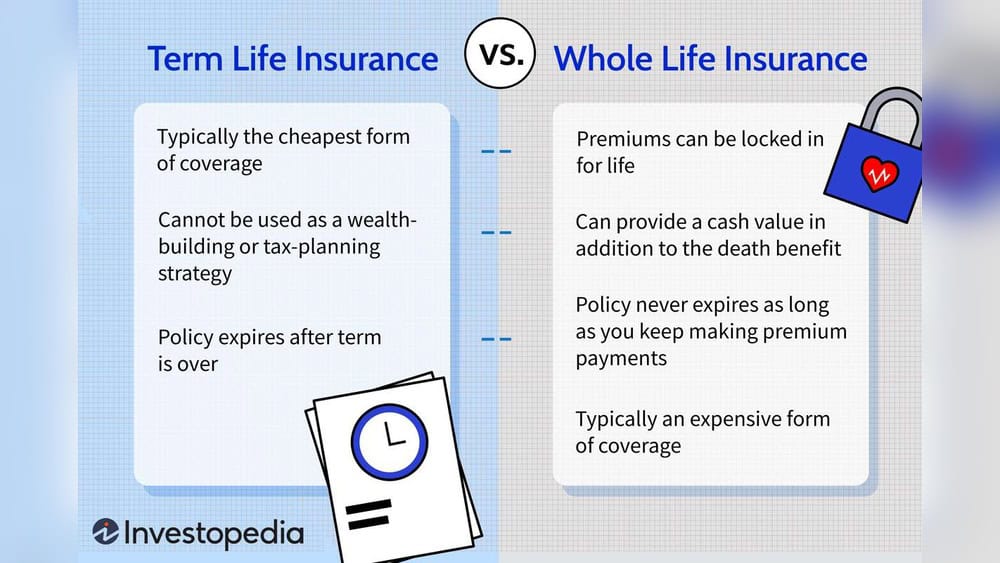
Life insurance is often confusing, especially when deciding between a whole life insurance policy and a term life insurance policy. These two types of coverage are very different in cost, features, and long-term value. If you want financial protection for your family, understanding these differences is vital. Many people make quick decisions, but the right choice can save you money and help you reach your financial goals.
What Is Whole Life Insurance?
Whole life insurance is a type of permanent life insurance. It gives you coverage for your entire life as long as you pay the premiums. This policy has two main parts: the death benefit and the cash value.

- Death Benefit: This is the money paid to your loved ones when you die.
- Cash Value: A part of your premium goes into a savings account. This cash value grows over time and you can borrow against it.
The policy never expires as long as you keep paying. The premium stays the same for life, so you won’t pay more as you get older. The cash value grows slowly, usually at a fixed rate.
What Is Term Life Insurance?
Term life insurance covers you for a set period—usually 10, 20, or 30 years. If you die during this term, your family receives the death benefit. If you live past the term, the coverage ends and there is no payout.
Term life is much simpler than whole life. It does not build cash value. The main aim is to provide high coverage at a low cost, especially when you have financial responsibilities, such as young children or a mortgage.
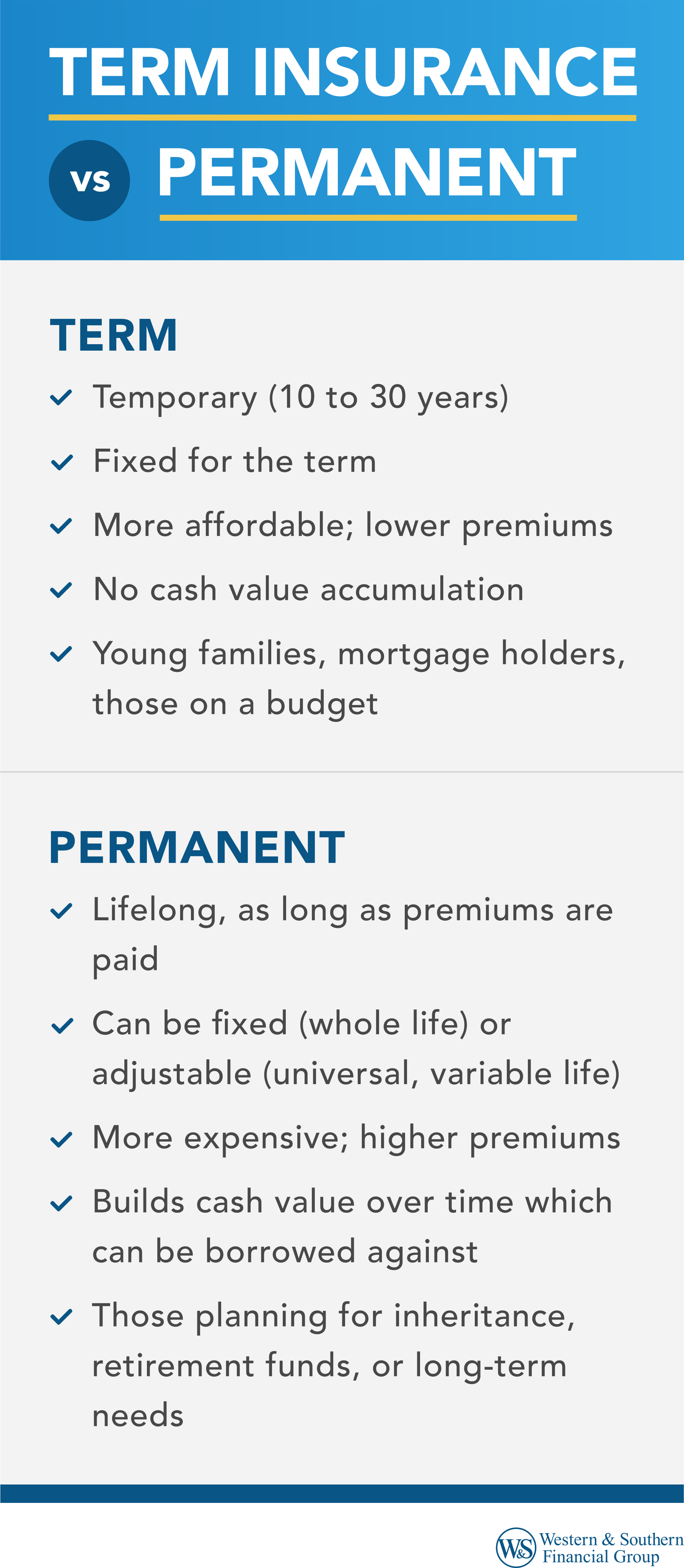
Key Differences Between Whole Life And Term Life
Understanding the main differences helps you decide which fits your needs best. The following table highlights the most important features:
| Feature | Whole Life Insurance | Term Life Insurance |
|---|---|---|
| Duration | Lifetime | 10–30 years |
| Premiums | Fixed, higher | Fixed, lower |
| Cash Value | Yes | No |
| Death Benefit | Guaranteed | Only if you die during term |
| Policy Loans | Available | Not available |
Cost Comparison
One of the biggest differences is the cost. Whole life insurance can cost five to ten times more than term life for the same amount of coverage. This is mainly because it never expires and builds cash value.
For example, a healthy 30-year-old male might pay:
| Policy Type | Coverage | Monthly Cost |
|---|---|---|
| Term Life (20 years) | $500,000 | $25–$35 |
| Whole Life | $500,000 | $300–$400 |
This big price gap is why many young families choose term life. You get more coverage for less money, which helps when budgets are tight.
Cash Value: A Key Feature Of Whole Life
Whole life insurance includes a cash value feature. This savings component grows over time and can be used in several ways:
- Borrowing: You can borrow money from your policy at a low interest rate. But if you don’t pay it back, your death benefit will decrease.
- Withdrawals: You may withdraw part of the cash value, but this can reduce the payout to your family.
- Surrender: If you end the policy early, you receive the cash value minus fees.
However, many people never use the cash value. It grows slowly, and the main benefit is the lifelong coverage.
When Does Term Life Make Sense?
Term life insurance is a smart choice for most people who:
- Need coverage for a specific period (like until kids finish college)
- Want the most coverage for the lowest price
- Do not need a savings or investment component
It is also easy to buy and understand. You pick the term and coverage amount, pay your premium, and are covered. If your needs change, you can often convert some term policies to permanent ones later.
When Is Whole Life A Better Fit?
Whole life insurance might be the right choice if you:
- Want lifelong coverage, no matter your age or health later
- Need to leave money for estate taxes or inheritance
- Like the idea of building cash value for emergencies
Some people use whole life as part of their long-term financial plan. For example, business owners may use it for succession planning or to fund a buy-sell agreement.
Common Mistakes When Choosing Life Insurance
Many people focus only on price. But there are other mistakes to avoid:
- Buying too much coverage: Paying for more insurance than you need can strain your budget.
- Choosing the wrong term: Picking a term that is too short can leave your family unprotected.
- Ignoring future needs: Not considering how your needs will change can lead to gaps in coverage.
- Thinking whole life is an investment: While cash value grows, it is not the same as investing in stocks or mutual funds.
- Forgetting to review your policy: Life changes—marriage, children, or a new job—should lead you to review your coverage.

Real-world Example
A 35-year-old mother, Sarah, wants to protect her family. She buys a 20-year term life policy for $500,000. The monthly cost is only $30. This covers her until her kids are grown. If she had chosen whole life, she would pay $350 a month for the same coverage.
But instead, she saves the difference in a retirement account.
Quick Reference: Pros And Cons
| Policy Type | Pros | Cons |
|---|---|---|
| Whole Life | – Lifelong coverage – Builds cash value – Fixed premiums |
– High cost – Complex – Cash value grows slowly |
| Term Life | – Affordable – Simple – High coverage for less |
– Expires – No cash value – Renewal costs rise with age |
Which Should You Choose?
If you want simple, low-cost protection for your family, term life insurance is often best. If you want lifelong coverage and like the idea of building savings, whole life insurance may suit you. Many financial advisors suggest buying term and investing the savings elsewhere, as this gives you more control and potential growth.
One non-obvious insight: Even though whole life builds cash value, fees and commissions can eat into your returns. Another thing beginners miss is that term life policies can sometimes be converted to whole life later—without a medical exam—if your needs change.
For more details and sample rates, check the National Association of Insurance Commissioners.
Frequently Asked Questions
What Happens If I Outlive My Term Life Policy?
When your term ends, coverage stops. You can renew or buy a new policy, but the cost will be much higher because you are older.
Can I Cash Out My Term Life Insurance?
No. Term life has no cash value. If you cancel or outlive the policy, there is no payout.
Is Whole Life Insurance A Good Investment?
Whole life is mainly for protection, not for high investment returns. The cash value grows slowly and fees are high compared to other investments.
Can I Switch From Term To Whole Life Insurance?
Some term policies allow you to convert to whole life without a medical exam. Check your policy’s rules before you buy.
What Is The Main Reason People Choose Term Over Whole Life?
Affordability. Term life gives high coverage for a much lower price, making it the most popular choice for families with limited budgets.
