
Buying life insurance is one of the most important financial decisions you can make for your family’s future. Among the many options available, term life insurance is often the simplest and most affordable choice. But what makes term life insurance stand out? Understanding its key features will help you decide if it’s the right coverage for your needs, and prevent costly mistakes down the road.
What Is Term Life Insurance?
Term life insurance is a type of life insurance that provides coverage for a set period, or “term,” usually 10, 20, or 30 years. If the insured person dies during the term, the policy pays a death benefit to their chosen beneficiaries. If the term ends and the person is still alive, the coverage simply stops—there’s no payout or cash value.

People often choose term life insurance because it’s straightforward, with no investment or savings component. This makes it a popular choice for people who want to protect their families from financial hardship if something unexpected happens.
Main Features Of Term Life Insurance
Term life insurance has several key characteristics that set it apart from other types of life insurance. Here’s what you need to know:
1. Fixed Coverage Period
You choose how long the policy will last when you buy it. Common options are:
- 10 years
- 20 years
- 30 years
Some insurers offer terms as short as 5 years or as long as 40 years. The coverage period should match the time you expect your family to need financial protection—like until your children are adults or your mortgage is paid off.
2. Level Premiums
Most term life policies offer level premiums, which means your payments stay the same throughout the term. This helps you plan your budget without worrying about rising costs each year.
However, some policies may have annual renewable premiums, where the cost increases as you get older. These are less common and often become expensive over time.
3. Guaranteed Death Benefit
If you pass away during the term, your beneficiaries receive the full death benefit tax-free. This is a lump sum, and your loved ones can use it however they need—paying off debts, covering living expenses, or funding education.
4. No Cash Value
Unlike whole life or universal life insurance, term life has no cash value. You cannot borrow against it, withdraw funds, or receive a payout if you outlive the policy. Its only value is the protection it provides during the term.
5. Convertibility
Many term policies let you convert to a permanent life insurance policy (like whole or universal life) without a medical exam, usually before a certain age or time limit. This can be useful if your needs change or you develop health issues that make new coverage expensive or hard to get.
6. Simplicity
There are no investment decisions, savings components, or complicated terms. You just pay your premium for the chosen term, and your loved ones get a payout if you die during that time.
7. Affordability
Term life is usually much cheaper than permanent life insurance for the same amount of coverage. This makes it accessible for young families, people with limited budgets, or anyone who wants maximum protection at the lowest cost.
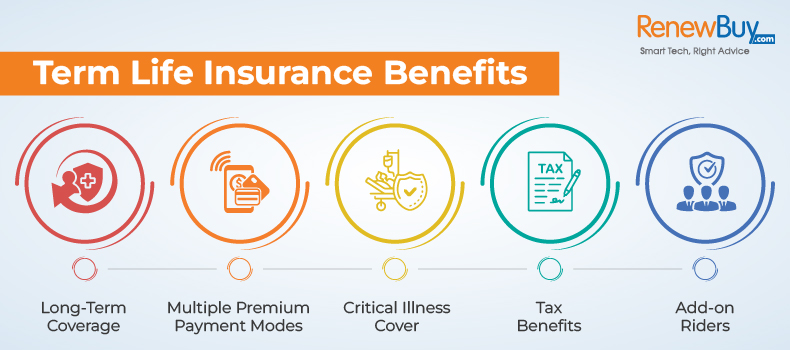
8. Customizable Riders
You can often add optional benefits, called riders, to your policy for extra coverage. Examples include:
- Accidental death rider: Extra payout for death from an accident
- Waiver of premium: Keeps your policy active if you become disabled and can’t pay premiums
- Child term rider: Covers your children under your policy
Adding riders will increase your premium, but may offer valuable protection.
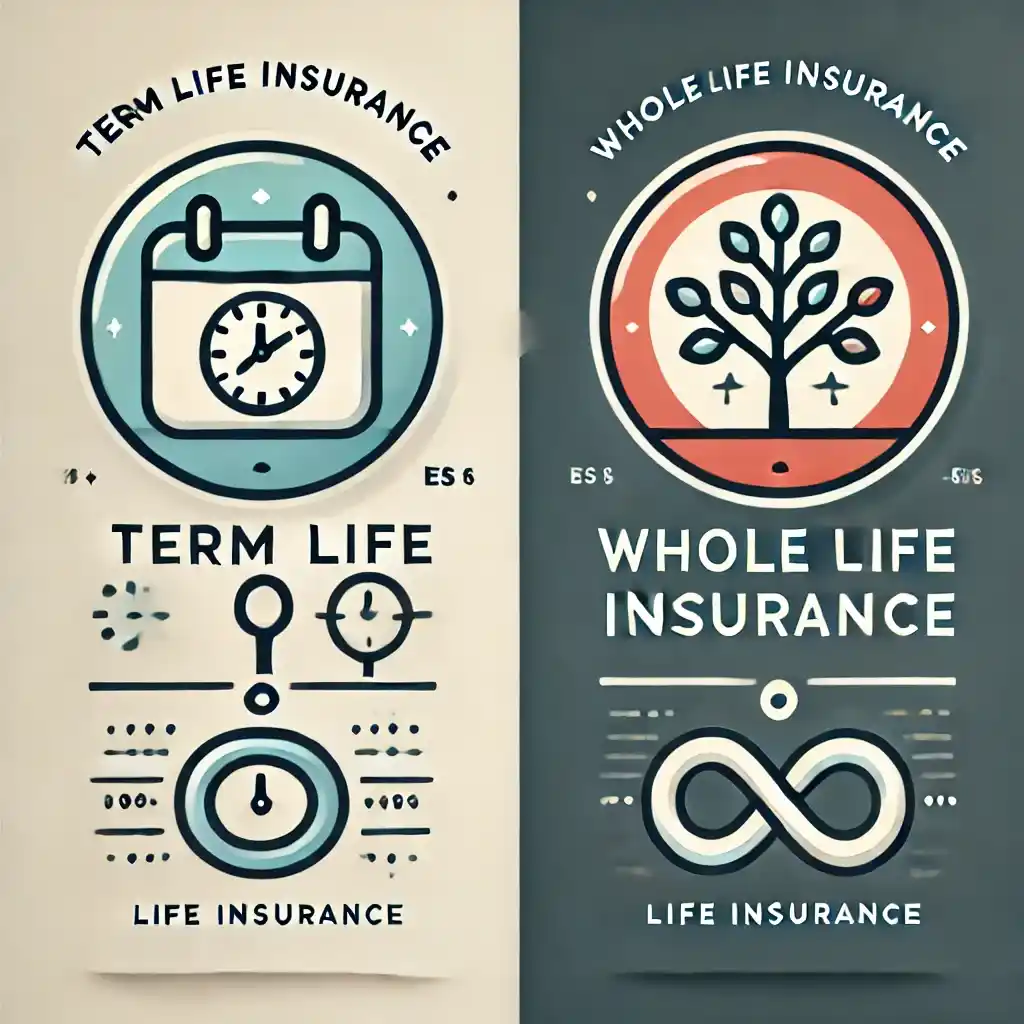
How Term Life Insurance Compares To Other Types
Choosing the right life insurance means knowing how term life measures up against other types. Here’s a simple breakdown:
| Feature | Term Life | Whole Life | Universal Life |
|---|---|---|---|
| Coverage Duration | Fixed term (10-30 years) | Lifetime | Lifetime (flexible) |
| Premiums | Usually level | Level | Flexible |
| Death Benefit | Guaranteed (if within term) | Guaranteed | Guaranteed |
| Cash Value | None | Yes | Yes |
| Cost | Lowest | High | Medium to High |
As you can see, term life focuses on pure protection at a low price, while permanent policies add cash value and higher costs.
Who Needs Term Life Insurance?
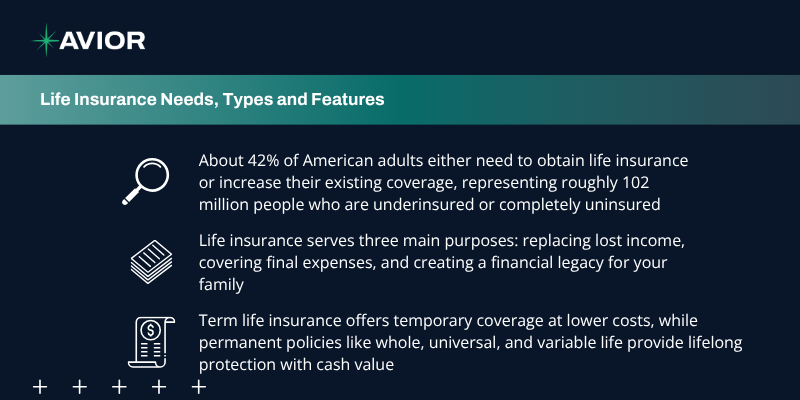
Term life insurance is a smart choice for anyone who needs affordable coverage for a limited time. Common reasons to buy term life include:
- Parents who want to protect children until they are financially independent
- People with mortgages or large debts that would burden their families
- Business owners who want to cover loans or key employees
- Anyone who needs a large amount of coverage for a lower price
If you only need life insurance for a set period—like until your kids finish college or your debts are paid—term life is usually the best fit.
How Much Coverage Should You Buy?
Choosing the right coverage amount is just as important as picking the right policy. Here are some tips:
- Multiply your annual income by 10 to 15. This gives your family time to adjust financially.
- Add up all debts (like mortgage, car loans, credit cards) and future expenses (college tuition, funeral costs).
- Subtract savings, existing life insurance, and assets your family could use.
Most families need at least $250,000 to $1,000,000 in term life coverage, but the exact amount depends on your situation.
Cost Factors: What Affects Your Premium?
Not everyone pays the same price for term life insurance. Insurers set your premium based on several factors:
| Factor | How It Affects Cost |
|---|---|
| Age | Younger people pay less |
| Health | Better health = lower premiums |
| Coverage Amount | More coverage = higher cost |
| Term Length | Longer terms cost more |
| Smoking Status | Smokers pay much more |
| Gender | Women often pay less |
| Occupation & Hobbies | Risky jobs/hobbies raise rates |
A healthy 30-year-old non-smoker might pay as little as $20/month for $500,000 of coverage for 20 years. But a 50-year-old smoker could pay over $150/month for the same policy.
Tip: Buy coverage when you’re young and healthy to lock in lower rates.
Common Mistakes When Buying Term Life Insurance
Even though term life insurance is simple, many people make the same errors:
- Choosing too short a term: If your policy ends before your financial needs do, you may not be covered when your family needs it most.
- Buying too little coverage: Underestimating your family’s expenses could leave them struggling.
- Ignoring convertibility: If you might need lifelong coverage, pick a policy with a conversion option.
- Not shopping around: Prices vary widely between companies—get quotes from multiple insurers.
- Skipping the medical exam: “No-exam” policies are convenient but often cost more for less coverage.
- Forgetting to review your policy: Update coverage as your life changes—marriage, kids, new home, etc.
Non-obvious Insights About Term Life Insurance
Most people know the basics, but here are some valuable details you might miss:
- Renewal isn’t always guaranteed. Some term policies offer guaranteed renewal, but the new premium can skyrocket. Always check if your policy is renewable and what the rates could be.
- Return of Premium (ROP) options exist. Some term policies refund your premiums if you outlive the term. These cost more and may not be worth it unless you’re very risk-averse.
- Laddering strategies can save money. Instead of one big policy, you can buy several smaller policies with different terms. This matches your coverage to your changing needs and can lower overall costs.
- Employer-provided term life isn’t always enough. Many jobs include a small life insurance benefit, but it often covers only one or two years of salary. This usually isn’t enough for most families.
- The claims process is usually fast and straightforward. Because term life is simple, beneficiaries often receive the payout within weeks, sometimes even days, after submitting a claim.
Real-world Example
Imagine a couple, John and Maria, both in their early 30s with two small children and a $250,000 mortgage. They choose a 20-year term life policy for $500,000 each. Their premiums are affordable ($25/month for John, $22/month for Maria). If either parent dies, the surviving spouse can pay off the mortgage and provide for the kids’ education.
If they outlive the term, they’ll have fewer financial obligations and may not need life insurance anymore.
How To Choose The Best Term Life Policy
Here are some practical steps:
- Decide how long you need coverage (until your kids are grown, your debts are gone, or you reach retirement).
- Calculate the right amount of coverage based on your family’s needs.
- Compare quotes from multiple top-rated insurers.
- Check for useful riders and conversion options.
- Review the insurer’s claims history and financial strength (look for ratings from A.M. Best, Moody’s, or Standard & Poor’s).
- Read the fine print—especially rules about renewal, conversion, and exclusions.
For more details on reputable insurance companies and their financial strength, visit National Association of Insurance Commissioners.
Frequently Asked Questions
What Happens If I Outlive My Term Life Insurance Policy?
If you outlive the policy, coverage ends, and there is no payout. Some policies allow you to renew or convert to permanent insurance, but your premium will likely increase.
Is Term Life Insurance Taxable?
The death benefit from term life insurance is usually tax-free for beneficiaries. However, if the policy is part of your estate, different tax rules may apply.
Can I Have More Than One Term Life Insurance Policy?
Yes, you can own multiple term life policies, as long as the total amount is justified by your financial situation and approved by the insurer.
How Do I Make Sure My Beneficiaries Receive The Payout?
Make sure your beneficiary designations are up to date and that someone knows about the policy. Beneficiaries must file a claim and provide a death certificate to receive the payout.
What If I Develop Health Problems After Buying Term Life Insurance?
Your coverage and premium won’t change if you develop health issues after buying the policy. That’s why it’s smart to buy term life insurance when you’re young and healthy.
Securing your family’s future doesn’t have to be complicated. Understanding the features of term life insurance helps you make a confident decision, so you can focus on what matters most—protecting the people you love.