
Getting life insurance is one of the most important steps you can take to protect your family. But today, many people wonder if they should get life insurance through work or buy a separate policy. If you’re new to this topic, it can feel confusing. Let’s break it down simply, so you can make a smart decision.
What Is Life Insurance Through Work?
When you work for a company, sometimes they offer group life insurance. This means your company buys one big policy for many employees, and you get coverage as part of your benefits. Usually, it’s called employer-sponsored life insurance. Most often, you pay nothing for basic coverage, or just a small amount from your paycheck.

How does it work? If you pass away while employed, your family gets a cash payment (called a death benefit). This helps them pay bills, funeral costs, or replace your lost income.
Pros Of Getting Life Insurance Through Work
Choosing life insurance through your job has some clear advantages. Here are the main benefits:
- Easy to get: You don’t need a medical exam or a long application. Just sign up during your company’s enrollment period.
- Automatic coverage: Many employers give basic coverage for free. You’re protected as soon as you start working.
- Affordable extra coverage: You can often buy more coverage at low group rates, which are usually cheaper than buying on your own.
- Payroll deduction: If you pay for extra insurance, the cost is taken out of your paycheck, so it’s simple to manage.
- No health questions: Even if you have health problems, you can still get covered.
Cons Of Getting Life Insurance Through Work
While employer life insurance is convenient, it has some downsides you should know:
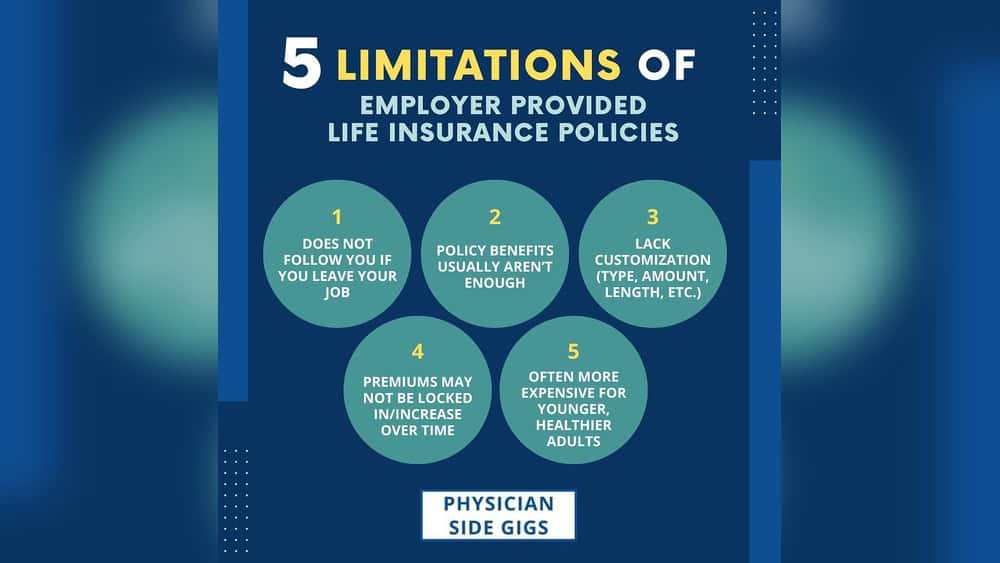
- Limited coverage: Most basic plans only cover 1x or 2x your yearly salary. For example, if you earn $40,000, your coverage might be $40,000 or $80,000. This is often not enough for a family.
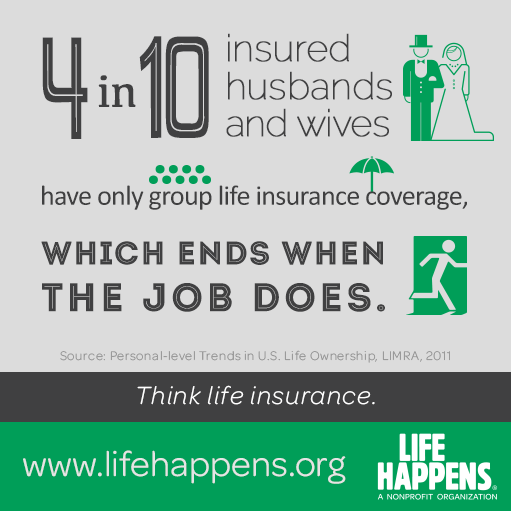
- You lose it if you leave: If you quit your job, get laid off, or retire, your coverage usually ends. Some plans let you convert to a private policy, but that can cost much more.
- Little control: You can’t choose the insurance company or customize the plan.
- Not portable: If you change jobs, you must start over with a new employer’s plan.
- No cash value: Unlike some private policies, employer life insurance doesn’t build savings or investment value.
How Much Life Insurance Do You Need?
Most experts suggest having enough life insurance to cover 10-15 times your annual income. For example, if you earn $50,000, you may need $500,000 to $750,000 in coverage.
Why so much? Think about these costs:
- Mortgage or rent
- Child care and education
- Everyday bills
- Funeral expenses
- Any debts
Employer plans often fall short. Basic coverage might only be $50,000 or $100,000. If your family depends on your income, this won’t last long.
Comparing Employer Life Insurance Vs. Private Policies
Let’s look at how work life insurance stacks up against buying your own policy.
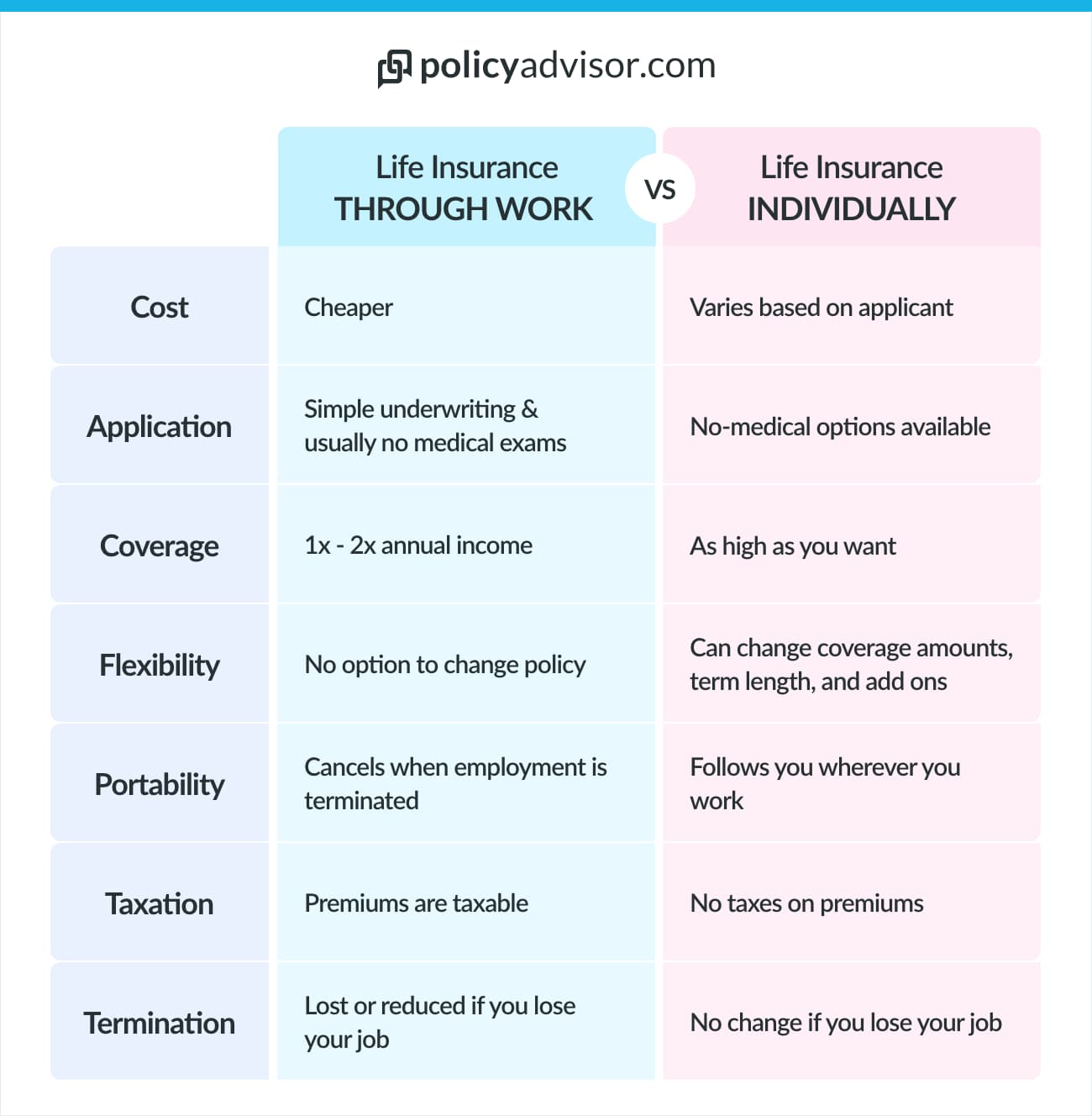
| Feature | Employer Life Insurance | Private Life Insurance |
|---|---|---|
| Cost | Usually free or low-cost | Depends on age, health, amount |
| Coverage Amount | Limited (often 1-2x salary) | Flexible (you choose amount) |
| Portability | Ends if you leave job | Stays with you anywhere |
| Health Requirements | No medical exam | May require health check |
| Customization | Minimal | Many options |
Real-life Example: A Beginner’s Story
Let’s take Sarah. She works for a company offering life insurance equal to her $40,000 salary. Sarah has two kids and a mortgage. If she dies, her family gets $40,000. That may cover funeral costs and a few months of bills, but not much more.
Sarah checks private policies. For less than $30 per month, she can buy a $500,000 policy. This would cover her mortgage, help her kids with college, and give her family breathing room.
Sarah decides to keep her work policy but also buys a private plan for full protection.
How To Decide What’s Right For You
Choosing between work life insurance and a private policy comes down to your needs. Here’s how to decide:
Step 1: Check Your Work Coverage
- Ask your HR department how much coverage you have.
- Find out if you can buy extra coverage, and at what price.
- Ask if you can take the insurance with you if you leave.
Step 2: Calculate Your Family’s Needs
- Add up your debts, mortgage, and living costs.
- Think about how many years your family will need support.
- Include future costs like college for kids.
Step 3: Compare Options
- Get quotes from private insurance companies.
- Compare monthly costs and coverage amounts.
- Consider your health; if you have problems, work insurance may be easier.
Step 4: Consider Both
Many people choose to keep work life insurance and buy extra coverage privately. This way, you have a backup and more protection.
Common Mistakes Beginners Make
- Relying only on work insurance: Many people trust their employer policy without checking if it’s enough. This can leave families under-protected.
- Ignoring portability: Not realizing coverage ends when you leave your job. You could be left with no insurance.
- Not reviewing coverage: As your life changes (marriage, kids, home), your needs grow. Review your insurance every year.
- Missing conversion options: Some plans allow you to convert to a private policy, but you must act fast after leaving.
- Assuming it’s always free: Some extra coverage costs more than you think. Compare prices carefully.
Important Data And Statistics
- According to the Life Insurance Marketing and Research Association (LIMRA), over 54% of Americans have life insurance through work.
- The average employer policy covers only $50,000.
- Nearly 40% of families say they would feel financial stress within one month of losing the main wage earner.
- Only about 1 in 3 workers can keep their insurance if they leave their job.
What Happens If You Leave Your Job?
If you quit, retire, or get fired, your employer policy usually stops. Some companies offer conversion—you can switch to a private policy, but costs may jump.
Here’s a quick look at what happens:
| Situation | Coverage Status | Action Needed |
|---|---|---|
| Quit/Retire | Coverage ends | Buy private policy or convert |
| Laid off | Coverage ends | Buy private policy or convert |
| Still employed | Coverage stays | No action |
| Job change | New coverage may start | Check new employer plan |
Practical Tips For Beginners
- Review your coverage every year, or after big life changes.
- Don’t wait until you’re sick or older; prices go up and options go down.
- If you don’t understand a policy, ask your HR or a licensed insurance agent.
- Keep both employer and private coverage if possible.
- Understand that life insurance through work is a good start, but may not be enough.
A hidden insight: Employer life insurance sometimes covers only accidental death. Double-check your policy to see if it covers all causes, not just accidents.
Another tip: If you have serious health issues, employer life insurance may be the only way to get coverage—because it skips health checks.
How To Buy Private Life Insurance
If you decide to buy more coverage, here’s what to do:
- Shop around. Get quotes from at least three companies.
- Choose term life insurance if you want simple, cheap coverage. It covers you for a set number of years.
- Consider whole life insurance if you want lifelong coverage and some savings built in.
- Fill out an application. You may need a health exam.
- Review the policy carefully before you sign.
For more details on types of life insurance, you can visit Wikipedia.

Can You Trust Employer Life Insurance?
Employer life insurance is offered by big, trusted companies. It’s safe, but only as reliable as your job. If your company cuts benefits or goes out of business, your coverage can disappear. Private policies are more stable because you own them, no matter where you work.
Key Takeaways
- Life insurance through work is an easy and cheap way to start protecting your family.
- Coverage is often too low for most people’s needs.
- You lose it if you leave your job.
- Combining employer and private life insurance is a smart move for most families.
- Check your policy details, coverage amount, and portability before making a decision.
Frequently Asked Questions
What Happens To My Life Insurance If I Leave My Job?
Usually, your coverage stops when your employment ends. Some companies offer a conversion option, but it can be expensive. Always check your policy and plan ahead before leaving.
Is Employer Life Insurance Enough For My Family?
For most people, employer life insurance is not enough. It covers only 1-2 times your salary. Families often need 10-15 times their income to stay protected.
Can I Buy Extra Coverage Through My Work?
Yes, many employers let you buy more coverage, called supplemental life insurance. You pay for this from your paycheck, but coverage limits may still be lower than private policies.
Do I Need A Health Exam For Work Life Insurance?
Usually, no. Employer plans cover all employees without health checks. This is helpful for people with medical issues who might not qualify for private insurance.
Should I Get Both Work And Private Life Insurance?
Yes, having both gives you more protection and flexibility. If you lose your job, you still have private coverage. This is the safest choice for most families.
Making the right choice about life insurance through work can mean peace of mind for you and your family. Take the time to review your options and get the coverage you truly need. Remember, protecting your loved ones is always worth the effort.