
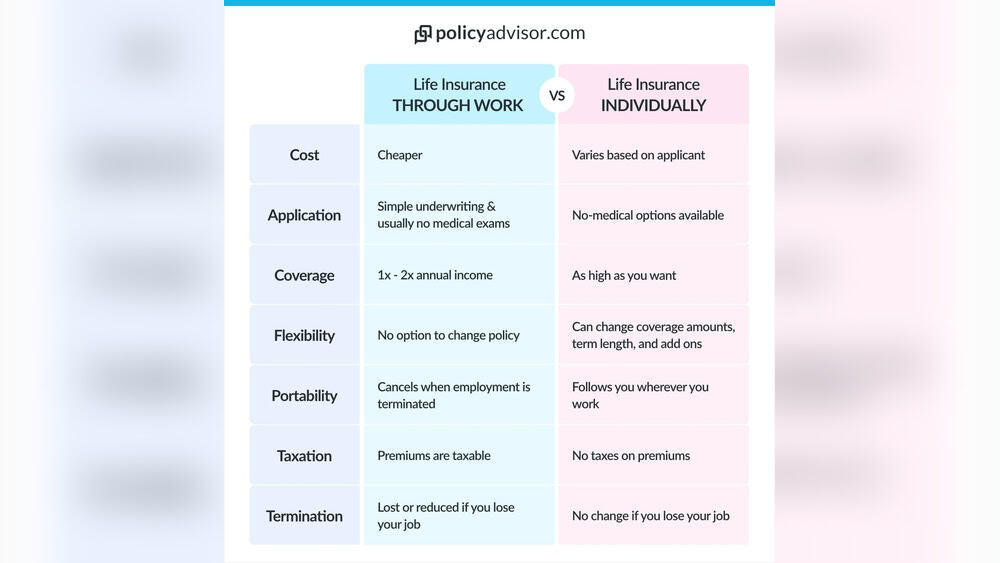
Choosing between life insurance through work or buying a private policy can feel confusing. Many people get basic life insurance from their employer and wonder if it’s enough. Others hear that private life insurance is more flexible but costs more. Which one is right for you? This article explains both options, compares the benefits and risks, and helps you decide which fits your situation best. If you want to protect your loved ones and make a smart choice, keep reading—this guide will clear up the most common doubts and give you the facts you need.
Understanding Life Insurance Through Work
Employer-provided life insurance is called group life insurance. It’s a common benefit, especially with full-time jobs. Here’s how it usually works:

- Your employer signs up for a policy that covers all employees.
- You’re automatically enrolled, or you can join during open enrollment.
- Premiums are often fully or partly paid by the employer.
The biggest advantage is convenience. You don’t need a medical exam, and you get coverage as long as you work there. Most group policies offer a death benefit equal to one or two times your annual salary. For example, if you earn $50,000 per year, your coverage might be $50,000 to $100,000.
But there are limits:
- Coverage may end if you leave your job.
- Payouts are usually much lower than private policies.
- You can’t customize much—everyone gets similar coverage.
What Is Private Life Insurance?
A private life insurance policy is something you buy directly from an insurance company. You choose the amount, type (term or whole life), and the length of coverage. There are two main types:
- Term life insurance: Covers you for a set period (like 10, 20, or 30 years). If you die during that time, your family gets paid.
- Whole life insurance (or permanent): Covers you for your entire life and may build cash value.
Private life insurance gives you more control. You can pick a higher payout, add riders (like child or disability coverage), and keep the policy even if you change jobs or retire.
Comparing Costs: Work Vs. Private Life Insurance
It’s important to see how much each type actually costs and what you get.
| Feature | Work Life Insurance | Private Life Insurance |
|---|---|---|
| Monthly Premium | Often free or low cost | Higher, depends on age/health |
| Coverage Amount | 1–2x salary | $100,000 up to several million |
| Medical Exam | Usually not needed | Often required |
| Stays After You Leave? | No | Yes |
| Custom Options | Very limited | Many |
Most people get work life insurance for free or at a low price, but the coverage is basic. Private policies cost more, but you can get much higher coverage and keep it for life.
Coverage Amounts: Are You Getting Enough?
A key question is: How much life insurance do you need? Experts often suggest 7–10 times your annual salary, especially if you have dependents, a mortgage, or debts.
Let’s look at a common example:
- Jane earns $60,000 per year. Her employer provides $60,000 in life insurance.
- Jane has two kids, a mortgage, and wants to replace her income for her family for at least 10 years.
In this case, $60,000 isn’t enough. Jane may need $600,000 or more. Relying only on work life insurance leaves her family underprotected.

The Pros And Cons Of Each Option
Both work-based and private life insurance have clear strengths and weaknesses. This quick comparison helps you see the trade-offs.
| Factor | Work Life Insurance | Private Life Insurance |
|---|---|---|
| Easy to Get | Yes | No (application process) |
| Low Cost | Yes | No (but can be affordable for young/healthy people) |
| Portable | No | Yes |
| Customizable | No | Yes |
| Stays with You | No | Yes |
When Is Work Life Insurance Enough?
For some, the coverage from work is all they need:
- Single people with no dependents may be fine with a basic work policy.
- If you have no debts and no one relies on your income, the employer plan might be sufficient.
- Some jobs offer higher group coverage, or let you buy more (at a group rate).
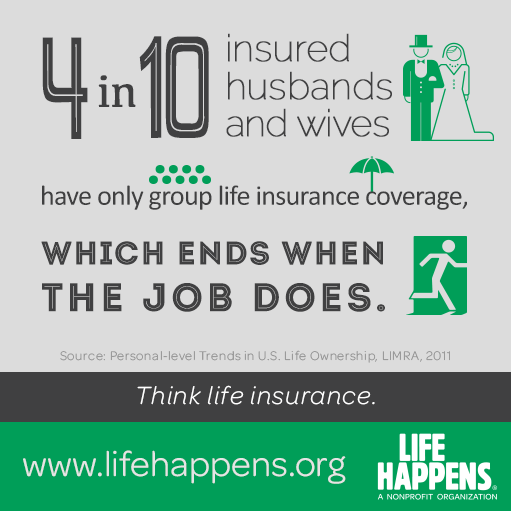
However, keep in mind that if you change jobs, retire, or get laid off, your coverage often ends or becomes expensive to keep.
When Should You Consider Private Life Insurance?
You should strongly consider a private policy if:
- You have children, a spouse, or aging parents who depend on your income.
- You have a mortgage or other large debts.
- You want to lock in a low rate while you’re young and healthy.
- You change jobs often or work in the gig economy.
- You want to leave an inheritance or cover estate taxes.
Private life insurance lets you control the policy terms. For example, you can choose a 30-year term to cover your family until your kids are grown.
Can You Have Both Types?
Yes! In fact, many financial advisors recommend using both work and private life insurance for layered protection. Here’s why:
- Your employer plan covers you for free or cheap, so it’s smart to keep it.
- A private policy fills the gap if you need more coverage.
- If you lose your job, your family is still protected by your private policy.
A common mistake is assuming the group plan is enough and not buying private coverage early. If your health changes later, getting a private policy may become expensive or impossible.
Common Myths About Life Insurance
Some people avoid private life insurance because of misunderstandings. Let’s clear up a few:
- “I’m young and healthy; I don’t need it.”
You can lock in a much lower rate now than later in life.
- “My work policy is enough.”
Most group policies only cover 1–2x your salary, not enough for most families.
- “Private life insurance is too expensive.”
Term life can be affordable, especially for young nonsmokers. For example, a healthy 30-year-old can often get $500,000 of term life coverage for $20–$30 per month.
- “I can’t get coverage with my health problems.”
Some private insurers offer no-exam or guaranteed issue policies, but they cost more.
How To Decide: Key Questions To Ask Yourself
To find out what’s best for you, ask yourself these questions:
1. Who Depends On My Income?
If anyone does, work coverage alone probably isn’t enough.
2. How Much Debt Do I Have?
Enough coverage should clear your debts and help your family with living costs.
3. Will I Stay With My Employer For Many Years?
If not, you need portable coverage.
4. Can I Afford Private Premiums?
Get quotes; you might be surprised how affordable term life can be.
- Do I want to lock in coverage while I’m healthy?
Private policies get more expensive as you age or if you develop health issues.
Hidden Details Many People Miss
Here are a few points that are often overlooked:
- Conversion options: Some group plans let you convert to an individual policy if you leave, but the rates are often much higher and may not be competitive. Always check the conversion terms before relying on this feature.
- Tax issues: Death benefits from both group and private life insurance are usually tax-free for your beneficiaries. However, if your employer pays for coverage over $50,000, the IRS may count the extra value as taxable income. This can affect your take-home pay.
- Policy exclusions: Both types may have exclusions (for example, suicide in the first two years, or death during illegal activities). Always read the fine print.
Steps To Get The Right Coverage
Follow these steps to make a smart life insurance decision:
1. Estimate Your Coverage Needs.
Add up your debts, income replacement, and future expenses (like college for kids).
2. Check Your Work Policy.
Find out how much coverage you have and if you can buy extra at a group rate.
3. Get Quotes For Private Policies.
Compare term and whole life options from several insurers. Use online calculators to see real prices.
4. Apply While You’re Healthy.
The younger and healthier you are, the lower your premiums.
5. Review Every Few Years.
Life changes—marriage, kids, buying a home—may mean you need to increase your coverage.
Real-life Example
Let’s look at Mike, age 35. He has a $75,000 group policy through work. He’s married with two kids and a $200,000 mortgage. If Mike dies, his family will need more than $75,000. Mike gets a private 20-year term policy for $500,000 at $25/month, in addition to his work coverage.
Now, his family is protected, whether he stays at his job or not.
Where To Learn More
If you want to dig deeper into the numbers and see sample quotes by age and health, the NerdWallet Life Insurance Guide is a good resource.

Frequently Asked Questions
What Happens To My Work Life Insurance If I Quit My Job?
Usually, you lose your coverage when you leave your employer. Some group policies let you convert to an individual plan, but the new rates are often much higher. Check your plan rules before you quit.
How Much Life Insurance Do I Really Need?
A common guideline is 7–10 times your annual income, but your needs may vary. Consider your debts, family’s living costs, and future expenses like college tuition.
Is Private Life Insurance Always More Expensive?
Private policies often cost more, especially for older people or those with health problems. But young, healthy people can get affordable term life coverage. Always compare prices before deciding.
Can I Trust The Life Insurance My Employer Gives Me?
Employer life insurance is a good start but rarely enough for most families. It’s also not portable—you lose it when you leave your job. Use it as a backup, not your only plan.
What If I Have Health Issues?
Some private insurers offer no-exam or guaranteed issue policies, but they cost more and may have lower coverage limits. It’s still worth applying, as some health issues are accepted by standard insurers.
Choosing between work and private life insurance is not a one-size-fits-all decision. For most people with dependents or financial responsibilities, relying only on the employer’s plan is risky. Combining both options gives you strong protection now and flexibility for the future. Take action while it’s easy and affordable—your loved ones will thank you for it.