
Getting life insurance through your employer sounds easy. You sign up at work, and coverage begins—no long forms or medical exams. But does this simple choice really protect your family in every situation? Many people think group life insurance is enough, only to discover gaps when they need help most. Let’s look closely at the real pros and cons of life insurance through work. With the right facts, you can decide if this benefit is strong enough for your needs—or if you should look for more.
What Is Life Insurance Through Work?
When you start a new job, your employer might offer group life insurance. This means you and your coworkers can get basic life insurance as part of your benefits package. Employers usually pay the full cost or a big part of it. Sometimes, you can buy more coverage with your own money. The main goal is to give families some financial help if something happens to an employee.

Most group life insurance is term life. It covers you only while you work for that company. If you leave, the policy often ends, though sometimes you can keep it by paying much higher rates. Coverage limits are usually set by your salary—maybe one or two times your yearly pay.
Pros Of Life Insurance Through Work
Let’s start with what makes employer life insurance appealing for many people.
1. Easy To Get
You don’t need a medical exam or answer health questions. If you’re an employee, you’re usually covered right away. This helps people who may have health issues that make private life insurance hard to get or expensive.
2. Low Or No Cost
Basic coverage is often free or very cheap. Many companies pay the premium for you. If you want more than the base amount, you can buy extra (called supplemental life insurance) at group rates, which are usually lower than personal policies.
3. Simple Sign-up
You don’t have to shop around or fill out long forms. It’s part of your benefits enrollment. For busy people, this is a big plus.
4. Payroll Deductions
If you do pay for extra coverage, costs come straight from your paycheck. This means you don’t have to remember to pay bills each month.
5. Coverage For Family Members
Some employers let you buy life insurance for your spouse or children at group rates. This makes it easier and sometimes cheaper than buying separate policies.
6. No Age Limit For Joining
Most group plans accept all eligible employees, even older workers or those with serious illnesses.
Non-obvious insight: Some group policies offer “conversion” options if you leave the company—letting you switch to an individual policy, though the price may be much higher. Many people don’t realize this and miss the deadline to convert.
Cons Of Life Insurance Through Work
While group life coverage is easy and affordable, it also has weaknesses that can leave families unprotected.
1. Low Coverage Amounts
Most employer plans cover only one or two times your annual salary. For example, if you earn $50,000, your family might get $50,000–$100,000. The average recommended coverage is 10 times your salary, so group insurance often falls short.
Here’s how typical amounts compare:
| Annual Salary | Common Employer Coverage | Recommended Personal Coverage |
|---|---|---|
| $40,000 | $40,000–$80,000 | $400,000 |
| $75,000 | $75,000–$150,000 | $750,000 |
| $100,000 | $100,000–$200,000 | $1,000,000 |
2. Loss Of Coverage If You Leave
Employer life insurance usually ends when you quit, retire, or are laid off. Even if you can “convert” the policy, you’ll pay much higher rates based on your age and health at that time. If your health has changed, you may not get affordable coverage elsewhere.
3. No Control Over The Policy
Your employer owns the group policy. If the company cancels or changes its benefits, your coverage can disappear or become less generous without warning.
4. Limited Portability
While some plans allow you to keep coverage after leaving, it’s often expensive and not always possible. Many workers don’t realize this until it’s too late. If you change jobs often, you risk gaps in protection.
5. One-size-fits-all
Group plans offer the same terms for everyone. You can’t customize coverage to fit your family’s needs—unlike private policies, which let you choose riders (like disability waivers or child coverage).
6. Tax Issues On Large Amounts
If your employer provides over $50,000 in coverage, the IRS may count the extra value as taxable income. This can raise your tax bill.
7. Not Always Enough For Your Needs
If you have a mortgage, kids’ college costs, or a non-working spouse, group coverage is rarely enough. Your family could face money problems if you rely only on work insurance.
Non-obvious insight: Many people assume they can always buy extra coverage at work. But “supplemental” group insurance often has strict limits, and sometimes requires medical questions or exams for higher amounts.
Comparing Group Life Insurance To Private Life Insurance
Understanding the key differences helps you make a smart choice. Here’s a side-by-side look:
| Feature | Group Life (Through Work) | Individual Life Insurance |
|---|---|---|
| Cost | Usually free or low-cost | Depends on age, health, and type |
| Medical Exam Needed? | Usually not | Often yes, for best rates |
| Coverage Amount | Low to moderate | Customizable, can be high |
| Portability | Rarely portable | Stays with you |
| Custom Options | Few | Many riders and types |
When Is Employer Life Insurance Enough?
For some people, group life insurance is a solid base:
- If you’re single, with no children or debts, basic coverage may be fine.
- If you have a spouse who works and few financial responsibilities, group coverage offers simple peace of mind.
- If you have health problems, employer plans may be your only affordable option.
But for most families, group insurance should be a starting point, not your whole plan.
When You Need More Than Group Coverage
Consider buying extra (private) life insurance if:
- You have children or dependents who rely on your income.
- You have a mortgage or other big debts.
- You want to leave money for college or family support.
- You want coverage that stays with you, no matter where you work.
A private term life policy is often affordable and can give you the amount and length of protection you need. For example, a healthy 35-year-old can buy a $500,000, 20-year term policy for about $30–$40 a month.
Common Mistakes People Make
Even smart people miss some key details with employer life insurance:
- Not checking the actual benefit amount—People think their family will be well protected, but the real payout is much less than expected.
- Not updating beneficiaries—If you marry, divorce, or have a child, make sure your policy names the right person.
- Forgetting coverage ends with the job—People leave a job and don’t realize their insurance is gone.
- Assuming you can buy more later—Health changes or company policy changes can block you from buying extra.
- Not reviewing coverage yearly—Life changes fast. Check each year to see if you need more insurance.
How To Decide What’s Right For You
Ask yourself these questions:
- If I died tomorrow, would my family have enough money for years to come?
- Do I have debts, a mortgage, or young children?
- Could my family keep their home and lifestyle without my income?
- How much life insurance does my employer offer, and can I buy extra?
- If I leave my job, can I keep the coverage? At what cost?
If you answer “no” or “I don’t know” to these questions, consider getting your own policy.
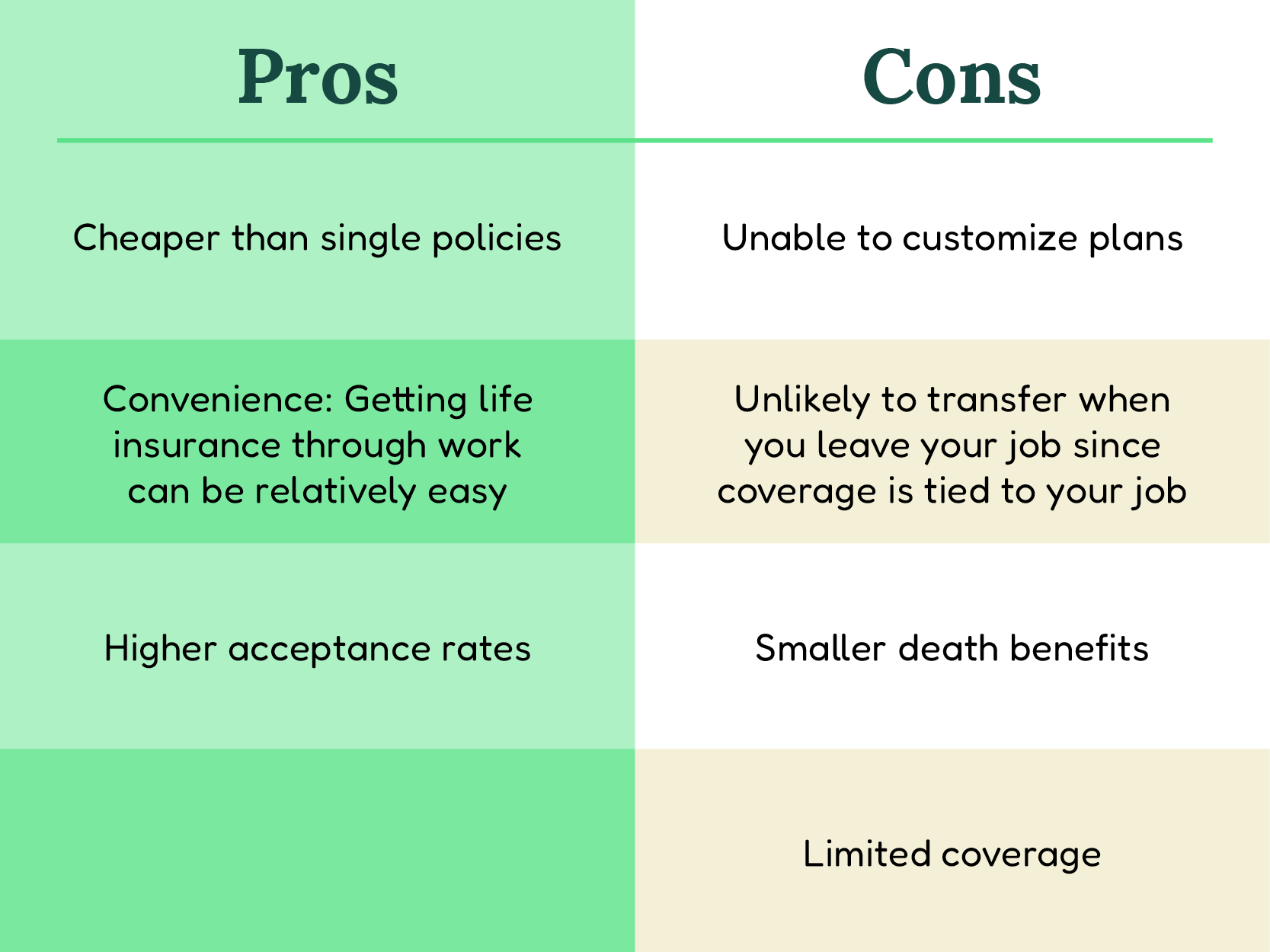
Credit: www.getamplifylife.com
Real-life Example
Let’s say Michael is 40, married, with two kids. His job offers $100,000 in group life insurance—free. He thinks it’s enough. But his mortgage is $200,000, and his kids will need money for college. If Michael dies, his family faces a big gap.
Michael buys a $400,000, 20-year term policy for $35/month. Now, if he loses his job or changes companies, his family still has protection.
Tips For Making The Most Of Employer Life Insurance
- Sign up right away—Don’t miss the open enrollment period.
- Ask about conversion options—Know if you can keep coverage when you leave.
- Buy supplemental insurance if you can—But check if the price is fair.
- Review your coverage yearly—Update as your life changes.
- Don’t rely only on group insurance—Get a personal policy for full protection.
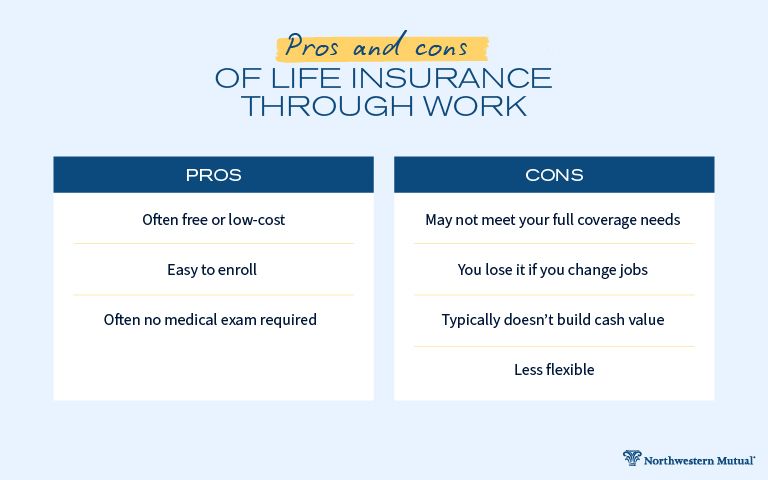
Credit: www.northwesternmutual.com
The Bottom Line
Life insurance through work is a great employee benefit. It’s easy, affordable, and helps many people who might not get coverage elsewhere. But for most families, it’s not enough. Use your group policy as a foundation, but don’t stop there. Look at your family’s needs and consider getting your own life insurance policy. Peace of mind is worth a few extra steps.
For more detailed information on life insurance types and benefits, visit the Investopedia Life Insurance Guide.
Frequently Asked Questions
What Happens To My Life Insurance If I Leave My Job?
Usually, your group life insurance ends when you leave your job. Some plans let you convert to an individual policy, but the cost is often much higher. Always check your plan details before making a move.
Is Group Life Insurance Enough For A Family?
For most families, employer life insurance does not offer enough coverage. Experts recommend having at least 10 times your annual income. Group plans usually cover only 1–2 times your salary.
Can I Have Both Group And Private Life Insurance?
Yes, you can. Many people use their employer plan as a base and buy private life insurance for extra protection. This gives your family more security.
Do I Need A Medical Exam For Group Life Insurance?
Most group plans do not require a medical exam for basic coverage. You may need to answer health questions or take an exam if you want to buy a higher amount.
What Should I Check Each Year About My Coverage?
Check your coverage amount, your listed beneficiaries, and if you need more insurance based on changes in your life (like marriage, children, or new debts). Review your plan every year during open enrollment.

Credit: www.nerdwallet.com