
Life can be unpredictable, and most people in Canada want to make sure their loved ones are protected—no matter what happens. Life insurance is one way to provide that peace of mind. But if you’re new to Canada, or just starting to learn about insurance, the details can feel confusing. How does life insurance actually work here? What types are available? How much does it cost, and what should you watch out for when choosing a policy? This guide explains life insurance in Canada in simple terms, using real examples, tables, and clear answers to common questions.
What Is Life Insurance And Why Does It Matter?
Life insurance is a contract between you and an insurance company. You pay them a set amount, called a premium, and if you die while the policy is active, the insurer pays a tax-free lump sum—called the death benefit—to your chosen person or people (beneficiaries). In short, it’s a safety net for your family.

People buy life insurance for different reasons:
- To pay for funeral costs and debts
- To replace lost income so loved ones can pay bills
- To leave money for children’s education
- To cover business obligations
The right type and amount of insurance depends on your life stage, family situation, and financial goals. In Canada, life insurance is widely available and regulated by both provincial and federal authorities, giving buyers some extra protection and confidence.
Main Types Of Life Insurance In Canada
There are two main categories of life insurance in Canada: term life insurance and permanent life insurance. Each works differently and serves different needs.
Term Life Insurance
Term life insurance covers you for a specific period, such as 10, 20, or 30 years. If you die during that period, your beneficiaries receive the benefit. If you outlive the term, the coverage usually ends, and you get nothing back.
Term life is the most popular type in Canada because it’s simple and more affordable—especially for younger families or those on a budget.
Example: Maria, age 35, buys a 20-year term policy for $500,000 coverage. She pays about $25/month. If she dies at age 40, her family receives $500,000. If she’s alive at 55 (the end of the term), the policy expires.
Permanent Life Insurance
Permanent life insurance lasts for your entire life, as long as you keep paying the premiums. There are a few types:
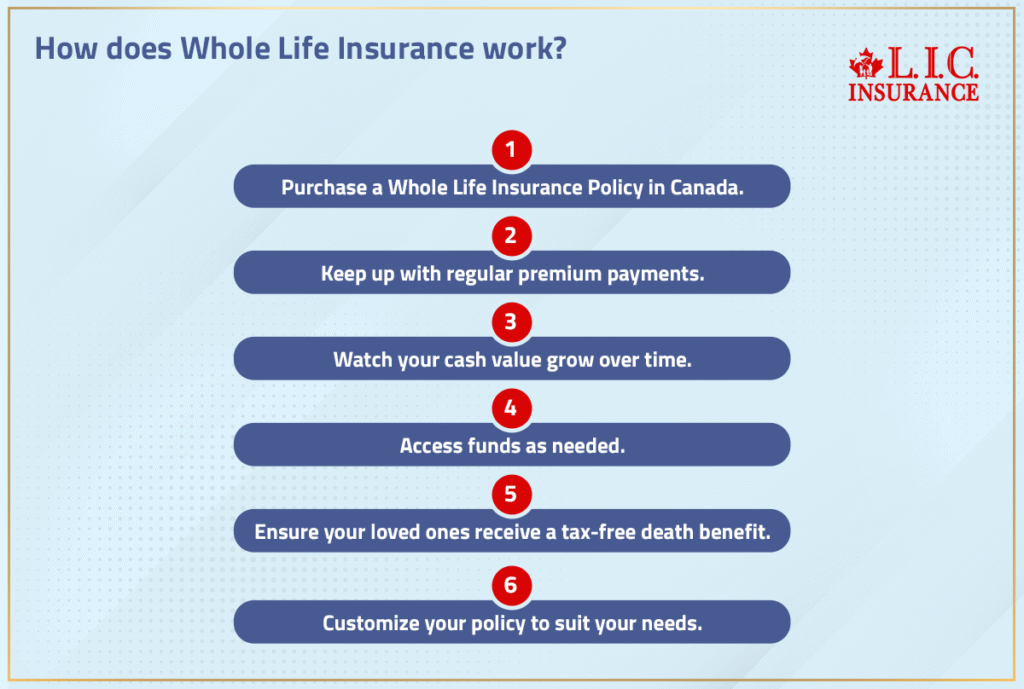
- Whole life insurance: Premiums stay level, and the policy builds a cash value you can borrow against.
- Universal life insurance: More flexible, with adjustable premiums and investment options.
- Term-to-100: Lasts until age 100, but with no cash value.
Permanent insurance costs more than term, but it guarantees a payout and can provide extra financial planning options.
Example: John, age 40, buys a $500,000 whole life policy. He pays $150/month, but part of that builds cash value. At age 65, he can borrow from this value if needed.
Comparing Term And Permanent Life Insurance
To help you see the differences, here’s a simple comparison:
| Feature | Term Life | Permanent Life |
|---|---|---|
| Coverage Period | 10–30 years (fixed) | Lifelong |
| Premiums | Lower, increase on renewal | Higher, usually fixed |
| Cash Value | None | Yes (whole, universal) |
| Flexibility | Simple, easy to cancel | Complex, more options |
| Typical Buyer | Families, mortgage holders | Estate planners, lifelong needs |
Non-obvious insight: Many new buyers think permanent insurance is “better” because it lasts for life. But in reality, most people only need coverage while they have dependents or a mortgage. Buying permanent insurance too early can mean paying much higher premiums for benefits you may not use.
How Life Insurance Works: Step-by-step
Let’s break down how the process works, from application to claim.
1. Applying For Life Insurance
You start by choosing a policy and filling out an application. The insurer will ask questions about:
- Age, gender, and smoking status
- Health history (personal and family)
- Occupation and hobbies (high-risk jobs or activities can affect cost)
For larger policies, you may need a medical exam (blood test, urine sample, sometimes an EKG). Some companies offer no-medical policies for smaller amounts or if you’re in very good health.
Key tip: Always answer truthfully. Giving false information can void your coverage.
2. Underwriting And Approval
The insurer reviews your application, medical results, and sometimes your driving or travel history. This process is called underwriting. It can take from a few days to several weeks.
After review, you’ll get one of four results:
- Approved as applied (you get the rate you applied for)
- Approved but rated (higher premium due to higher risk)
- Approved with exclusions (some causes of death not covered)
- Declined (too risky)
3. Paying Premiums
Once you’re approved, you pay your premiums—monthly, quarterly, or annually. Missing payments can cause your policy to lapse (end).
4. Making A Claim
If you pass away while covered, your beneficiary contacts the insurer and files a claim. The insurer will need the death certificate and sometimes more documents. If everything is in order, the insurer pays the death benefit—usually within a few weeks.
Typical Timelines In Canada
| Step | Time Needed |
|---|---|
| Application to Approval | 1–6 weeks |
| Premium Payment Cycle | Monthly, quarterly, or yearly |
| Claim to Payout | 2–6 weeks |
Non-obvious insight: If you have a policy with a “contestability period” (usually the first 2 years), the insurer may investigate more closely if you die during that time. This is to catch fraud, not to deny honest claims.
How Much Does Life Insurance Cost In Canada?
The cost of life insurance depends on several factors:
- Age: Younger people pay less.
- Gender: Women often pay less than men.
- Smoking: Smokers pay much more.
- Coverage amount: More coverage = higher premium.
- Policy type: Term is cheaper than permanent.
- Health: Good health means lower rates.
Here’s an example of average monthly premiums for a healthy non-smoker:
| Age | Term ($500,000, 20 years) | Whole Life ($500,000) |
|---|---|---|
| 30 | $25–35 | $180–220 |
| 40 | $38–55 | $270–340 |
| 50 | $85–120 | $420–560 |
Example: A 35-year-old woman who doesn’t smoke can get $250,000 of 20-year term life for around $18/month. If she waited until age 45, the same coverage might cost $32/month.
Expert tip: Buying young locks in low rates, even if you expect your income to rise later.
Key Features And Options In Canadian Life Insurance
When you buy a policy, you can often customize it with riders (extra features). Here are some common options:
- Waiver of premium: If you become disabled, the insurer pays your premiums.
- Child term rider: Adds coverage for your children.
- Accidental death benefit: Extra payout if you die in an accident.
- Conversion option: Lets you convert term to permanent insurance without a new medical exam.
Not all riders are worth the cost, so read the details carefully.
Taxation And Payouts
One of the main benefits of life insurance in Canada is that the death benefit is tax-free for beneficiaries. This means your loved ones get the full amount, not just what’s left after taxes.
Caution: If you build up cash value and withdraw it, you may owe tax on the growth. But the basic death benefit is not taxable.
Permanent policies can also play a role in estate planning. For example, you can name a charity as a beneficiary, or use insurance to help pay estate taxes when passing on a family business.
How To Choose The Right Policy
Choosing life insurance is a big decision. Here’s a step-by-step approach that works for most Canadians:
- Decide why you need coverage. Is it to protect your children, cover a mortgage, or leave a legacy?
- Calculate how much you need. Add up debts, future expenses (like tuition), and income replacement. Subtract savings and other benefits.
- Pick the right type of insurance. Most families start with term life. Permanent insurance is best for long-term wealth or estate needs.
- Get quotes from several companies. Rates can vary widely, even for similar coverage.
- Read the policy details. Watch for exclusions, waiting periods, and premium increases.
- Review your coverage every few years. Life changes—so should your insurance.
Common mistake: Many buyers focus only on price. But a cheap policy that doesn’t pay out when needed isn’t a bargain. Check the insurer’s reputation and claims history.
Who Needs Life Insurance In Canada?
Not everyone needs life insurance, but it’s vital for certain groups:
- Parents with young children: Protects family if a parent dies.
- Homeowners with a mortgage: Covers the loan balance.
- Business owners: Ensures business continuity or buys out a partner’s share.
- People with dependents: Anyone who supports others financially.
If you’re single with no dependents and no debt, you might not need life insurance—or only a small policy for funeral costs.
Buying Life Insurance As A Newcomer To Canada
If you’re new to Canada, getting life insurance might feel more complicated. Here’s what you should know:
- Most insurers require you to be a permanent resident or citizen. Some will cover people on work or study permits, but options may be limited.
- You’ll need a Canadian bank account and address.
- Your medical history from your home country may be considered.
Tip: Build a relationship with a licensed Canadian insurance advisor, especially if English is not your first language. They can explain options and help with paperwork.
Group Life Insurance Vs. Individual Policies
Many Canadian employers offer group life insurance as part of their benefits package. This coverage is usually smaller ($25,000 to $100,000) and may end when you leave the job.
Advantages of group insurance:
- No medical exam required
- Low or no cost to the employee
Disadvantages:
- Limited coverage amount
- Not portable (ends with job)
For most people, group insurance is a good supplement, but not enough on its own.
What Happens If You Miss Payments Or Cancel?
If you stop paying your premiums, your policy will lapse—meaning you lose coverage. Some permanent policies have a grace period (usually 30 days) or a cash value you can use to pay missed premiums.
If you cancel a term policy, you usually get nothing back. If you cancel a permanent policy, you may receive the cash value, minus fees.
Warning: If you let a policy lapse and re-apply later, you’ll pay higher rates based on your new age and any health changes.
How Claims Are Paid: Real Examples
Let’s look at two scenarios.
Scenario 1: Term Life Claim
Jessica, age 42, has a $400,000 term life policy. She dies in a car accident. Her husband submits the death certificate and claim form. The insurer pays $400,000 tax-free to the family within 4 weeks.
Scenario 2: Denied Claim
Alex, age 50, hid his smoking habit on his application. He dies of lung cancer within the first year. During the contestability period, the insurer investigates and finds out. The claim is denied, and his family receives nothing.
Lesson: Honesty on your application is critical.

How To Find A Good Life Insurance Company
There are many insurance companies in Canada, including Manulife, Sun Life, Canada Life, and smaller regional providers. Here’s what to check:
- Financial strength: Look for companies with high ratings from agencies like AM Best or DBRS.
- Claims reputation: Ask how quickly they pay claims and how often they deny them.
- Customer service: Good support matters, especially for non-native speakers.
- Policy options: Make sure they offer the type of insurance you want.
Check the Canadian Life and Health Insurance Association for a list of licensed companies and consumer tips.
Common Myths And Mistakes
Myth 1: “I’m young and healthy. I don’t need insurance yet.”
In fact, buying while you’re young means much lower premiums and ensures coverage before health changes.
Myth 2: “Group insurance through work is enough.”
Employer insurance is often too small and ends if you change jobs.
Mistake: Choosing insurance based only on monthly cost, not on the company’s reliability or the policy’s features.

Life Insurance And Other Financial Planning Tools
Life insurance can be part of a broader plan. Some permanent policies allow you to invest or borrow against the cash value—helpful for retirement or emergencies. But these features add complexity and cost, so make sure they fit your needs.
For most people, term life insurance plus regular savings is a simpler and more cost-effective way to protect your family.
If you want to learn more about the industry and how it’s regulated, visit the Office of the Superintendent of Financial Institutions.
Frequently Asked Questions
How Much Life Insurance Do I Need In Canada?
Most experts suggest coverage equal to 7–10 times your annual income. But the right amount depends on your debts, family needs, and future expenses. Use an online calculator or talk to an advisor for a personalized number.
Can Non-residents Or Newcomers Buy Life Insurance?
Many insurers cover permanent residents and some temporary workers or students. Options are more limited if you don’t have permanent status. You’ll need to show proof of identity, address, and sometimes a Canadian medical record.
Is The Death Benefit From Life Insurance Taxable In Canada?
No, the death benefit is tax-free for beneficiaries. However, if you withdraw cash value from a permanent policy, you may owe tax on the growth portion.
What Happens If I Outlive My Term Life Policy?
If you’re still alive when your term ends, coverage stops and you get no payout. Some policies let you renew or convert to permanent insurance, but rates will be much higher at your older age.
What Should I Watch Out For When Buying Life Insurance?
Watch for:
- Exclusions (what’s not covered)
- Premium increases after the initial term
- Long waiting periods for some benefits
- Policies from companies with poor claims history
Always read the policy and ask questions before you sign.
Life insurance in Canada can seem complicated, but with the right information, it becomes much clearer. Remember: the best policy is the one that fits your needs, budget, and family. Start early, compare options, and choose with confidence—your loved ones will thank you.