
Finding affordable life insurance can feel confusing, especially with so many options and price differences. Many people ask, “What is the cheapest life insurance you can get? ” The answer depends on your age, health, lifestyle, and the type of coverage you choose.
But with the right information, you can find a policy that protects your loved ones without breaking the bank.

Let’s explore the cheapest types of life insurance, what affects your price, how to choose the right policy, and smart strategies to save even more. If you want basic protection at the lowest cost, this guide will show you where to start and what to look for.
What Makes Life Insurance Cheap?
Life insurance prices are not random. Companies use several factors to set premiums. Understanding these can help you lower costs.
- Age: Younger people pay less because they are less likely to die soon.
- Health: Non-smokers and healthy people get better rates.
- Policy Type: Some policies are much cheaper than others (term is usually cheapest).
- Coverage Amount: Lower death benefits cost less.
- Policy Length: Shorter policies are cheaper than longer ones.
Insurers also look at your job, hobbies, and even where you live. For example, dangerous jobs or activities (like skydiving) raise your price. If you want the cheapest life insurance, choose a simple policy, buy it young, and keep your coverage basic.
Cheapest Types Of Life Insurance
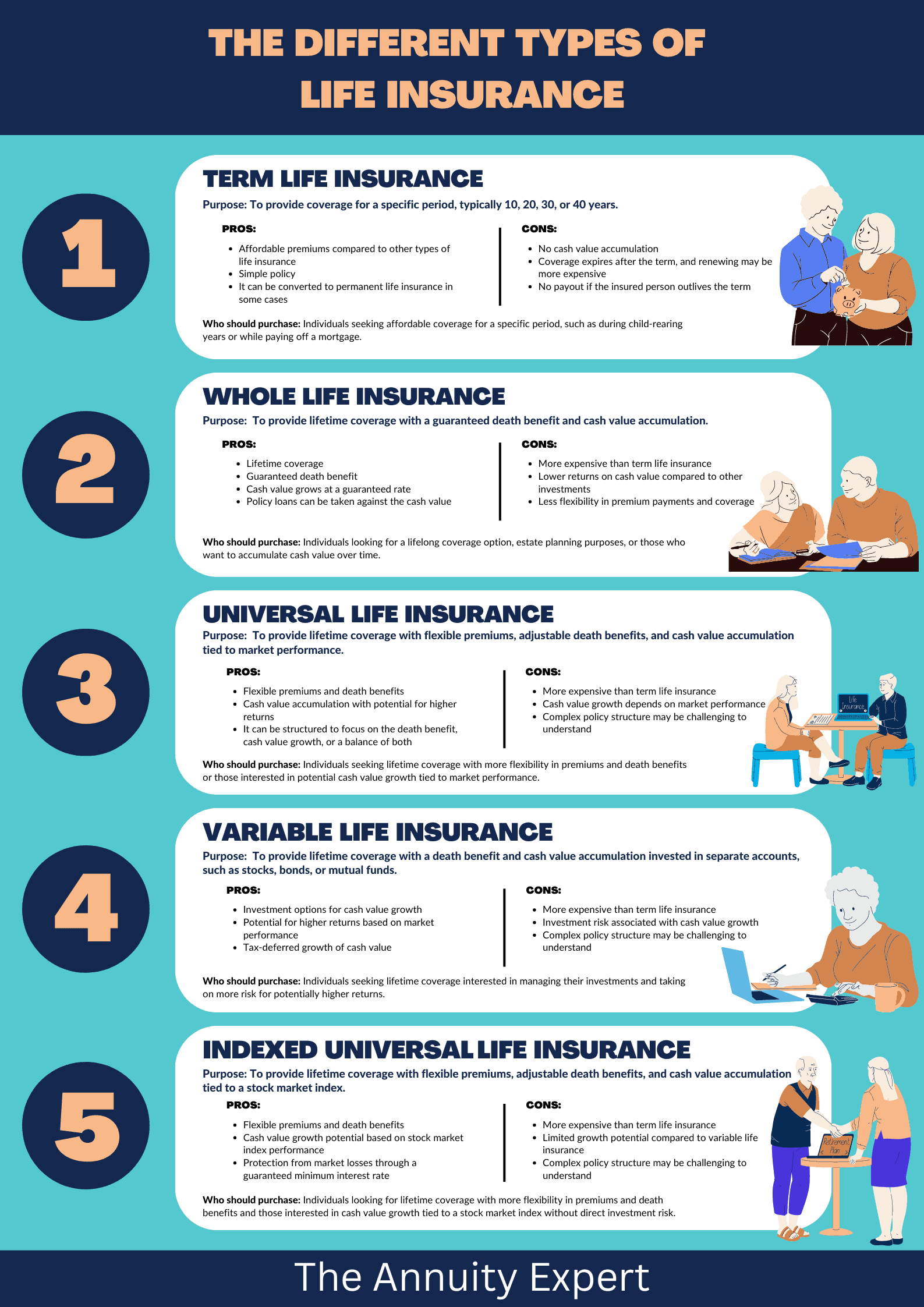
Not all life insurance is the same. Some types cost much less than others. Here are the main options and what you can expect to pay.
Term Life Insurance: The Lowest Cost Option
Term life insurance is usually the cheapest life insurance you can get. It covers you for a set period, like 10, 20, or 30 years. If you die during that time, your family gets a payout. If you outlive the term, the policy ends and you get nothing back.
This simplicity keeps costs very low. Companies take less risk, so they charge less. Term life is a good choice for most people who want basic protection.
Typical Costs (monthly Premiums)
| Age | 10-Year Term | 20-Year Term | 30-Year Term |
|---|---|---|---|
| 25 (Healthy, Non-Smoker) | $8–$12 | $12–$18 | $17–$25 |
| 35 (Healthy, Non-Smoker) | $10–$15 | $15–$22 | $22–$35 |
| 45 (Healthy, Non-Smoker) | $18–$28 | $28–$42 | $45–$70 |
*Assumes $250,000 coverage, male, US rates, 2024. *
Group Life Insurance: Sometimes Free Or Very Cheap
Many employers offer group life insurance as a work benefit. Often, you get $25,000 to $50,000 coverage at no cost, or for a few dollars a month. This is the cheapest life insurance for workers, but it may end if you leave your job.
Final Expense Insurance: Small, Affordable Policies
Final expense insurance is a type of whole life policy. It pays a small amount ($5,000–$25,000) for funeral costs. Monthly payments are low for small coverage, and most people can qualify—even with health issues.
No Medical Exam Term Life
Some companies offer no medical exam term life. These policies are quick to get and still cheaper than most permanent insurance. However, they often cost more than regular term life because the insurer takes more risk.
How To Get The Cheapest Life Insurance
The price you pay depends on more than just the policy type. Here’s how you can get the lowest rate possible.
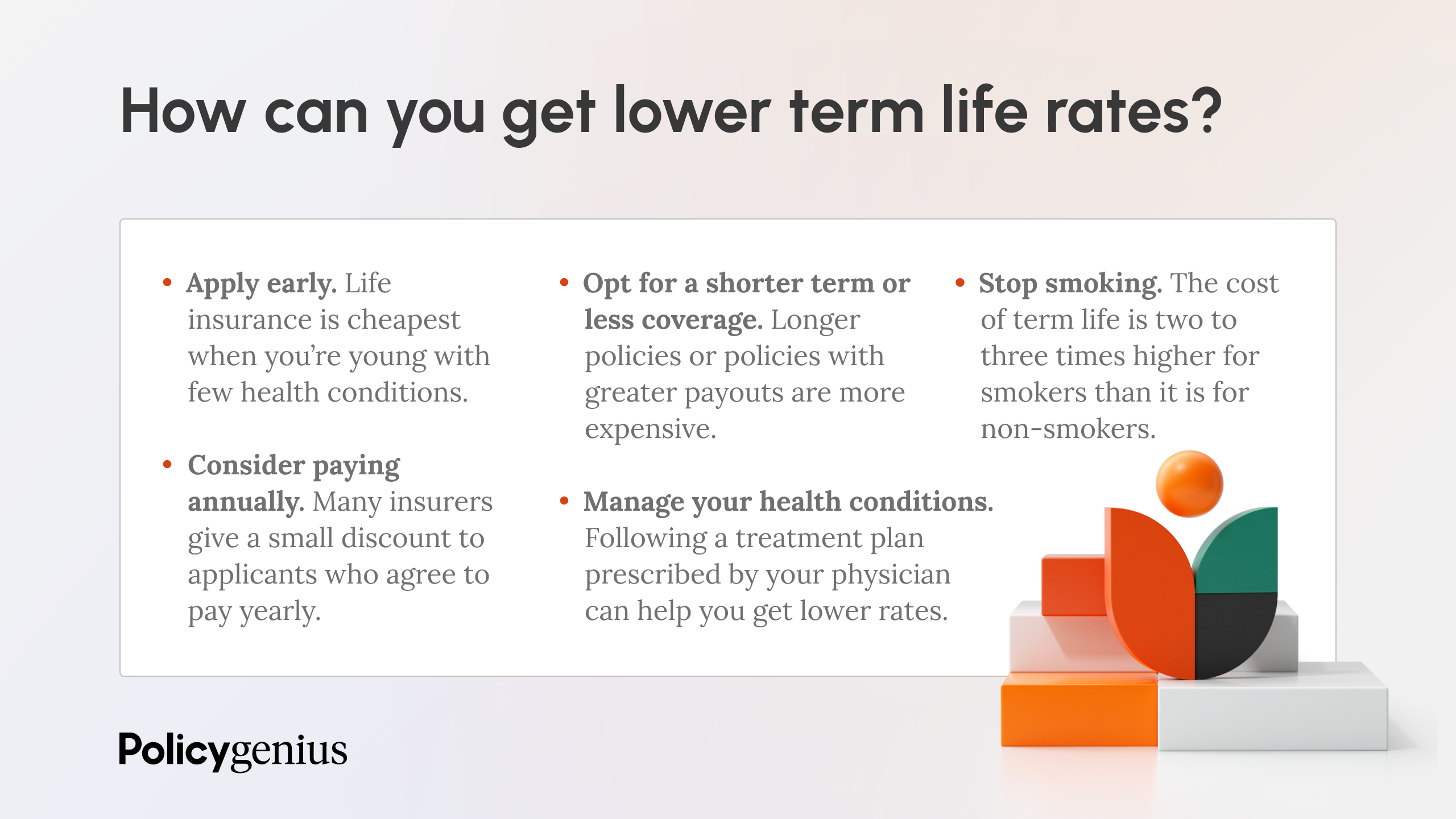
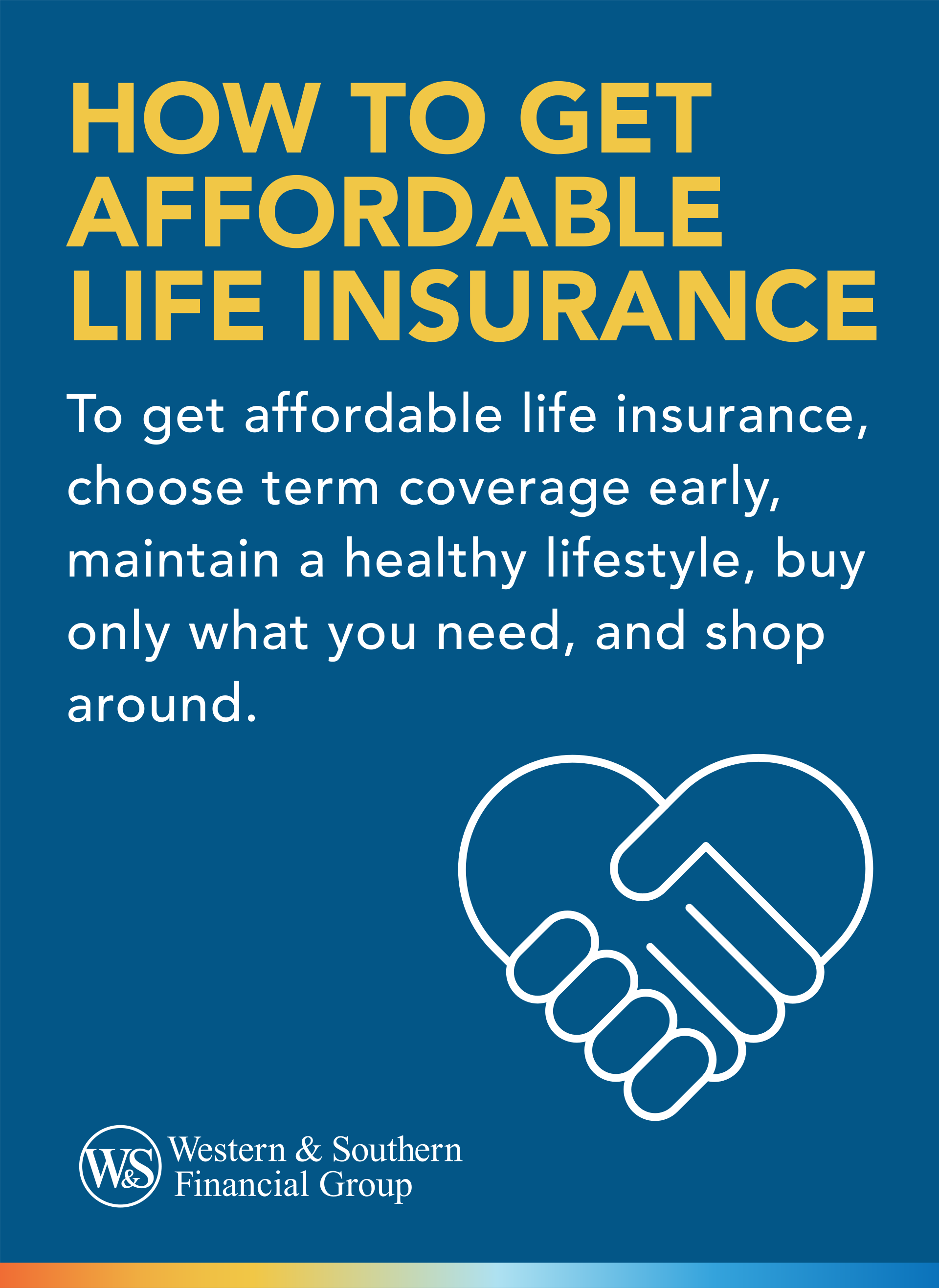
- Apply Young: Buy when you are in your 20s or 30s. Rates rise with age.
- Stay Healthy: Keep your weight, blood pressure, and cholesterol in a healthy range.
- Don’t Smoke: Smokers pay 2–3 times more for the same coverage.
- Shop Around: Compare quotes from at least 3–5 companies.
- Choose Term Over Whole Life: Term life is almost always cheaper.
- Get Only What You Need: Don’t over-insure. Stick to a basic payout.
Example: How Much Can You Save?
Suppose a 30-year-old non-smoker buys a $250,000, 20-year term policy. They might pay $15/month. If they wait until age 45, the same policy could cost $35/month or more. Over 20 years, that’s a $4,800 difference.
Comparing The Cheapest Life Insurance Options
To help you see the main differences, here’s a simple comparison.
| Type | Coverage Amount | Typical Cost | Medical Exam? | Best For |
|---|---|---|---|---|
| Term Life | $50,000–$1 million+ | Lowest | Yes, usually | Most people |
| Group Life | $25,000–$100,000 | Free/Low | No | Employees |
| Final Expense | $5,000–$25,000 | Low for small policies | No/Yes | Seniors, health issues |
| No Exam Term | $50,000–$500,000 | Low–Moderate | No | Fast coverage |
Common Mistakes That Raise Your Costs
Many people pay more than they need to for life insurance. Here are mistakes to avoid:
- Waiting too long to buy: Every year you wait, your rate goes up.
- Choosing whole life for basic needs: Whole life is 5–10 times more expensive than term.
- Not comparing enough companies: Prices vary a lot between insurers.
- Buying more than you need: Don’t let a sales agent talk you into extra coverage.
- Ignoring group life: If your employer offers it, use it as extra protection.
How Life Insurance Companies Set Rates
Insurers use statistics and data to price policies. They look at:
- Mortality tables: Predict how long people your age and health will live.
- Underwriting: The process of checking your health, history, and lifestyle.
- Claims history: Companies with more claims may charge more.
Non-obvious insight: Many people don’t realize that even your hobbies (like rock climbing or scuba diving) can make your premiums higher. Insurers ask about these on applications and may deny coverage or raise your rate if you have risky habits.
Another detail: Even small health problems can affect your price. For example, high blood pressure or being overweight can cost you $5–$20 more per month, even if you feel fine.
How Much Coverage Do You Really Need?
The cheapest life insurance is not always the best if it doesn’t protect your family. To find the right amount:
- Add up debts, mortgage, and future expenses (like college).
- Subtract savings and other assets your family can use.
- Buy enough to replace your income for 5–10 years if you have children.
For single people with no dependents, a small policy to cover funeral costs may be enough. For parents, $250,000 to $500,000 is common.
Where To Buy Cheap Life Insurance
You have several ways to buy affordable life insurance:
- Online Brokers: Sites like Policygenius, Ladder, and SelectQuote let you compare quotes from many companies quickly.
- Direct from Insurers: Major companies like State Farm, Banner Life, and Mutual of Omaha sell policies online or through agents.
- Through Your Employer: Ask your HR department about group life insurance.
- Local Agents: If you prefer face-to-face help, a local agent can explain options.
Non-obvious tip: Online applications are often cheaper because they save the insurer money. But always double-check company reviews and financial ratings before buying.
How To Lower Your Premium Even More
If you want the absolute lowest price, try these extra strategies:
- Pay annually: Many companies give a discount if you pay once a year.
- Bundle with other insurance: Some offer discounts if you buy auto and life insurance together.
- Improve your health: Lose weight, quit smoking, or treat medical issues before applying.
- Take a medical exam: If you are healthy, a full exam can get you the lowest rate.
- Ask for “laddering” options: Some insurers let you reduce coverage over time to save as your needs drop.
Real-world Example
Let’s look at two people applying for life insurance:
Anna is 28, healthy, non-smoker. She buys a 20-year, $250,000 term policy for $13/month.
Mark is 40, smokes, and is overweight. For the same policy, he pays $55/month.
Over 20 years, Anna pays $3,120; Mark pays $13,200. The difference is huge—mainly due to age, health, and smoking.
Cheapest Life Insurance Companies In 2024
Rates change often, but some companies are known for affordable term life. Here are a few top choices:
| Company | Sample 20-Year, $250k Policy (Age 30, Non-Smoker) | Medical Exam? | Financial Strength |
|---|---|---|---|
| Banner Life | $13/month | Yes | A+ |
| Protective | $14/month | Yes | A+ |
| Haven Life | $15/month | No/Yes | A++ |
| Mutual of Omaha | $16/month | No | A+ |
*Rates are examples only. Always compare for your own situation. *
When The Cheapest Life Insurance Isn’t Enough
It’s important to remember that the cheapest life insurance may not fit everyone’s needs. If you want lifelong protection, cash value, or complex features, you’ll pay more. But for most families, a simple term policy is enough.
If you have unique needs—like a special-needs child, estate planning, or a family business—talk to a financial advisor about other options.
Final Thoughts
Finding the cheapest life insurance is about knowing your needs and shopping smart. Term life insurance is usually your best bet for low cost and simple protection. Buy young, choose the right amount, and compare companies. Avoid common mistakes like over-insuring or waiting too long.
Remember, the cheapest policy is the one you can afford that still protects the people you care about. Take time to review your choices, and don’t be afraid to ask questions. Your family’s future is worth it.
For more detailed comparisons and current rates, you can check resources like NerdWallet.
Frequently Asked Questions
What Is The Cheapest Type Of Life Insurance?
Term life insurance is usually the cheapest type. It gives you coverage for a set time (like 10 or 20 years) and costs much less than permanent life insurance.
Does Life Insurance Get More Expensive As You Get Older?
Yes, life insurance costs rise with age. The younger and healthier you are when you buy, the lower your price will be.
Can I Get Cheap Life Insurance Without A Medical Exam?
Yes, many companies offer no medical exam policies. These are usually a bit more expensive than traditional term life, but still much cheaper than whole life insurance.
Is Employer-provided Life Insurance Enough?
Employer life insurance is a great start, but often too small to cover all needs. It may also end when you leave your job, so it’s smart to have your own policy too.
How Much Life Insurance Do Most People Buy?
Most people choose $250,000 to $500,000 in term life coverage, but your needs may be higher or lower. Consider your debts, income, and family situation when deciding.