
Life Insurance: Does It Make Sense?
Many people wonder if buying life insurance is truly necessary. Some see it as a safety net for their families, while others feel it’s an extra expense they can skip. The truth is, life insurance is not a simple yes or no decision.
It depends on your age, family situation, debts, and future plans. If you care about protecting those you love or want to leave a financial legacy, this topic is worth your attention.

Let’s explore when life insurance makes sense, how it works, the types available, and common mistakes to avoid. Whether you are new to insurance or rethinking your finances, you’ll find practical ideas here. We’ll break down the numbers, real-life scenarios, and even some myths that often confuse buyers.
By the end, you should feel confident deciding if life insurance fits your needs—or if you’re better off without it.
Why People Buy Life Insurance
Life insurance is more than just paperwork. It’s a way to provide for those you care about, even if you’re not around. Here are the main reasons people consider it:
1. Income Replacement
If your family depends on your salary, life insurance can replace lost income. This helps them cover costs like rent, groceries, and daily expenses.
2. Debt Protection
Mortgages, car loans, and credit cards do not disappear when someone passes away. Life insurance can help pay off these debts, so loved ones are not left with bills they can’t manage.
3. Children’s Education
Parents often buy life insurance to secure money for college or school fees, making sure their children’s dreams are not cut short.
4. Funeral And Final Expenses
Even a simple funeral can cost thousands of dollars. Life insurance can cover these costs, saving family members from sudden, large expenses.
5. Peace Of Mind
For many, the biggest value is knowing their family will be taken care of, whatever happens. This peace of mind is hard to measure, but very important.
Real-world Example
Consider a family where one parent earns $60,000 a year and the other stays home with two young kids. If the breadwinner passes away, the family could lose their house, fall into debt, and struggle with daily costs. A life insurance policy could provide a payout that covers these needs, giving the family time to adjust and plan for the future.
How Life Insurance Works
At its core, life insurance is a contract between you and an insurance company. You pay regular premiums (monthly or yearly). If you die while the policy is active, your chosen beneficiary (usually a family member) receives a lump sum of money.
Basic Steps
1. Choose A Policy Type
There are several types (we’ll cover these soon), but the main idea is to select the one that matches your goals.
2. Set The Coverage Amount
This is the total money your family gets if you pass away.
3. Pick A Beneficiary
This is the person or people who will receive the money.
4. Pay Premiums
This is your regular payment to keep the policy active.
5. File A Claim
If you die, your beneficiary contacts the insurance company to claim the money.
Key Terms
- Premium: The payment you make for the policy.
- Death benefit: The payout your beneficiary receives.
- Term: The length of time the policy is active.
- Beneficiary: The person who gets the money.
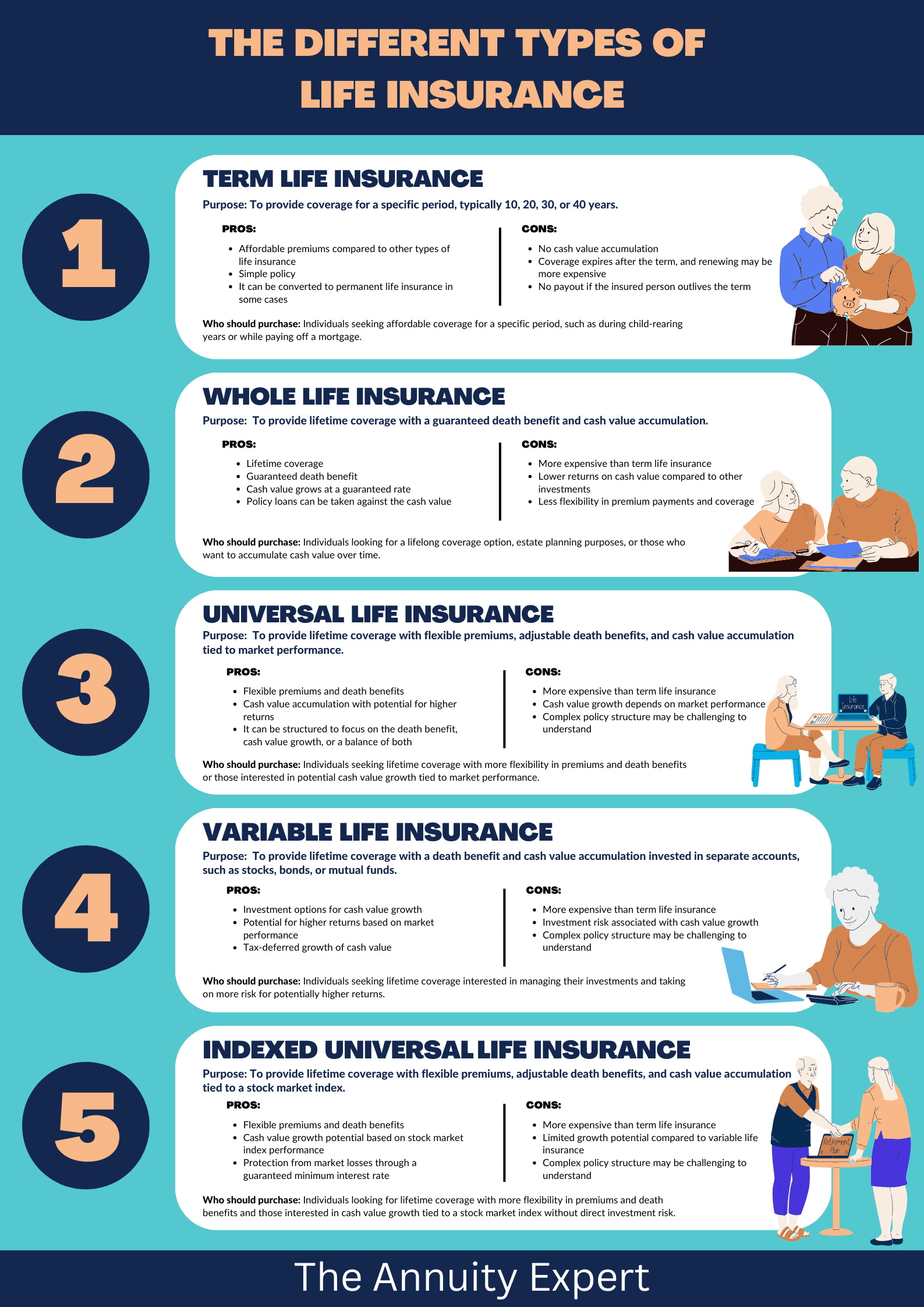
Types Of Life Insurance
There are several kinds of life insurance, each with its own pros and cons. Choosing the right type is a key step.
Term Life Insurance
This is the simplest and often the most affordable type. You buy coverage for a set period, such as 10, 20, or 30 years. If you die during this time, your beneficiary gets paid. If you live past the term, the policy ends and pays nothing.
Advantages
- Low cost for high coverage
- Simple to understand
- Good for temporary needs (like until kids finish school)
Disadvantages
- No payout if you outlive the policy
- No savings or investment feature
Whole Life Insurance
This type covers you for your entire life, as long as you pay premiums. It also builds cash value—a small savings account you can borrow against.
Advantages
- Guaranteed payout (as long as premiums are paid)
- Cash value grows over time
- Can borrow against cash value
Disadvantages
- Higher premiums (often 5-10 times more than term)
- Complex to understand
- Cash value grows slowly in early years
Universal Life Insurance
This is a flexible type of permanent insurance. You can change your premiums and coverage over time. It also builds cash value.
Advantages
- Flexibility to adjust premiums
- Lifelong coverage
- Potential for cash value growth
Disadvantages
- Premiums can increase if costs rise
- More complicated than term or whole life
Comparing The Main Types
Here’s a simple comparison table:
| Type | Coverage Length | Cash Value? | Premium Cost | Best For |
|---|---|---|---|---|
| Term Life | 10–40 years | No | Low | Young families, debt coverage |
| Whole Life | Lifetime | Yes | High | Estate planning, lifelong needs |
| Universal Life | Lifetime | Yes | Medium–High | Flexible needs, long-term planning |
Who Needs Life Insurance (and Who Doesn’t)
Life insurance is not for everyone. Whether you need it depends on your situation.
People Who Usually Need It
- Parents with dependent children
- Couples with shared debts or mortgages
- Single adults with aging parents or others who rely on them
- Business owners with partners or employees to protect
People Who May Not Need It
- Single people with no dependents or debts
- Retirees with enough savings to cover final expenses
- Children (except for special cases, such as for future insurability)
Key Insight
One thing many people miss: life insurance is not just about income. It’s also about covering services you provide. For example, a stay-at-home parent may not earn a salary, but their work (childcare, housework) would be expensive to replace.
How Much Life Insurance Do You Need?
Choosing the right amount is important, but can be confusing. Too little, and your family may struggle. Too much, and you’re paying for coverage you don’t need.
Simple Rules Of Thumb
- 10–15 times your annual income is a common starting point.
- Add extra for big debts (mortgage, loans).
- Consider education costs for children.
More Detailed Approach
- Estimate your family’s annual living expenses.
- Multiply by the number of years they’ll need support (for example, until children finish college).
- Add up all debts you want to pay off.
- Subtract any savings or other life insurance already in place.
For example:
If your family needs $40,000 a year for 10 years = $400,000
Mortgage: $200,000
Education: $100,000
Savings: $50,000
Total needed: $400,000 + $200,000 + $100,000 – $50,000 = $650,000
Non-obvious Insight
Don’t forget about inflation. Costs rise over time, so a policy that seems large today may not be enough in 20 years. Some policies let you add riders that increase coverage as needed.
What Affects The Cost Of Life Insurance?
Premiums are not the same for everyone. Insurance companies look at many factors to decide your rate.
Main Factors
- Age: Younger people pay less; premiums rise as you get older.
- Health: Medical history, smoking, and weight matter a lot.
- Gender: Women usually pay less, as they tend to live longer.
- Occupation: Risky jobs (construction, pilots) cost more.
- Hobbies: Dangerous hobbies (skydiving, racing) raise rates.
- Coverage amount and type: More coverage, or permanent policies, cost more.
- Policy length: Longer terms cost more.
Example Premiums
To give you a sense of the costs, here is a sample premium comparison:
| Age | Term Life (20 years, $500,000) | Whole Life ($500,000) |
|---|---|---|
| 30 | $25/month | $320/month |
| 40 | $38/month | $470/month |
| 50 | $93/month | $720/month |
*Note: These are typical rates for healthy non-smokers in the US. Your actual cost may vary.*
Underwriting Process
When you apply, you may need to answer health questions or take a medical exam. Some policies let you skip the exam, but these often cost more.
Common Mistakes When Buying Life Insurance
People often make costly mistakes when choosing life insurance. Here are some to watch for:
1. Underestimating Coverage Needs
Many people buy a small policy, thinking it’s enough, but forget about inflation, debts, or future costs.
2. Over-insuring
Buying too much coverage can waste money that could be better invested elsewhere.
3. Focusing Only On Price
Cheaper is not always better. Some low-cost policies have exclusions or don’t last as long as needed.
4. Naming The Wrong Beneficiary
If you list a minor child, the money may be tied up in court. Consider naming a trust or adult guardian if your kids are young.
5. Forgetting To Update The Policy
If your life changes—marriage, divorce, new child—you should review and update your policy.
6. Not Comparing Multiple Quotes
Rates can vary widely between companies for the same coverage. Always shop around.
7. Ignoring Riders And Add-ons
Some riders (like waiver of premium if disabled, or accelerated death benefit) can add value for a small extra cost.
When Does Life Insurance Not Make Sense?
Sometimes, buying life insurance is not the best choice. Here are situations where it may not fit:
- You have no dependents or debts, and your funeral costs are covered by savings.
- You are older, with grown children who are financially independent.
- You want to use your money for other investments with better returns.
- You already have enough assets to cover final expenses and leave something for your family.
Special Case: Employer-provided Life Insurance
Many jobs offer a basic life insurance policy (often 1–2 times your salary) at no cost. This is a good start, but usually not enough for most families. Also, you lose this coverage if you leave your job.
Understanding The Fine Print
Insurance contracts can be confusing. Always read the details before you sign.
Look For:
- Exclusions: Some policies do not pay if death happens during risky activities or due to suicide in the first 1–2 years.
- Waiting periods: Some policies have a period before full benefits start.
- Conversion options: Some term policies let you switch to permanent insurance without a new medical exam.
- Renewal terms: Check if you can renew your policy or if premiums will jump after the term ends.
Non-obvious Insight
Some policies offer “living benefits,” which let you access part of your death benefit if you become terminally ill. This can help with medical bills or end-of-life care.
How To Buy Life Insurance: A Step-by-step Guide
Buying life insurance can feel overwhelming, but breaking it into steps makes it easier.
1. Decide Why You Need Life Insurance
Is It For Income Replacement, Paying Debts, Or Something Else?
2. Calculate How Much Coverage You Need
Use the methods described earlier.
3. Choose The Type Of Policy
Term is usually best for most people, but whole or universal may fit special needs.
4. Shop Around For Quotes
Compare at least three companies for price and reputation.
5. Apply For Coverage
Fill out the application. You may need to answer health questions or take a medical exam.
6. Review The Policy Offer
Check the premium, coverage amount, and fine print.
7. Name Your Beneficiary Carefully
Consider setting up a trust if you have young children.
8. Sign And Pay Your First Premium
Your policy is not active until you make your first payment.
9. Review Your Policy Every Few Years
Update your coverage as your needs change.
Alternatives To Traditional Life Insurance
If you don’t qualify for regular life insurance or want something different, consider these options:
- Group life insurance: Offered by employers or associations, usually with no medical exam.
- Guaranteed issue policies: No health questions, but lower coverage and higher cost.
- Final expense insurance: Small policies designed to cover funeral costs.
- Self-insurance: Save and invest money to cover your own needs, instead of buying a policy.
Each has its pros and cons, so compare carefully.
Myths About Life Insurance
Many misunderstandings keep people from making smart decisions. Let’s clear up a few common myths.
“i’m Young And Healthy. I Don’t Need Life Insurance.”
You may not need much coverage now, but buying young locks in lower rates. Also, health can change without warning. It’s often smarter (and cheaper) to buy early, especially if you plan to have a family or debts later.
“stay-at-home Parents Don’t Need Life Insurance.”
As mentioned earlier, their work has real value. If they pass away, paying for childcare or home help can be a big burden.
“my Employer Policy Is Enough.”
Employer coverage is usually small and disappears if you quit or lose your job. Having your own policy gives more control.
“life Insurance Is Too Expensive.”
Term life is often much cheaper than people expect. For most healthy young adults, it costs less than a daily cup of coffee.
“i Can’t Get Life Insurance Because Of My Health.”
Even with health issues, you may qualify for special policies, though they cost more. Always check your options.
Life Insurance And Taxes
Most life insurance payouts are tax-free for beneficiaries. However, there are exceptions:
- If the policy was transferred for money, taxes may apply.
- If your estate is very large (over the federal estate tax limit), some of the payout could be taxed.
The cash value in permanent policies can grow tax-deferred, but loans or withdrawals may have tax effects. Check with a tax advisor for details.
How Life Insurance Fits Into Financial Planning
Life insurance is just one piece of a bigger financial plan. It works best when combined with:
- Emergency savings: For short-term needs.
- Retirement accounts: For long-term growth.
- Disability insurance: If you can’t work due to illness or injury.
- Health insurance: For medical costs.
Smart planning balances all these pieces, so your family is protected from more than just one risk.

Case Studies: When Life Insurance Made (or Didn’t Make) Sense
Case 1: Young Family, Mortgage, And Kids
Sarah and Mike, both 35, have two children and a $300,000 mortgage. Sarah earns $50,000 a year; Mike stays home. They buy a 20-year, $500,000 term life policy for Sarah. When Sarah dies in a car accident, the policy pays out, letting Mike pay off the mortgage and support the kids while finding new work.
Without insurance, the family would have faced major hardship.
Case 2: Single Adult, No Debts
Jason, age 28, is single, rents an apartment, and has no dependents. He has $10,000 in savings. He chooses not to buy life insurance. If he dies, his savings cover funeral costs, and no one is left with unpaid bills.
Here, skipping life insurance makes sense.
Case 3: Retired Couple With Grown Children
Linda and Bob, both retired, have paid off their house and have enough savings for final expenses. Their children are financially independent. They decide not to buy more life insurance, using their money for travel and hobbies instead.
Choosing The Right Company
Not all insurers are equal. Here’s what to look for:
- Financial strength: Choose companies with high ratings from agencies like A.M. Best or Moody’s.
- Customer service: Read reviews to see how claims are handled.
- Policy options: Some companies have more flexible or affordable choices.
- No pressure sales: Good companies let you compare and decide at your own pace.
For more on picking a strong insurance provider, you can check resources like the Insurance Information Institute.

Frequently Asked Questions
What Happens If I Stop Paying My Life Insurance Premiums?
If you stop paying, your policy will usually lapse (end). For term insurance, coverage stops. For whole or universal life, you may get some cash value back, but coverage ends. Some policies have a grace period for missed payments.
Can I Have More Than One Life Insurance Policy?
Yes, you can own multiple policies from different companies. Many people combine a group policy from work with an individual policy for extra coverage.
Is A Medical Exam Always Required?
Not always. Some policies (like group or guaranteed issue) do not require an exam, but they tend to cost more or offer less coverage. For larger or longer-term policies, a medical exam is common.
Does Life Insurance Cover Death By Accident, Illness, Or Suicide?
Most policies cover death by accident or illness right away. Suicide is usually excluded for the first 1–2 years, but covered after that. Check your policy for details.
Can I Change My Beneficiary Later?
Yes, most policies let you change your beneficiary at any time. Review and update your choices after major life events like marriage, divorce, or the birth of a child.
Life insurance can seem complicated, but with the right information, you can make a smart choice for your future. Whether it makes sense for you depends on your unique needs, goals, and family situation. Take your time, ask questions, and review your options—your peace of mind, and your loved ones’ future, may depend on it.