
Life insurance is more than just a document. For many families, it’s a promise of security. It can help pay for a child’s education, cover funeral costs, or keep a family home. But what happens if your life insurance lapses?
The answer is not always simple. Lapsed coverage brings risks, confusion, and sometimes expensive surprises. Many people do not know what to expect or how to fix the situation. Let’s explore what really happens when your life insurance lapses, what you can do about it, and how to avoid it in the future.

What Does It Mean When Life Insurance Lapses?
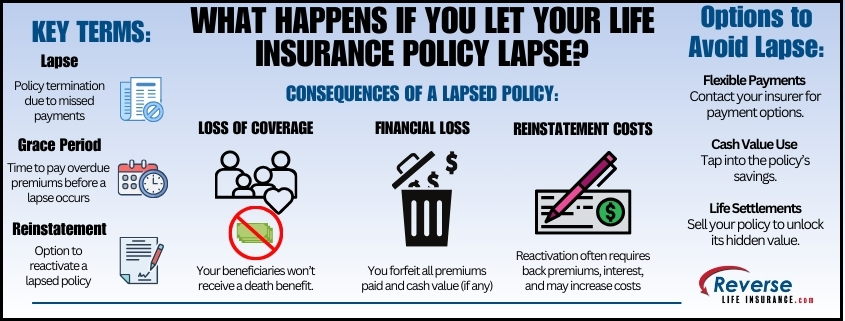
A life insurance lapse occurs when your policy is no longer active because you missed payments. The insurance company cancels your coverage. This means you and your beneficiaries lose the protection that the policy provided. Most life insurance policies—whether term life or whole life—require regular premium payments. If you miss one or more payments and do not catch up within the grace period, your policy will lapse.
The Grace Period Explained
Most insurers offer a grace period—usually 30 or 31 days. During this time, you can still pay your missed premium and keep your policy active. If you die during the grace period, your insurer will usually pay out the death benefit, but might subtract the unpaid premium from the payout.
- If you pay before the grace period ends, your policy stays active.
- If you do not pay, your coverage will lapse, and your beneficiaries will not receive anything if you pass away after that.
Common Reasons Policies Lapse
Life insurance lapses happen for several reasons:
- Missed payments: The most common cause. Sometimes, people forget, or their bank account has insufficient funds.
- Automatic payments fail: Credit cards expire, or accounts change.
- Change in financial situation: Job loss or unexpected expenses can lead to skipped payments.
- No response to notices: Insurers send reminders, but people sometimes miss or ignore them.
Immediate Consequences Of A Lapsed Life Insurance Policy
When your life insurance lapses, the effects can be serious. Here’s what usually happens:
- No death benefit: If you die after your policy lapses, your beneficiaries will not get the payout. This can leave your family without financial support.
- Loss of additional benefits: Riders like accidental death, waiver of premium, or child coverage also end.
- Possible cash value loss: With whole life or universal life policies, you may lose the cash value you’ve built up, especially if the policy stays lapsed for a long time.
Case Example
Imagine you bought a $250,000 term life policy for your family. After 15 years of on-time payments, you miss two payments and don’t notice the lapse notice in your mail. Two months later, you pass away unexpectedly. Since your coverage ended with the lapse, your family receives nothing.
That’s a devastating situation, especially when they counted on the policy.
What Happens To Cash Value When Whole Life Insurance Lapses?
Whole life and universal life policies often build a cash value over time. If you stop paying premiums, here’s what can happen:
- Automatic premium loan: Some policies use the cash value to pay your missed premium, if you have enough built up. This keeps your policy active, but reduces your cash value.
- Surrender value payout: If the policy lapses entirely, you may get the cash surrender value—the amount left after fees and loans are deducted.
- Total loss: In some cases, the cash value is used up to pay premiums, and when it’s gone, the policy ends, and you get nothing.
| Scenario | Outcome |
|---|---|
| Cash value enough to cover premiums | Policy stays active until cash value runs out |
| Cash value used up, policy lapses | Coverage ends, may receive small surrender value |
| No cash value | Immediate lapse, no payout |
Can You Reinstate A Lapsed Life Insurance Policy?
In many cases, yes. Insurance companies usually allow you to reinstate a lapsed policy within a certain time—often up to five years, but sometimes less. However, reinstating is not automatic and requires several steps.
Steps To Reinstate
- Contact your insurer quickly: The sooner you act, the easier it is to reinstate.
- Pay missed premiums: You’ll need to pay all unpaid premiums, sometimes with interest.
- Show proof of good health: Most insurers require you to complete a health questionnaire or medical exam. If your health has changed, your reinstatement could be denied, or your rates could increase.
- Complete paperwork: You may need to fill out forms to confirm you want the policy back.
Limits And Conditions
- If your policy lapsed recently (less than 30–60 days), reinstatement is usually simple.
- After a longer time, you might face stricter requirements.
- If you have developed a new health issue (like diabetes or heart disease), you could be refused or pay higher premiums.
| Time Since Lapse | Medical Requirements | Chance of Approval |
|---|---|---|
| Within 30 days | Usually none | High |
| 31 days to 6 months | Health statement, sometimes exam | Moderate to high |
| 6 months to 5 years | Full application, medical exam | Varies; more difficult |
What If You Cannot Reinstate?
If you cannot reinstate your lapsed policy, you have two main options:
1. Buy A New Policy
You can apply for new life insurance. But this comes with challenges:
- Higher premiums: You are now older, and your health may have changed.
- Possible denial: If you have developed a medical issue, some insurers may decline your application.
- New contestability period: The first two years of a new policy are called the contestability period. If you die during this time, the insurer can review your application for errors or omissions.
2. Go Without Coverage
This is risky, especially if you have dependents or debts. If you pass away, your family may face financial hardship.
Example
A 45-year-old who let a $500,000 policy lapse at age 35 will now pay much more for the same coverage. If they developed a health problem, they might pay triple the premium—or may not qualify at all.
How To Prevent Your Life Insurance Policy From Lapsing
It’s much easier to keep your policy active than to fix a lapse. Here are practical strategies to prevent problems:
- Set up automatic payments from your bank account or credit card.
- Review your payment method annually. Update expired cards or changed bank accounts.
- Add a backup contact: Some insurers let you name someone (a family member or friend) to receive lapse warnings if you miss payments.
- Read your mail and emails: Insurers send multiple reminders before canceling your policy.
- Ask for a grace period extension if you face temporary hardship.
- Contact your agent: If you cannot pay, some insurers may offer temporary solutions, like reducing coverage or changing payment frequency.
Non-obvious Insights
- If you own permanent life insurance, you might be able to use your cash value to cover temporary payment gaps.
- Some insurers allow you to skip a payment once a year if you have a good payment history—ask your agent if this is possible.
The Impact Of Lapsing On Different Types Of Life Insurance
Not all life insurance policies work the same way when they lapse. Here’s how the impact differs for the main types:
Term Life Insurance
- Simple: If you miss payments and the grace period passes, the coverage ends. There is usually no cash value. If you want coverage again, you must apply for a new policy.
Whole Life Insurance
- Builds cash value over time. If you miss payments, your insurer may use your cash value to pay premiums automatically. Once the cash value is gone, the policy lapses.
- You may be eligible for a small surrender value payout when the policy lapses.
Universal Life Insurance
- More flexible. You can sometimes use the policy’s cash value to cover skipped payments. However, if the cash value runs out, the policy will lapse.
- If the interest rate on the cash value is lower than your premium costs, your policy can lapse even if you keep paying.
Group Life Insurance
- Often provided by employers. If you leave your job or stop paying, your coverage ends.
- Some group policies let you convert to an individual policy, but you must act quickly.
| Policy Type | Lapse Outcome | Reinstatement Option |
|---|---|---|
| Term Life | Coverage ends, no cash value | Usually can reapply or buy new policy |
| Whole Life | Loss of coverage, possible cash value payout | Reinstatement often possible if acted quickly |
| Universal Life | Flexible, but can lapse if cash value depleted | Can reinstate, but may require medical review |
| Group Life | Coverage ends with employment or missed payment | May be converted to individual policy |
The Financial And Emotional Costs Of A Lapsed Policy
Letting your life insurance policy lapse can cost more than just money. Here are some of the real-world impacts:
Financial Costs
- Higher replacement premiums: Buying a new policy at an older age is more expensive.
- Loss of cash value: You may lose money you’ve paid into a whole or universal life policy.
- Gaps in coverage: If you die while uninsured, your family receives nothing.
Emotional Impact
- Stress for family: Loved ones may worry about their financial future.
- Regret and frustration: Many people feel upset for letting coverage lapse, especially when it was preventable.
- Trust issues: Family members may lose trust in the policyholder’s planning.
How Insurers Notify You Of A Pending Lapse
Insurance companies must follow legal rules for notifying you before canceling your policy. Here’s what usually happens:
- Payment reminder: After a missed payment, you’ll get a reminder by mail, email, or phone.
- Grace period notice: If you still don’t pay, you’ll receive a formal warning that your coverage will end soon.
- Lapse notice: Final warning that your policy will be canceled if payment isn’t received by a specific date.
Non-obvious Tip
- Many states require insurers to send a lapse notice to a secondary contact if you have named one. This reduces the risk of missing important mail.
Special Situations: Military, Disability, And Seniors
Certain groups face unique risks of lapsing life insurance:
Military Members
- If you are deployed, it’s easy to miss mail or payments. Set up automatic payments and name a trusted contact to help watch your policy.
People With Disabilities
- If you become disabled, you may not be able to work or manage bills. Ask your insurer about a waiver of premium rider, which can keep your policy active if you are disabled.
Seniors
- As people age, they may forget to pay bills or struggle with technology. Family members or trusted friends can help monitor important mail and payments.
What Happens To Outstanding Loans Or Premium Riders?
If you have borrowed money against your life insurance policy (a common feature with whole and universal life), a lapse can cause extra problems:
- Outstanding loan: If your policy lapses, the insurer will subtract the loan amount (plus interest) from any cash value or surrender value you may receive.
- Premium riders: Special benefits, such as long-term care riders, also end with a lapse.
Example
If you have a $20,000 loan against a policy with $25,000 cash value, and the policy lapses, you’ll only receive $5,000 minus any surrender charges.
Alternatives To Lapsing: Reduced Paid-up And Extended Term
Before your policy lapses, some insurers offer ways to keep partial coverage without paying more premiums:
Reduced Paid-up Insurance
- Converts your policy’s cash value into a smaller fully paid-up policy. No more premiums, but a lower death benefit.
Extended Term Insurance
- Uses your cash value to buy a term policy for the same face amount, but only for a limited time.
Ask your insurer if these options are available before your policy lapses. They can be a lifeline if you can’t afford premiums but want some protection for your family.
Tips For Managing Life Insurance Responsibly
- Review your policy annually: Make sure your coverage matches your needs and your payment details are up-to-date.
- Keep your insurer’s contact info handy: If you move or change email addresses, update your insurer right away.
- Communicate with your beneficiaries: Make sure they know you have a policy and where to find it.
- Check for unclaimed policies: Sometimes, people don’t realize a loved one’s policy has lapsed or was never claimed. States keep records of unclaimed insurance money.
Real-world Statistics On Life Insurance Lapses
- According to the American Council of Life Insurers, about 4–5% of all life insurance policies lapse each year.
- Older policies are more likely to lapse as people age or their financial situation changes.
- The average time a policy remains in force in the US is about 12 years for term and 16 years for whole life.
Lapses are common, but with good planning, they are almost always preventable.
For more details on how life insurance works and its importance, visit the National Association of Insurance Commissioners.
Frequently Asked Questions
What Is The Grace Period For Life Insurance Payments?
Most life insurance policies have a grace period of 30 or 31 days. This is the time after a missed payment when you can still pay and keep your coverage. If you pay within this time, your policy stays active.
Can I Get My Money Back If My Life Insurance Lapses?
If you have a term life policy, you usually get nothing back. For whole or universal life policies with cash value, you might get the cash surrender value, minus fees and any loans.
What Should I Do If I Get A Lapse Notice?
Act quickly. Contact your insurer or agent, find out how much you need to pay, and ask if you can reinstate your policy. The sooner you respond, the easier it is to fix the problem.
Will A Lapsed Policy Affect My Credit Score?
No, a lapsed life insurance policy does not usually affect your credit score. However, if you owe money to the insurer (such as a loan) and do not pay, they might send it to collections, which can impact your credit.
Can I Buy A New Policy After My Old One Lapses?
Yes, you can apply for a new policy, but you may pay more due to age or changes in health. You’ll need to go through the application process again, including a medical exam in most cases.
Life insurance offers peace of mind, but only if it’s active. A lapse can leave you and your loved ones unprotected. By understanding the risks and taking simple steps, you can avoid problems and keep your family safe. Stay alert, communicate, and review your coverage regularly.
Your future self—and your family—will thank you.