
Life insurance gives peace of mind. It protects your family if you pass away. But what happens when your term life insurance ends? Many people feel lost when their policy expires. You may worry about losing coverage or paying more for a new plan. This article explains everything you need to know about ending term life insurance. You’ll learn what options you have, what costs to expect, and what mistakes to avoid. If your policy is ending soon, or you’re planning for the future, this guide will help you make smart decisions.
What Is Term Life Insurance?
Term life insurance is a simple type of insurance. You buy coverage for a fixed period, usually 10, 20, or 30 years. If you die during the term, your family gets a death benefit. If you live past the term, the policy ends and no money is paid out.

This insurance is popular because it is affordable and easy to understand. You pay a set premium each month or year. The cost is lower compared to permanent life insurance. Most people use term life to cover financial needs, like a mortgage or children’s education, for a certain time.
But term life insurance is not forever. When the term ends, your coverage stops unless you take action. Many people don’t realize this until the end is near.
What Happens When Your Term Ends?
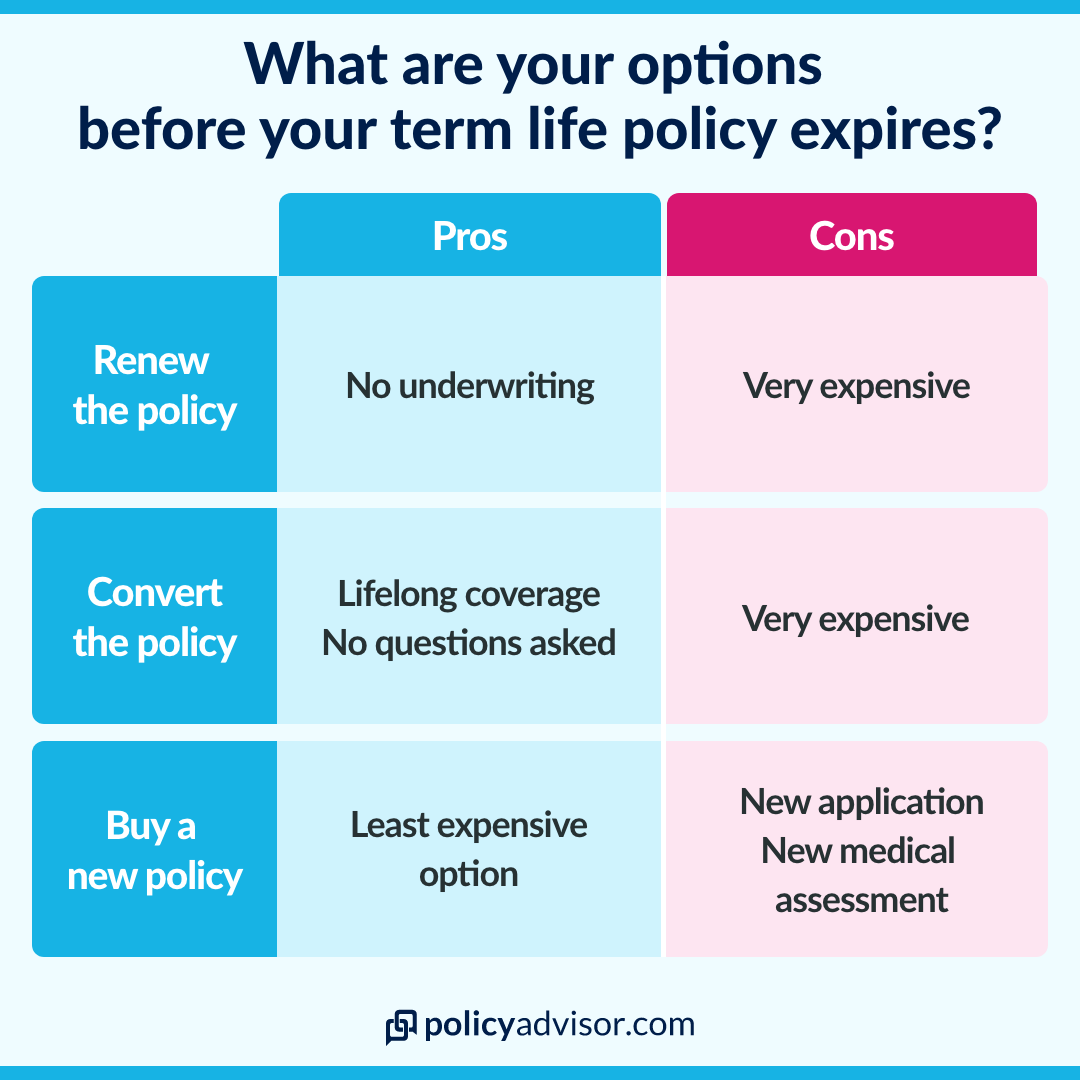
When your term life insurance expires, several things can happen. Here are the most common outcomes:
- Coverage Ends: Your insurance stops. If you die after the term, your family gets nothing.
- Renewal Option: Some policies let you renew for another term, often year by year. The price will be much higher.
- Conversion Option: Some plans let you convert to a permanent policy. This usually costs more but gives lifelong protection.
- Buy New Policy: You can buy a new term or permanent policy. You’ll need to qualify again, and prices may be higher due to age or health changes.
Let’s look at each option in detail.
Coverage Ends: What Does That Mean?
If your term policy ends and you don’t renew or convert, your insurance stops. You do not get any money back. The policy simply expires.
This is the most common situation. Many people buy term life to cover needs that change over time. For example, you may want coverage until your children finish school or your mortgage is paid. When the term ends, you may not need insurance anymore.
But some people still need coverage. Maybe your financial situation changed, or you want to leave money for your family. In this case, you must look at other options.
Renewal Option: Extending Your Coverage
Many term policies include a renewal option. This lets you keep your insurance after the term ends, often for one year at a time. You do not need a medical exam to renew.
However, the premium will rise sharply. Insurance companies increase the price because you are older and may have more health risks.
Here is a simple example:
| Age | Term Premium (20-year) | Renewal Premium (Annual) |
|---|---|---|
| 35 | $25/month | – |
| 55 | – | $140/month |
| 60 | – | $240/month |
As you can see, renewing is much more expensive. If you are healthy, it may be better to buy a new policy.
Non-obvious insight: Renewal is useful if you have health problems and cannot qualify for new coverage. But if you are healthy, buying a new policy can save money.

Conversion Option: Switching To Permanent Insurance
Some term policies allow you to convert to a permanent policy, like whole life or universal life. This gives you lifelong coverage. You do not need to pass a health exam, but premiums will be higher.
Conversion must happen before a set age or before your term ends. Check your policy for details.
Benefits of converting:
- Lifelong coverage
- Builds cash value
- No medical exam required
Drawbacks:
- Much higher premiums
- Permanent policies are more complex
Here’s a comparison:
| Feature | Term Life | Permanent Life |
|---|---|---|
| Coverage Length | 10–30 years | Lifelong |
| Premiums | Low | High |
| Cash Value | None | Yes |
| Medical Exam Needed | Yes (for new) | No (for conversion) |
Non-obvious insight: Conversion is best for people with health issues who want lifelong coverage. If you are young and healthy, buying permanent insurance directly is usually cheaper.
Buying A New Policy After Term Ends
If your term ends and you still need insurance, you can apply for a new policy. This could be another term life or a permanent policy.
Here’s what to consider:
- Age: The older you are, the higher the premium.
- Health: You must qualify again. If your health changed, rates may be much higher or you may not qualify.
- Coverage Amount: Decide how much coverage you need. Your needs may have changed.
Many people are surprised how much prices rise with age. Here’s a comparison:
| Age | 20-Year Term Premium ($250,000) | Whole Life Premium ($250,000) |
|---|---|---|
| 35 | $25/month | $180/month |
| 50 | $70/month | $370/month |
| 60 | $190/month | $690/month |
If you are healthy, buying a new term policy is usually cheapest. If you have health issues, you may need to look at guaranteed issue plans, which cost more.
What Happens To Your Premiums?
When your term ends, your regular premiums stop. If you renew or convert, premiums change:
- Renewal: Premiums rise sharply, often 5–10 times more.
- Conversion: Premiums rise, but you keep coverage without a medical exam.
- New Policy: Premiums depend on your age, health, and coverage amount.
It’s important to plan ahead. If you wait until your term ends, you may face high costs or lose the chance to convert.
What Happens If You Outlive Your Policy?
Most people outlive their term policy. You do not get your premiums back. The policy ends, and coverage stops.
Some companies offer return of premium policies. You pay higher premiums, but if you outlive the term, you get your money back. These are less common and cost more.
Is it worth it? Usually not. Most people pay less for regular term insurance and invest the savings.
Steps To Take Before Your Term Ends
If your policy is ending soon, here are smart steps to follow:
- Review Your Needs: Do you still need life insurance? Are your debts paid? Are your children grown?
- Check Your Policy: See if you can renew or convert. Know the deadlines.
- Shop for New Coverage: Compare prices and options. Get quotes early.
- Talk to an Advisor: Get expert advice if you’re unsure. A professional can help you choose the best option.
- Don’t Wait: Last-minute decisions may cost more or limit your options.
Common mistake: Many people wait until the last month to act. This limits choices and leads to higher costs.
Example: Real-life Scenario
Imagine John, age 50, whose 20-year term life policy is ending. He bought it at age 30 to cover his mortgage and children’s college. Now his mortgage is paid, and his children are grown. John is healthy but wants to leave money for his spouse.
John’s options:
- Do nothing: Coverage ends. No money paid out.
- Renew: Premium rises from $25/month to $140/month.
- Convert: Premium rises to $370/month for permanent coverage.
- Buy new policy: He qualifies for a new term at $70/month.
John decides to buy a new 10-year term policy. It fits his budget and needs. He avoids paying high renewal or conversion premiums.
What If You Can’t Qualify For New Insurance?
If your health has changed, you may not qualify for new policies. In this case:
- Renew your old policy if possible, even if expensive
- Convert to permanent insurance if allowed
- Look for guaranteed issue policies (no medical exam)
Guaranteed issue policies are costly and offer low coverage. Only use them if you have no other options.
Is Permanent Insurance Worth It?
Permanent insurance covers you for life and builds cash value. But it costs much more than term insurance.
Some people convert to permanent plans for peace of mind. Others buy permanent insurance for estate planning or leaving money to family.
If you don’t need lifelong coverage, term insurance is cheaper and simpler.
Non-obvious insight: Many people overestimate their need for permanent insurance. Only buy what fits your real needs.
Comparing Term And Permanent Insurance
Let’s compare the main features:
| Feature | Term Life | Whole Life |
|---|---|---|
| Coverage Length | Fixed term | Lifelong |
| Premium Cost | Low | High |
| Cash Value | No | Yes |
| Purpose | Temporary needs | Estate planning, lifelong |
| Medical Exam | Usually yes | Usually yes |
| Return of Premium Option | Sometimes | N/A |
Mistakes To Avoid When Your Term Ends
- Waiting too long: You may lose the chance to renew or convert.
- Ignoring your needs: Review your finances and family situation.
- Not comparing options: Don’t just renew—shop around.
- Missing deadlines: Conversion and renewal have time limits.
- Buying more coverage than needed: Over-insuring costs more.
How To Save Money When Term Ends
- Buy a new policy early, before you age more
- Choose only the coverage you need
- Compare quotes from different companies
- Consider shorter terms if you only need coverage for a few years
- Avoid expensive renewal unless you have no other choice
What If You Don’t Need Insurance Anymore?
If your debts are paid and your family is secure, you may not need life insurance. Let your term policy expire. Use the money you save for retirement or other goals.
Many people keep insurance longer than needed. Review your situation every few years.
Planning Ahead: Smart Strategies
- Start planning a year before your term ends
- Update your beneficiary information
- Review your financial goals
- Talk to your family about your choices
- Consider your health and future needs
Data: How Many People Outlive Their Term?
According to the Insurance Information Institute, most people outlive their term life policy. Less than 5% of term policies pay a death benefit. This is why premiums are lower than permanent insurance.
Should You Get Return Of Premium?
Return of premium policies pay back your premiums if you outlive the term. But they cost more.
Here’s an example:
- Regular term: $30/month
- Return of premium term: $60/month
After 20 years, you get $14,400 back if you outlive the policy. But if you invested the savings, you could earn more.
Non-obvious insight: Return of premium is only worth it if you want a forced savings plan and do not invest elsewhere.
How To Decide Your Next Step
Ask yourself:
- Do I still need coverage?
- Can I afford higher premiums?
- Is my health good enough for a new policy?
- Do I need lifelong protection or just temporary?
If you’re unsure, speak to a financial advisor. An expert can help you pick the best option for your situation.
Where To Get More Help
Life insurance is complex. Policies and options differ by company and state. For detailed guidance, visit the National Association of Insurance Commissioners.
Frequently Asked Questions
What Happens If My Term Life Insurance Expires And I Die Afterward?
If your term life insurance expires and you pass away later, your family receives no death benefit. The coverage stops at the end of the term. You must have an active policy to receive the benefit.
Can I Renew My Term Life Insurance After It Ends?
Many policies allow renewal, often for one year at a time. But the premium will be much higher because you are older. Renewal is useful if you cannot qualify for new insurance due to health.
Can I Convert My Term Policy To Permanent Insurance?
Some term policies let you convert to permanent insurance before the term ends or before a certain age. You do not need a medical exam, but premiums will rise. Check your policy’s conversion rules.
What Is A Return Of Premium Term Life Policy?
A return of premium term policy pays back your premiums if you outlive the term. These policies cost more and are less common. Most people get better value from regular term insurance.
What Should I Do If I No Longer Need Life Insurance?
If your debts are paid and your family is secure, let your policy expire. You can use the money saved for other financial goals. Always review your situation to make the best choice.
Life insurance is important, but it’s not forever. When your term ends, review your needs, compare options, and make a smart decision. Planning ahead gives you peace of mind and helps your family stay protected.
