
When people think about life insurance, they often imagine it as a way to help family members after death. But there’s a growing question: can life insurance also help cover the high costs of long term care while you’re still alive? As people live longer, more families worry about paying for nursing homes, home care, or assisted living. These services can be expensive, sometimes costing over $100,000 per year. Many are surprised to learn that the right life insurance policy can do more than just pay out after death—it can also be a tool for handling long term care needs. Let’s explore how this works, the types of policies available, and what you should consider before making a decision.
Understanding Long Term Care Needs
Long term care (LTC) means help with daily activities like bathing, eating, dressing, or moving around. This care can happen at home, in an assisted living community, or in a nursing home. According to the U.S. Department of Health and Human Services, nearly 70% of people over age 65 will need some type of LTC during their life. But Medicare (government health insurance for seniors) covers only short-term skilled care, not long-term help with daily needs.

Costs add up quickly. For example, the Genworth Cost of Care Survey reports that in 2023, the average yearly cost for a private room in a nursing home was about $108,405. Home health aide services cost around $61,776 per year. Most people are not prepared to pay these large amounts out-of-pocket.
Life Insurance Basics
Before we discuss how life insurance can help with LTC, it’s important to understand the main types of policies:
- Term life insurance: Offers coverage for a set period (like 10, 20, or 30 years). If you die during this time, your family gets a payment. After the term, the policy ends.
- Whole life insurance: Lasts your entire life, as long as you pay premiums. It also builds cash value that you can borrow from.
- Universal life insurance: Also lasts your lifetime and builds cash value, but is more flexible. You can adjust your premium payments and death benefit.
Only some types of life insurance can be used for LTC. Usually, you need a permanent policy (whole or universal life) or a special hybrid product. Term insurance does not include these features.

Credit: www.aaltci.org
Ways Life Insurance Can Be Used For Long Term Care
There are several ways to use life insurance to help pay for LTC. Each method has its own rules, costs, and benefits.
1. Life Insurance With Long Term Care Riders
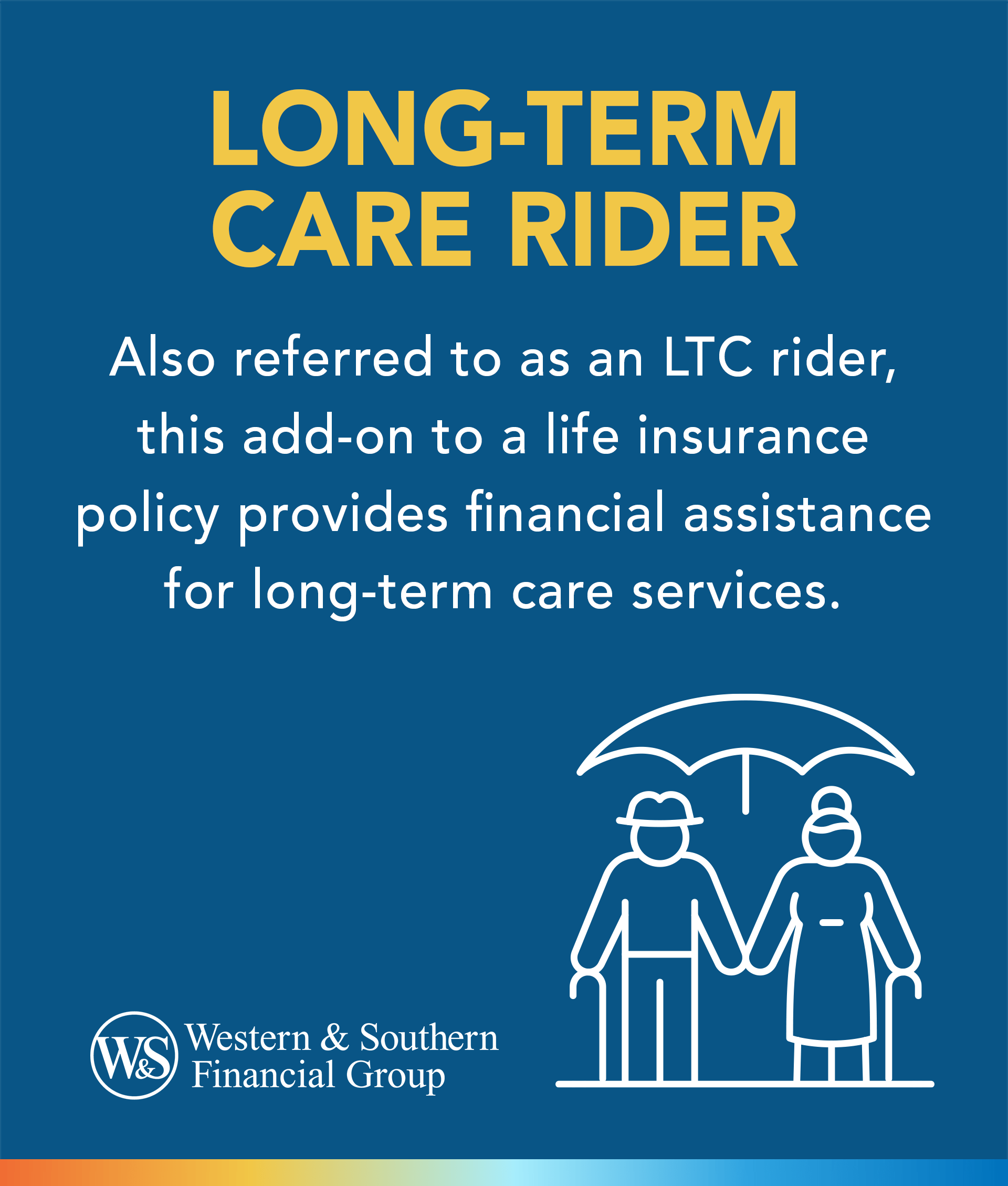
Some life insurance policies offer an LTC rider. This is an extra feature you can add to a permanent policy. The rider lets you use part of the death benefit (the money paid out at death) if you need long term care.
For example, if you have a $300,000 policy and need LTC, you might be able to take out $5,000 per month to pay for care. The total amount you use will reduce the death benefit your family gets later.
Key points:
- Usually only available with permanent policies.
- You must meet certain health conditions to qualify (like needing help with at least two daily activities).
- The insurance company may charge extra for the rider.
2. Hybrid Life/long Term Care Insurance
A hybrid policy combines life insurance and long term care insurance in one product. You pay a larger premium, but if you need LTC, you can use the policy’s benefits for that. If you don’t use the LTC part, your family still gets a death benefit.
Here’s how it works:
- You buy a policy for, say, $100,000.
- If you need care, you can use a set amount per month (like $4,000) for several years.
- If you never use LTC, your heirs get the full $100,000 when you die.
Hybrid policies often offer more flexibility and can be easier to qualify for than traditional LTC insurance.
3. Accelerated Death Benefit
Many permanent life policies now include an accelerated death benefit (ADB). This lets you access part of your death benefit if you are terminally ill or, sometimes, if you need LTC. The rules for what counts as a qualifying illness or need vary by policy.
ADB is usually included at little or no extra cost, but using it will reduce what your beneficiaries receive.
4. Life Settlements
If you have a permanent life insurance policy you no longer need, you can sometimes sell it to a third party (a life settlement company) for a lump sum. You get cash now, and the buyer takes over the policy and collects the death benefit later.
This money can be used for anything, including long term care expenses. However, you will likely get less than the full death benefit, and there may be tax consequences.
5. Policy Loans And Withdrawals
Permanent life insurance policies build cash value over time. You can borrow against this cash value or withdraw some of it. The loan does not need to be repaid during your lifetime, but it will reduce the death benefit. Withdrawals may also reduce the policy’s value and could have tax impacts.
This approach is less formal than an LTC rider, but it gives you flexibility to use the money as you need.
Comparison: Life Insurance Vs. Traditional Long Term Care Insurance
To help you see the differences, here’s a simple comparison:
| Feature | Life Insurance with LTC Rider | Traditional LTC Insurance |
|---|---|---|
| Benefit if LTC not used | Death benefit for heirs | No benefit |
| Premiums | Higher than basic life, but fixed | Can increase over time |
| Medical qualifying | Required for both life and LTC parts | Usually strict |
| Flexibility | Can use for either LTC or death | Only for LTC expenses |
Hybrid policies and riders can help you avoid the “use it or lose it” feeling of traditional LTC insurance.

Credit: www.annuityexpertadvice.com
Real-life Example
Consider Jane, age 65. She buys a hybrid life/LTC policy with a $200,000 death benefit. She pays a single premium of $75,000. Five years later, Jane needs help with bathing and dressing due to illness. Her policy allows her to access up to $4,000 per month for long term care. If she uses $48,000 for care over one year, her family will get $152,000 when she passes away (the original $200,000 minus $48,000 used for care).
Jane’s friend Bob buys stand-alone LTC insurance, pays premiums for 12 years, and never uses the benefits. Bob’s family receives nothing from the policy, since he did not need LTC.
Important Factors To Consider
Before using life insurance for long term care, think about these points:
- Policy Type: Not all policies offer LTC features. Check if yours is eligible or if you need to buy a new one.
- Cost: Adding an LTC rider or buying a hybrid policy costs more than basic life insurance. Compare the cost to stand-alone LTC insurance.
- Benefit Limits: Some policies have daily or monthly maximums on how much you can use for care.
- Health Requirements: You must qualify based on your health when buying or adding LTC features.
- Impact on Heirs: Money used for LTC reduces the death benefit your family receives.
- Tax Implications: Benefits used for qualified LTC expenses are usually not taxed, but loans and withdrawals may be.
Non-obvious Insights Most People Miss
Many people do not realize that timing matters. The younger and healthier you are when you buy a life insurance policy with LTC features, the lower your premiums will be. Waiting until your 60s or after a serious health event can make it much more expensive, or you may not qualify at all.
Another overlooked point is the importance of reviewing old policies. If you have a whole or universal life policy bought years ago, ask your insurer if it can be updated or if you can add an LTC rider. Some companies allow you to convert or exchange old policies for new ones with LTC features, sometimes without new medical exams.
How To Decide If Using Life Insurance For Ltc Is Right For You
Choosing the right strategy depends on your needs and family situation. Here’s a simple decision guide:
| Situation | Best Option |
|---|---|
| Want both life & LTC coverage, have savings | Hybrid life/LTC policy |
| Already own permanent life insurance | Add LTC rider if possible, or consider policy loan |
| Need only LTC, want lower cost | Traditional LTC insurance |
| In poor health, need cash soon | Life settlement or cash value withdrawal |
It’s wise to discuss your choices with a financial advisor who understands both life insurance and LTC planning. They can help you find the best fit for your age, health, and goals.
Credit: www.westernsouthern.com
Pitfalls And Common Mistakes
- Assuming all policies cover LTC: Many life policies do not include LTC features unless you add them when you buy the policy.
- Not reading the fine print: Some policies have waiting periods (like 90 days) before LTC benefits start, or limits on what types of care are covered.
- Forgetting about inflation: The cost of care rises over time. Make sure your benefits keep up, or add an inflation protection option if available.
- Ignoring tax issues: Loans or withdrawals from cash value may have tax consequences. LTC benefits used for qualified care are usually tax-free, but check with a tax advisor.
Steps To Take If You’re Interested
- Review your current life insurance to see if it has any LTC riders or cash value.
- Ask your insurance company if you can add LTC features or convert your policy.
- Compare quotes from multiple insurers for hybrid or new policies.
- Consider your health and age—applying sooner usually means lower costs.
- Talk to a professional who can explain the pros and cons based on your full financial picture.
Frequently Asked Questions
Can I Add A Long Term Care Rider To My Existing Life Insurance Policy?
Sometimes. If your policy is permanent (whole or universal life), your insurer may let you add an LTC rider. If you have term life insurance, this is usually not possible. Check with your insurer for options.
Will Using Life Insurance For Long Term Care Reduce What My Family Receives?
Yes. If you use your policy’s benefits for LTC, the amount your family gets after you die will be reduced by what you used for care.
Is Life Insurance With An Ltc Rider Better Than Traditional Ltc Insurance?
It depends on your needs. Hybrid life/LTC policies provide benefits even if you never use LTC, while traditional LTC insurance is “use it or lose it.” However, hybrids often cost more upfront.
Are Life Insurance Payouts For Long Term Care Taxed?
Usually, benefits used for qualified LTC expenses are tax-free. But loans or withdrawals from your cash value may be taxed. Always check with a tax professional for your situation.
Where Can I Learn More About Long Term Care And Insurance Options?
A good place to start is the National Association of Insurance Commissioners. Visit their guide at NAIC Consumer Resources for more information.
Life insurance can be a powerful tool for long term care planning when used wisely. With careful research and good advice, you can protect both yourself and your loved ones from the high costs of care.