
Why Do Life Insurance Premiums Increase With Age
Many people wonder why their life insurance costs go up as they get older. If you’ve ever looked at quotes for life insurance, you probably noticed that age is one of the main factors in the price. This can be confusing, especially for those who are new to insurance. Let’s explore why life insurance premiums increase with age, and how this affects your choices.
What Is Life Insurance Premium?
A life insurance premium is the amount you pay, usually monthly or yearly, to keep your insurance policy active. This payment covers the risk that the insurance company takes to provide your coverage. If you stop paying the premium, the policy will end, and you won’t get the protection.

The premium depends on several factors, such as your age, health, lifestyle, the amount of coverage, and the type of policy. Age is one of the most important factors.
How Age Affects Life Insurance Premiums
When you apply for life insurance, the company checks your age. The younger you are, the lower the premium. As you get older, the premium goes up. But why?
The Risk Of Dying Increases With Age
Insurance companies use statistics to decide how much risk you bring. As people age, their chance of dying in a given year increases. This is called mortality risk. The higher the risk, the higher the premium.
Here is a simple example:
| Age | Chance of Dying (per year) | Typical Premium ($100,000 Coverage) |
|---|---|---|
| 25 | 0.04% | $10/month |
| 45 | 0.17% | $22/month |
| 65 | 1.1% | $65/month |
As you can see, the risk increases quickly as people age. Insurance companies charge more to cover this higher risk.
Health Changes With Age
Most people’s health gets worse as they get older. You may develop medical conditions like diabetes, heart disease, or high blood pressure. These conditions increase the risk of death, so the insurance company increases the premium.
Some companies require a medical exam. If the exam finds health problems, the premium may be even higher. Even if you are healthy, the fact that you are older means your body is more likely to have issues.
Policy Type Matters
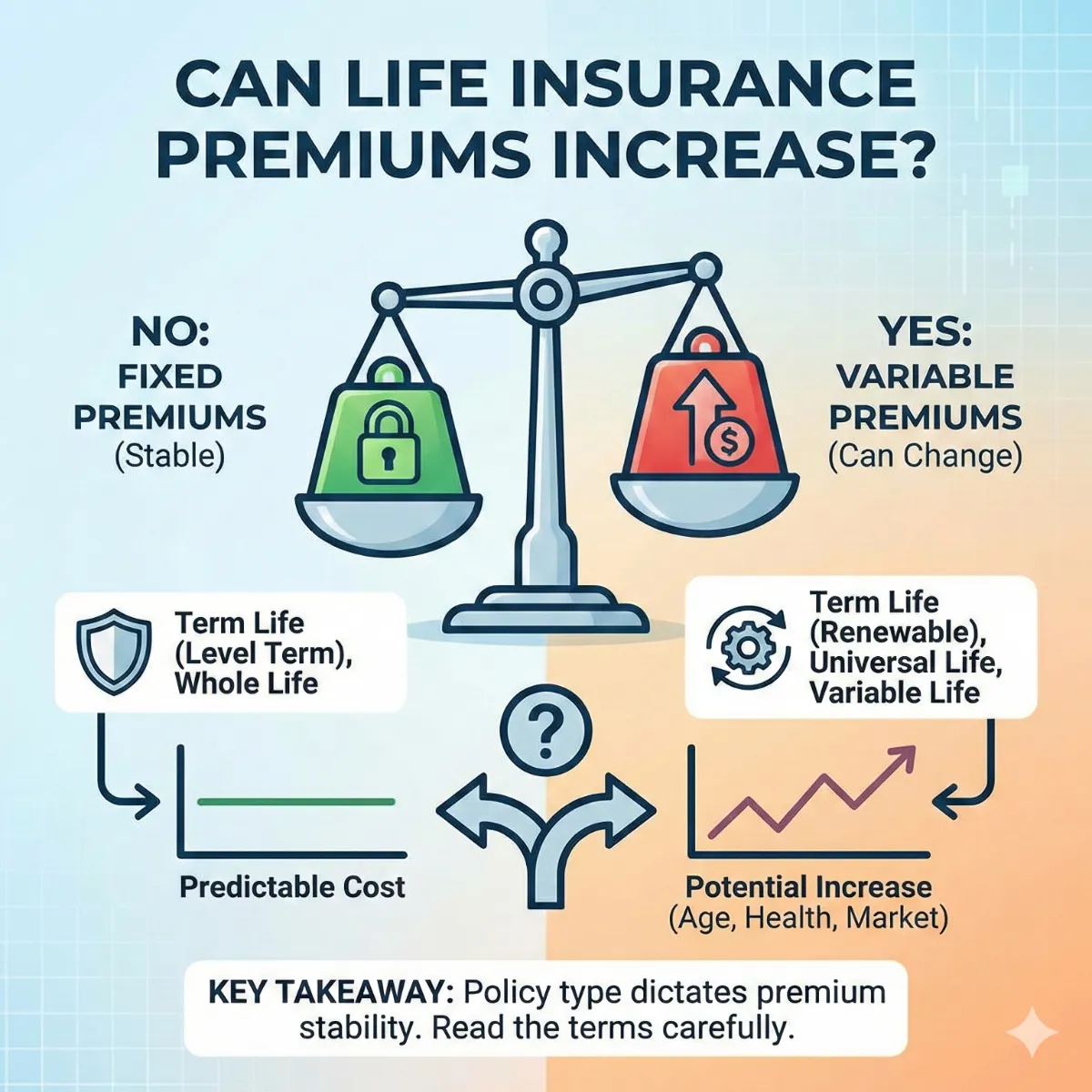
Not all life insurance policies work the same way. The most common types are term life insurance and whole life insurance.
- Term life insurance covers you for a set period (10, 20, or 30 years). The premium is fixed during this time, but if you renew after the term, the premium will be much higher because you are older.
- Whole life insurance covers you for your whole life. The premium is higher from the start, but it does not increase as you age.
If you buy term insurance at 25 years old, you pay a low premium. If you buy the same policy at 45 or 65, the premium is much higher.
Underwriting And Age Bands
Insurance companies use age bands to group people by age. For example, premiums may be the same for people aged 30–34, then jump for 35–39, and so on. When you move into a new age band, the premium increases.
Underwriting is the process where the company checks your risk. For older applicants, the underwriting is stricter, and the premium is higher.
Why Insurance Companies Set Premiums This Way
The main goal of insurance companies is to stay profitable. They collect premiums from many people, and only pay out when someone dies. If they charge too little for older people, they could lose money.
Here are some key reasons:
- Mortality tables: These tables show the expected death rate for each age. Companies use them to set prices.
- Risk pooling: Insurance works by pooling risk. Younger, healthier people subsidize older people. But if the pool has more older people, premiums go up for everyone.
- Long-term commitments: For whole life policies, companies must predict costs over decades. They charge more to cover future risks.
Real Data: Premiums By Age
To help you understand, here’s another example showing how premiums change for a healthy, non-smoking male for a 20-year term policy:
| Age | Annual Premium ($250,000 Coverage) |
|---|---|
| 30 | $160 |
| 40 | $220 |
| 50 | $480 |
| 60 | $1,320 |
Premiums rise sharply, especially after age 50. This is because the risk of death increases rapidly after middle age.
Other Factors That Affect Premiums
Age is important, but not the only factor. Here are some other things that can change your premium:
- Gender: Women usually pay less because they live longer.
- Smoking: Smokers pay much more. For some policies, premiums can be double or triple.
- Occupation: Dangerous jobs (like construction or pilots) have higher premiums.
- Lifestyle: Risky hobbies (like skydiving) can increase premiums.
- Family history: If your family has health issues, your risk is higher.
But even with these factors, age is usually the biggest driver.
Is There A Way To Lock In Lower Premiums?
Yes, you can lock in a low premium if you buy life insurance when you are young. For example, buying a 30-year term policy at age 25 will keep your premium fixed until you are 55, even though your risk increases with age.
Some people buy whole life insurance or universal life insurance early for this reason. These policies have higher premiums up front, but the premium stays the same, no matter how old you get.

Practical Examples: Buying Insurance At Different Ages
Let’s look at two cases:
Case 1: Maria buys a 20-year term life insurance at age 30. Her premium is $160 per year. She keeps paying this amount until she is 50.
Case 2: John waits until age 50 to buy the same policy. His premium is $480 per year, three times more than Maria’s. If he had bought it earlier, he would have saved thousands of dollars.
These examples show how important it is to buy life insurance early, if you need it.
Common Mistakes When Buying Life Insurance
Many beginners make mistakes that cost them money:
- Waiting too long: People think they can wait until they are older. But premiums go up fast.
- Underestimating coverage needs: Some buy too little coverage, thinking they will upgrade later. But upgrading later means higher premiums.
- Ignoring health changes: If you develop health problems, you may not qualify for cheap insurance anymore.
- Renewing term insurance: Renewing after the term ends is often expensive. Buying a new policy when you are older is much costlier.
Non-obvious Insights Beginners Miss
Most beginners focus only on the premium, not the overall value. Here are two insights:
- Cash value growth: Some permanent policies build cash value. If you buy young, this value grows faster and can be used later for loans or withdrawals.
- Insurability risk: If you develop a health issue later, you may not be able to buy insurance at all. Buying early protects your insurability.
Comparing Premiums: Younger Vs. Older Applicants
Here is a comparison for a 30-year term life policy for a healthy male:
| Age at Purchase | Monthly Premium | Total Paid Over 30 Years |
|---|---|---|
| 25 | $18 | $6,480 |
| 35 | $26 | $9,360 |
| 45 | $47 | $16,920 |
Buying at 25 saves over $10,000 compared to buying at 45. This is why experts recommend buying early.
What Should You Do If You’re Older?
If you are older, you still have options. You can:
- Shop around for the best rates. Some companies specialize in older applicants.
- Consider a shorter term policy. This costs less.
- Reduce coverage amount to lower the premium.
- Improve your health. Stop smoking, lose weight, and get regular checkups.
- Ask about “guaranteed issue” policies. These don’t require a medical exam but are more expensive.
It’s important to compare offers and read the fine print.
The Role Of Inflation And Policy Costs
Some people worry that inflation will make premiums go up. For term policies, premiums stay the same during the term. For whole life or universal policies, premiums are fixed, but the value of the payout may decrease over time because of inflation.
Insurance companies also have costs for administration, marketing, and claims. These costs can affect premiums, but age remains the main factor.

Expert Guidance: Timing Is Key
If you need life insurance, the best time to buy is usually now, not later. Many experts agree:
- Buying young locks in lower premiums.
- It protects your insurability.
- You can build cash value in permanent policies.
Waiting usually costs more and limits your options.
Frequently Asked Questions
Why Do Premiums Increase So Much After Age 50?
After age 50, the risk of death rises quickly. Insurance companies use mortality tables that show this jump. As a result, premiums go up sharply to cover the higher risk.
Can I Get Life Insurance If I Have Health Problems?
Yes, but the premium will be higher. Some companies offer “guaranteed issue” policies, which don’t require a medical exam. These are more expensive and may have lower coverage.
What Happens If I Miss A Premium Payment?
If you miss a payment, your policy may lapse. You could lose coverage and need to reapply, possibly at a higher premium due to your older age.
Is Term Life Insurance Better Than Whole Life Insurance For Older People?
Term life insurance is cheaper but only lasts for a set period. Whole life insurance is more expensive but covers you for your entire life. For older people, whole life may be better if you want lifelong coverage, but it costs more.
Where Can I Find Reliable Data On Life Insurance Premiums?
You can find data from official sources like the National Association of Insurance Commissioners, which publishes annual reports and statistics.
Getting life insurance is a big decision, and understanding how age affects premiums helps you make a smart choice. Buying young saves money and gives you more options. Always compare policies and ask questions before you buy.