
If you have life insurance, you probably chose it to protect your loved ones from financial trouble if you die. But what happens if you decide to stop your life insurance? Maybe you’re cutting expenses, your situation changed, or you simply wonder what’s at stake.
It’s a bigger decision than many people realize. Let’s break down what you need to know if you’re thinking about canceling your life insurance policy.

Why People Consider Canceling Life Insurance
People cancel life insurance for different reasons. Some common motivations include:
- Financial pressure: Premiums may feel too high after a job loss or other expense increase.
- Life changes: Kids grow up, debts are paid, or you separate from a partner.
- Better offers elsewhere: Sometimes, people find a cheaper or more flexible policy.
- No longer needed: Savings or investments may now cover what insurance used to protect.
Before you act, it’s important to understand the effects. Stopping your life insurance can have both immediate and long-term consequences.
What Happens Immediately After Stopping Life Insurance
The impact depends on the type of policy you hold. Here are the basics for the most common types:
| Policy Type | Immediate Effect of Stopping |
|---|---|
| Term Life | Coverage ends, no refund, no payout |
| Whole Life | Coverage ends, may receive cash value (if any), surrender charges possible |
| Universal Life | Coverage ends, cash value (if any) returned minus fees |
Term Life Insurance
If you stop paying for term life insurance, your coverage ends, usually after a grace period of 30 or 31 days. If you die after the policy lapses, your beneficiaries get nothing. There’s no refund because term policies don’t have a cash value.
Whole Life And Universal Life Insurance
Whole life insurance and universal life insurance are permanent policies. They build cash value over time. If you stop these policies, you might get some money back—the “surrender value”—but it’s not always as much as you think. Surrender charges (fees for quitting early) and taxes can reduce what you receive.
Grace Periods And Reinstatement
Most companies offer a short grace period if you miss a payment. If you act fast, you can often reinstate your policy by paying the missed premium plus interest. If you wait too long, you might need to answer health questions or even take a medical exam, which could make reinstatement more expensive or impossible.
The Hidden Costs Of Stopping Life Insurance
Canceling life insurance is not just about stopping payments. Some costs are less obvious:
Loss Of Protection
If you die after canceling, your family won’t get a payout. This could mean:
- Mortgage, car loans, or other debts left unpaid
- Children’s education not funded
- Loss of financial support for your spouse or dependents
Even if you feel financially stable now, unexpected events can quickly change that picture.
Surrender Charges And Taxes
Permanent policies often have surrender charges if you cancel in the first few years. For example, if your cash value is $10,000, but the surrender charge is $2,000, you’ll only get $8,000. Plus, if your cash value is more than you’ve paid in premiums, you could owe income tax on the gain.
Losing Insurability
As you age, health problems become more likely. If you cancel now and need coverage later, you might not qualify or could pay much higher premiums. This is something many people don’t consider until it’s too late.
| Age When Buying New Policy | Average Premium (Non-Smoker, $250,000, 20-Year Term) |
|---|---|
| 30 | $16/month |
| 40 | $27/month |
| 50 | $63/month |
| 60 | $174/month |
As this table shows, premiums increase sharply with age.
What Happens To The Money You Paid?
With most term life insurance, you do not get your premiums back if you cancel. The money you paid was for coverage during the time you had the policy. There are some “return of premium” term policies, but these are rare and more expensive.
If you own a permanent policy (whole or universal life), part of your payments may go into a cash value account. If you cancel, you’ll usually get the cash value, minus any surrender fees and loans. However, the payout is often much less than you expect, especially in the first 5–10 years.
Example Scenario
Imagine you’ve had a whole life policy for 7 years. You’ve paid $12,000 in premiums, and your cash value is $7,000. If you surrender the policy, you may get only $5,500 after fees. If you die after canceling, your family gets nothing.
This surprises many people. They often think “I paid for years, I should get all my money back,” but most policies don’t work that way.

Alternatives To Canceling Your Policy
Before you stop your life insurance, consider other options. You might solve your problem without losing all your coverage or benefits.
- Reduce the coverage amount: Many insurers allow you to lower your death benefit, which also lowers your premium.
- Switch to a cheaper policy: Some companies let you change from whole life to term life, which is usually less expensive.
- Ask about paid-up insurance: For permanent policies, you might be able to stop paying but keep a smaller, “paid-up” policy using the cash value.
- Use your cash value: Some policies let you use the cash value to pay premiums temporarily.
- Sell your policy: In some cases (especially for older people or those with health problems), you can sell your policy to a third party for more than the surrender value. This is called a life settlement.
It’s smart to talk to your insurer or a trusted financial advisor before making a final decision.
What Your Beneficiaries Need To Know
If you stop your life insurance, your beneficiaries should be aware. They might expect a payout if you die, but if you canceled the policy, there is no benefit. It’s wise to talk openly so your family can plan and avoid surprises.
Life Insurance And Your Overall Financial Plan
Life insurance is just one part of your financial safety net. If you’re thinking about canceling, ask yourself:
- Do you have enough savings to cover funeral costs, debts, and everyday expenses for your loved ones?
- Are there other assets or investments that can replace the lost protection?
- Is now the right time to take on more risk, or would it be better to wait?
Sometimes, keeping even a small amount of coverage is better than canceling everything.
Special Situations: Group Life, Divorce, And Loans
Employer-provided (group) Life Insurance
If you leave your job, your group life insurance usually ends. Some plans let you convert to an individual policy, but this is often much more expensive. If you’re relying only on work insurance, losing your job can leave you unprotected.
Divorce Or Family Changes
If your policy names your ex-spouse or a family member you no longer support, you may want to update your beneficiaries rather than cancel the policy. Some divorce settlements require you to keep coverage for child support or alimony.
Life Insurance Loans
If you borrowed money from your policy’s cash value and then cancel, the loan amount is subtracted from your payout. If you owe more than the cash value, you get nothing, and you may owe taxes on the unpaid portion.
Common Mistakes When Canceling Life Insurance
- Canceling before new coverage is in place: If you want a different policy, get approved for the new one before canceling the old.
- Ignoring tax effects: Surrendering a policy with a cash value can create a tax bill.
- Not telling your beneficiaries: Family may make financial plans based on coverage that no longer exists.
- Not reading the fine print: Many people are surprised by surrender charges and fees.
- Assuming you can always buy more later: Health and age may make future coverage expensive or impossible.
Real-world Example
Jane, age 48, had a $250,000 term life insurance policy for 20 years. At age 47, she lost her job and canceled her policy to save money. Six months later, she found work and wanted new coverage. Because she had developed high blood pressure during that time, her new premium was over twice as high as before.
If Jane had kept her policy for one more year, she could have kept the lower rate.
Is There Ever A Good Time To Cancel?
Sometimes canceling makes sense—if your children are grown, debts are paid, and you have enough savings. But even then, consider:
- Would your spouse struggle financially if you died?
- Do you help care for an aging parent or disabled relative?
- Are you sure you won’t want coverage later?
Cancel only after a careful review of your needs, not just because of short-term financial stress.
When Does Life Insurance End Automatically?
Some policies have clear end dates or triggers. For example:
- Term life insurance: Ends when the term (10, 20, or 30 years) is over, unless you renew.
- Non-payment: If you miss payments and don’t pay during the grace period, coverage lapses.
- Age limits: Some group or employer policies end at retirement or a certain age.
Know your policy’s terms, so you’re not caught off-guard.
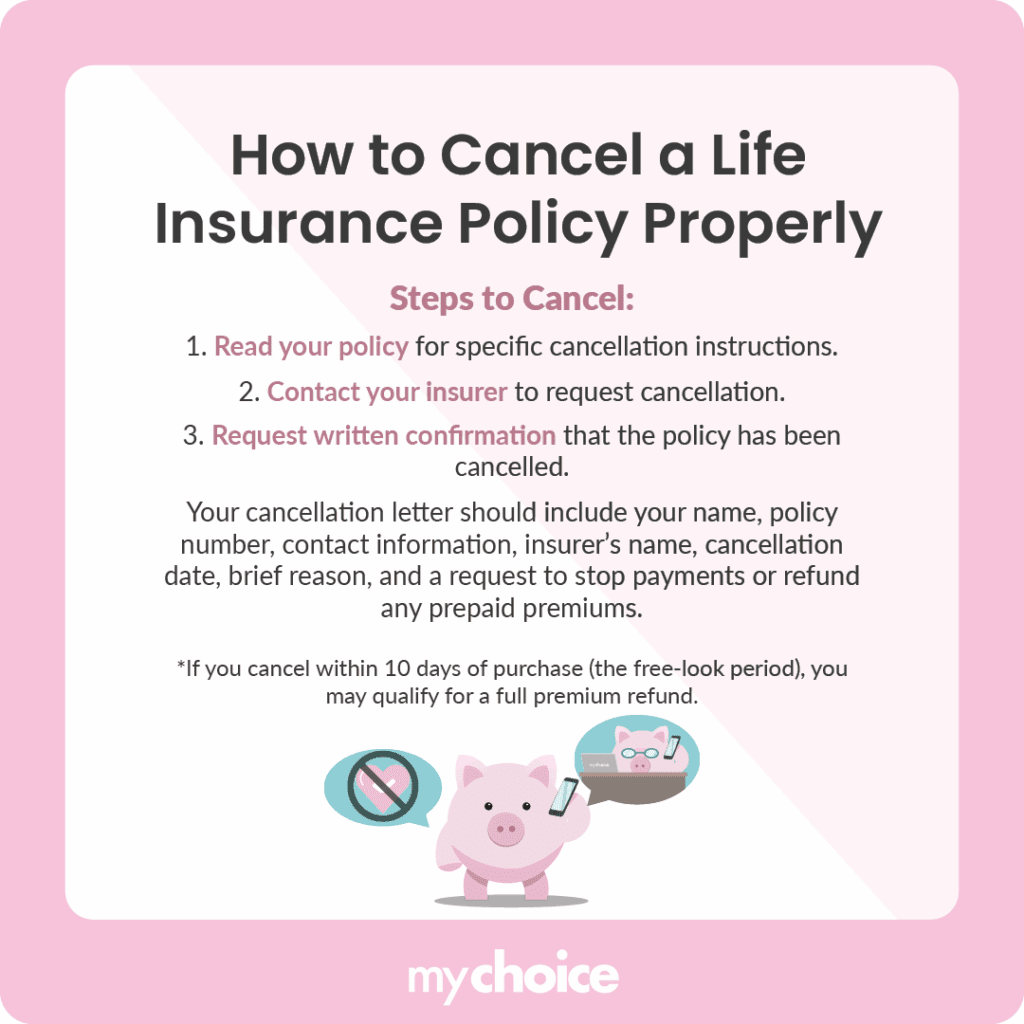
How To Cancel Your Policy Properly
If you decide canceling is right for you, follow these steps for a smooth process:
- Contact your insurer: Don’t just stop payments—call the company and ask for the cancellation process.
- Get it in writing: Request a written confirmation that your policy is canceled.
- Ask about the cash value: If you have a permanent policy, ask how much you’ll receive and any fees.
- Check for automatic payments: Make sure to stop any auto-pay to avoid extra charges.
- Keep records: Save all documents in case there’s confusion later.
Final Thoughts
Stopping your life insurance is a big decision with lasting results. The main risk is losing the protection your loved ones may depend on. In most cases, you’ll get no refund for term policies, and only part of your money back from permanent insurance.
Surrender charges, taxes, and lost insurability are common surprises.
Before you cancel, look at all your options. Reducing coverage, changing policy types, or using cash value to cover premiums could help. Talk to your insurer or a financial expert for advice.
For more in-depth information about life insurance basics, you can visit the National Association of Insurance Commissioners.
Frequently Asked Questions
What If I Stop Paying My Life Insurance Premium?
If you stop paying, your policy will usually lapse after a grace period (often 30 days). Term life ends with no refund. Permanent policies might use cash value to pay premiums for a short time, but eventually, coverage will end if payments don’t resume.
Do I Get Any Money Back If I Cancel My Life Insurance?
With term life, you do not get your money back. With whole or universal life, you may get the cash surrender value (cash value minus fees and loans). This amount is often much less than you paid in.
Can I Restart My Life Insurance After Canceling?
Usually, once a policy is canceled, you need to reapply for new coverage. Some policies allow reinstatement within a certain time, but you may need a new health check and pay back missed premiums plus interest.
Will Canceling My Policy Affect My Credit Score?
No, canceling life insurance does not affect your credit score. However, any loans you took from the policy and did not repay could have tax consequences.
What Are Alternatives To Canceling My Life Insurance?
You can lower your coverage, switch to a cheaper policy, use cash value to pay premiums, or sell the policy in a life settlement. Talk to your insurer about options before canceling.