
Is Life Insurance Useful
When people hear the words “life insurance,” they often think of paperwork, monthly bills, or something you only need when you’re old. But the truth is, life insurance is one of the most important tools for protecting your loved ones and your future. Whether you’re young, married, a parent, a business owner, or even single, life insurance can play a surprising role in your financial security. Many people overlook its value until it’s too late. Let’s look closely at what life insurance really offers, who needs it, and why it matters more than you might think.
What Is Life Insurance?
Life insurance is a contract between you and an insurance company. You pay regular amounts called premiums. If you die while the policy is active, the company pays a lump sum—called the death benefit—to the people you choose (your beneficiaries). This money can help your family pay bills, cover debts, or simply stay financially stable during a difficult time.

There are two main types:
- Term life insurance: Covers you for a set period, like 10, 20, or 30 years. If you die during this time, your beneficiaries get paid. It’s usually the cheapest type.
- Permanent life insurance: Lasts your whole life and includes options like whole life or universal life. These usually cost more but can build cash value you can borrow from.
While life insurance may sound simple, its usefulness depends on your needs, goals, and stage of life.
Why Do People Buy Life Insurance?
Many people think life insurance is only about death. In reality, it’s about protecting the living—the people who depend on you. Here are some common reasons people choose life insurance:
- Income replacement: If your family relies on your salary, life insurance can replace that income if you die unexpectedly.
- Paying debts: Mortgage, car loans, and credit cards don’t disappear when you die. Insurance can help your family pay off these bills.
- Funeral costs: Funerals can be expensive. The average cost in the US is over $7,000. Insurance can help cover these costs.
- Children’s education: You may want to make sure your kids can still go to college, even if you’re not there.
- Business protection: Life insurance can help keep a business running if an owner or key employee dies.
- Leave a legacy: Some people want to leave money to charity or their grandchildren.
These reasons show that life insurance is about more than just covering death—it’s about caring for your family’s future.
How Does Life Insurance Work?
When you buy a policy, you agree to pay premiums (monthly, yearly, or as a lump sum). In return, the insurance company promises to pay your beneficiaries a set amount if you die while the policy is active. The process looks like this:
- Apply for a policy: This involves answering health questions and possibly a medical exam.
- Choose coverage amount: This is how much money your beneficiaries will get.
- Name beneficiaries: These are the people who will receive the money.
- Pay premiums: If you stop paying, the policy might end.
- Claim process: When you die, your beneficiaries file a claim and, if approved, receive the death benefit.
This simple structure offers peace of mind. But to see how useful life insurance can be, it helps to look at real examples.
Real-life Examples Of Life Insurance Benefits
Example 1: Young Family
Sarah and Mike have two small children. Mike is the only one working. If he dies, the family will lose his income. With a $500,000 term life policy, Sarah could pay the mortgage, cover daily costs, and keep the children in school.
Example 2: Single Parent
Jasmine is a single mom. She wants to make sure her son will have money for college if something happens to her. She buys a 20-year term policy for $250,000. This gives her peace of mind.
Example 3: Small Business Owner
Carlos owns a bakery with his brother. They buy “key person” life insurance on each other. If one dies, the other gets the money to keep the business running or buy out the other’s share.
These stories show how flexible and useful life insurance can be for different people.

Who Really Needs Life Insurance?
The answer is simple: If someone would struggle financially if you died, you probably need life insurance. Here are some common groups who benefit the most:
Parents With Dependent Children
Children depend on their parents for food, housing, education, and more. If a parent dies, life insurance can help fill the gap.
Homeowners With Mortgages
If you have a mortgage, your family could lose the home if they can’t make payments. Insurance can help protect your home.
Married Couples (even Without Kids)
If your spouse depends on your income, insurance can help them keep up with bills and maintain their lifestyle.
People With Private Student Loans Or Co-signed Debt
Some student loans don’t go away when you die. If someone co-signed your loan, life insurance can prevent them from getting stuck with your debt.
Business Partners
If you own a business, life insurance can protect your company and make transitions smoother if something happens to you or a partner.
Caregivers
If you support an aging parent or disabled relative, insurance can make sure they still get care if you’re gone.
Single People With No Dependents
While not everyone in this group needs coverage, some still want to leave money for funeral costs or charity.
Table: Who Needs Life Insurance Most?
Here’s a simple comparison:
| Group | Need for Life Insurance | Reason |
|---|---|---|
| Parents with Children | High | Income replacement, education, daily living costs |
| Homeowners | High | Mortgage protection |
| Single People | Low to Medium | Funeral costs, debts, charity |
| Business Owners | High | Business continuity, buyout |
| Retirees | Low to Medium | Estate planning, legacy |
Types Of Life Insurance: Which Is Most Useful?
Choosing the right type of life insurance can make a big difference. Here’s what you need to know:
Term Life Insurance
- Simple and affordable
- Covers a set period (like 10, 20, or 30 years)
- Pays only if you die within the term
- No cash value
Best for: Young families, people with debt, those needing coverage for a certain time (like until kids graduate).
Whole Life Insurance
- Covers you for life
- Has a cash value that grows over time
- Costs much more than term life
- Can be used as an investment
Best for: Those who want permanent coverage, estate planning, or a forced savings component.
Universal Life Insurance
- Flexible premiums and coverage
- Cash value grows over time
- More complex than term or whole life
Best for: People with changing needs, those wanting to adjust coverage as life changes.
Table: Comparing Term Vs. Whole Life
See how the two main types stack up:
| Feature | Term Life | Whole Life |
|---|---|---|
| Coverage Period | Specific Term | Lifetime |
| Premium Cost | Low | High |
| Cash Value | No | Yes |
| Payout Guarantee | Only if you die within term | Whenever you die |
| Complexity | Simple | Complex |
Insight for beginners: Many agents push whole life because it pays them more, but most families only need term life for basic protection.
Is Life Insurance Worth The Cost?
One of the biggest questions is, “Is it worth the money? ” The answer depends on your situation and what you value.
Cost Vs. Benefit
Term life can be very cheap, especially if you’re young and healthy. For example, a healthy 30-year-old can often buy $500,000 in coverage for less than $30 per month. That’s less than $1 per day for peace of mind.
Whole life and other permanent policies can cost 5–10 times more. They offer extra features, but most people don’t need them.
What Do You Get?
- Financial safety net for your family
- Peace of mind
- Ability to lock in low rates when you’re young
When Is It Not Useful?
- If no one depends on you financially
- If you have enough savings to cover all needs (self-insured)
- If you’re older with no debts or dependents
Table: Sample Monthly Costs For $500,000 Coverage
These are average costs for non-smoking, healthy individuals:
| Age | Term Life (20 years) | Whole Life |
|---|---|---|
| 30 | $25 | $300 |
| 40 | $40 | $450 |
| 50 | $100 | $700 |
Non-obvious insight: The cost of waiting can be huge. Even a few years’ delay can double your monthly premium.
Common Myths And Mistakes About Life Insurance
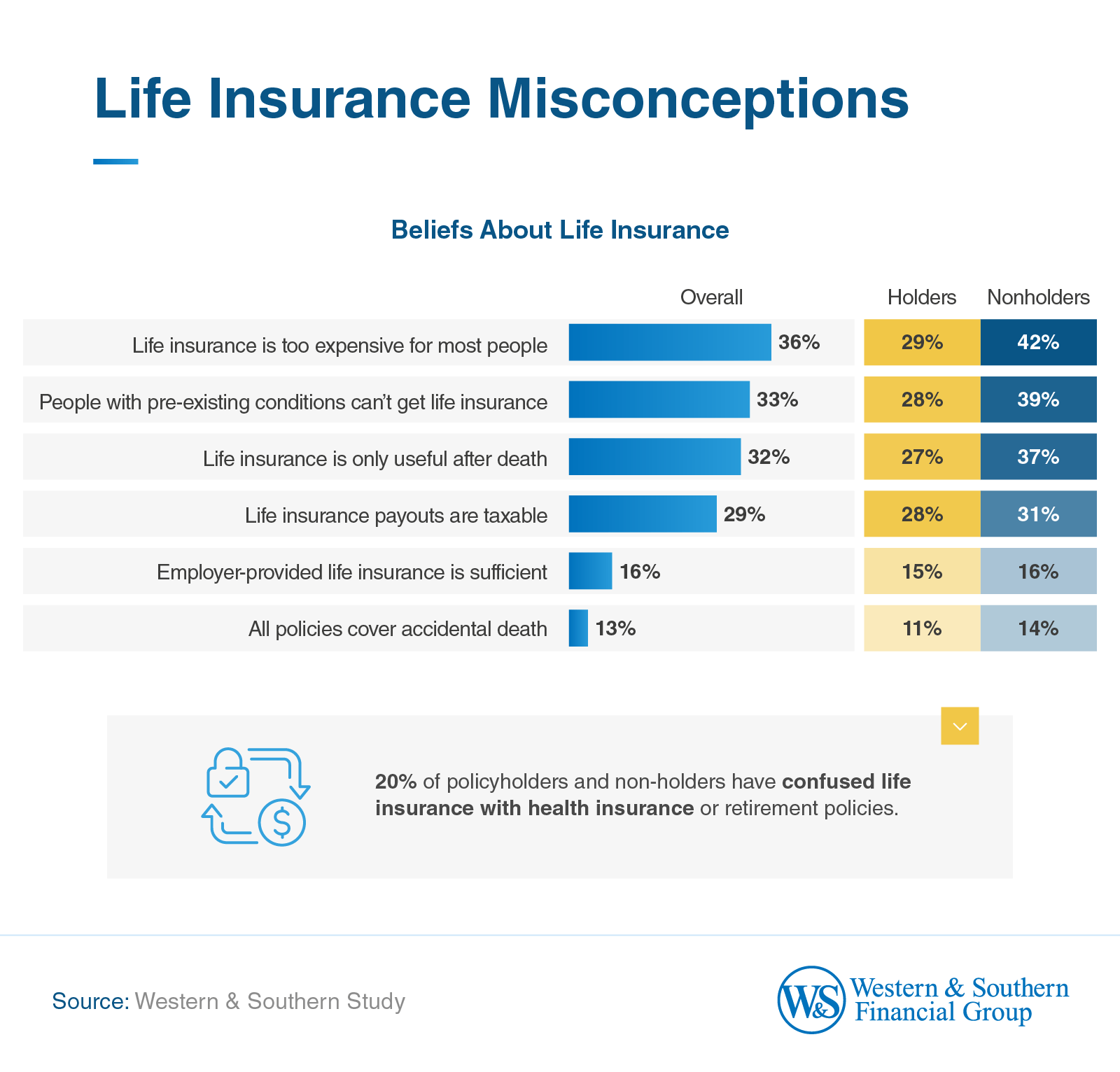
Many people avoid life insurance because they believe certain myths. Let’s clear up some common misunderstandings:
Myth 1: “i’m Young And Healthy, I Don’t Need It.”
Accidents and illnesses can happen at any age. Buying young means lower costs and guaranteed coverage before any health problems start.
Myth 2: “my Work Life Insurance Is Enough.”
Employer coverage often ends when you leave the job, and the amount is usually low (often 1–2 times your salary). It’s risky to rely on just this.
Myth 3: “i’ll Buy It When I’m Older.”
Life insurance gets more expensive as you age. Waiting can mean paying much more or not qualifying if your health changes.
Myth 4: “stay-at-home Parents Don’t Need Life Insurance.”
If a stay-at-home parent dies, the surviving parent may need money for childcare, housework, or other help.
Mistake: Buying Too Much Or Too Little
Some people buy expensive policies they don’t need. Others buy too little coverage to save money, leaving their family unprotected.
Practical tip: Most families need 7–10 times their yearly income in coverage.
How Much Life Insurance Do You Really Need?
There’s no one-size-fits-all answer, but you can use simple steps to estimate your need.
Step 1: Add Up What You Want To Cover
- Income replacement (for how many years?)
- Debts (mortgage, loans, credit cards)
- Education costs for children
- Funeral and final expenses
Step 2: Subtract What You Already Have
- Savings
- Existing life insurance
- Other assets
Step 3: Choose A Policy That Fills The Gap
Example:
If you want $50,000 per year for 10 years, plus $200,000 for debts and college, that’s $700,000. If you already have $100,000 in savings, you might need a $600,000 policy.
Non-obvious insight: Don’t forget inflation—college and living costs go up over time.
How To Choose The Right Policy And Company
Picking a policy can feel confusing. Here’s how to make it easier:
- Decide on term or permanent: Most people only need term life.
- Get quotes from several companies: Prices and rules can vary a lot.
- Check the company’s financial strength: Use ratings from sites like AM Best or Standard & Poor’s.
- Read the fine print: Some policies have exclusions or waiting periods.
- Work with a trusted advisor: Not all agents are the same—find one who puts your interests first.
Practical tip: Don’t buy more insurance than you need, but don’t cut it too close either.
Alternatives To Life Insurance
Some people wonder if there are other ways to protect their loved ones. Here are some common alternatives:
- Building savings: Self-insurance works if you have enough assets, but it takes time.
- Employer benefits: Good as extra, but not enough alone.
- Investing in retirement plans: Can help, but often locked up until retirement age.
- Government programs: Social Security survivor benefits may help, but usually not enough.
None of these completely replace the speed and certainty of a life insurance payout.
When Does Life Insurance Not Make Sense?
Life insurance is not for everyone. Here are a few situations where it may be less useful:
- No dependents or debts: If you’re single, have no debt, and nobody relies on your income, you may not need much or any coverage.
- Very old age: If you’re retired and your family is financially secure, you might not need more insurance.
- High assets: If you have enough money to cover everything, you may be “self-insured.”
Caution: Even if you don’t need it now, your situation can change—like getting married or having children.
Life Insurance And Estate Planning
Life insurance is often used in estate planning. It can:
- Provide money to pay estate taxes
- Leave a legacy to heirs or charity
- Equalize inheritance among children
Some permanent policies offer tax advantages, but these are complex and not needed for most families. For high-net-worth individuals, though, it’s a powerful tool.
The Emotional Value Of Life Insurance
Besides money, life insurance offers something else—peace of mind. Knowing your family will be okay if you’re not there can lift a huge emotional burden. It’s a silent promise that you’ve cared enough to plan for their future.

External Resource
For a deeper look at different types of policies and their uses, visit the National Association of Insurance Commissioners.
Frequently Asked Questions
What Happens If I Stop Paying My Life Insurance Premiums?
If you stop paying, your policy may lapse or end. For term life, coverage usually stops right away. For whole life, you might keep some value or reduced coverage, depending on the policy.
Can I Have More Than One Life Insurance Policy?
Yes, you can own multiple policies from different companies. Many people combine term and permanent policies to fit changing needs.
Is The Death Benefit From Life Insurance Taxable?
In most cases, life insurance payouts are not taxed for the beneficiary. However, very large estates might have tax concerns.
Can I Change My Beneficiaries Later?
You can usually change beneficiaries at any time, unless you made them irrevocable (cannot be changed without their consent).
What’s The Best Age To Buy Life Insurance?
The best time is when you’re young and healthy—premiums are lowest and you’re less likely to be denied for health reasons.
Final Thoughts
So, is life insurance useful? For most people, the answer is a clear yes. It’s a safety net, a sign of love and responsibility, and a smart part of any financial plan. While not everyone needs the same kind or amount, almost everyone benefits from at least a basic policy at key stages of life.
Take time to review your needs, ask questions, and don’t put it off—your family’s security may depend on it.