
Life insurance is more than just a financial product. For many families, it’s a tool to protect their loved ones from the unexpected. But as soon as you start looking for a policy, one big question comes up: How much does life insurance cost? If you’ve searched online, you’ve probably seen many different prices, terms, and confusing details. Understanding what affects the cost—and how to find the right price for your situation—can be challenging, especially if English isn’t your first language. In this article, you’ll learn how life insurance costs are calculated, what makes prices go up or down, and how to make smart choices. Along the way, you’ll see real examples, data, and tips that can help you save money and get the protection you need.
What Is Life Insurance And Why Does Cost Vary?
Life insurance is a contract between you and an insurance company. You pay a premium (monthly or yearly payment), and if you pass away while the policy is active, your chosen person (the beneficiary) receives a cash payment. But why do costs seem so different for everyone?

The price of life insurance depends on two things: the risk you present to the insurer (how likely you are to die during the policy period) and the details of the policy you choose. Insurers look at your age, health, lifestyle, and even your job. Then, they consider the type and length of insurance, as well as how much money you want the policy to pay out.
Here’s a simple way to think about it: If you’re young, healthy, and buy a small policy for a short time, you’ll usually pay much less than someone older or with health issues who wants a large, lifelong policy.
Main Types Of Life Insurance And Their Costs
Not all life insurance is the same. The two main types are term life insurance and permanent life insurance. Each one works differently, and the price can vary a lot.
Term Life Insurance
Term life insurance is the simplest form. It covers you for a set period (like 10, 20, or 30 years). If you die during this time, your beneficiary gets paid. If you’re still alive at the end, the policy ends, and you get nothing back.
Term policies are usually much cheaper than permanent ones. Why? Because most people outlive their terms, so insurers pay out less often.
Permanent Life Insurance
Permanent life insurance lasts your whole life, as long as you keep paying the premiums. There are different types—whole life, universal life, and others—but all offer lifelong coverage and often build up cash value you can borrow against.
These policies cost more because the insurer is sure to pay out one day (everyone dies eventually), and the policy may also include investment features.
Comparing Costs: Term Vs. Permanent
Let’s see how the average prices compare:
| Age | Term Life (20 Years, $500,000) | Whole Life ($500,000) |
|---|---|---|
| 30 | $25/month | $350/month |
| 40 | $40/month | $500/month |
| 50 | $100/month | $800/month |
As you can see, permanent life insurance can cost 10-20 times more than term life for the same coverage amount.
The Big Factors That Affect Life Insurance Cost
If you want to know what you’ll pay, you need to understand what insurers look at. Some factors you control; others you don’t.
1. Age
The younger you are, the lower your premiums. This is because younger people are less likely to die soon. Buying early can save you thousands over a policy’s lifetime.
2. Health And Medical History
Insurers check your health through questions, medical exams, and sometimes your records. Common things they look for:
- High blood pressure
- Heart disease
- Diabetes
- Cancer history
- Smoking
Better health means lower costs. Even small issues (like high cholesterol) can raise your premium.
3. Gender
Women usually pay less than men, because women live longer on average. For the same policy, a 35-year-old woman might pay 10-20% less than a man.
4. Lifestyle Choices
Certain habits can make your premium much higher:
- Smoking: Smokers can pay 2-3 times more than non-smokers.
- Dangerous hobbies: Activities like skydiving or scuba diving increase your risk.
- Alcohol or drug use: A history of substance abuse will raise your cost.
5. Occupation
Jobs with higher risks (like construction, firefighting, or commercial fishing) can lead to higher premiums.
6. Policy Details
- Coverage amount: The more money you want paid out, the higher your premium.
- Length of coverage: A 30-year term costs more than a 10-year one.
- Riders or add-ons: Special features (like disability waiver or child coverage) add to the price.
7. Family History
If close relatives had diseases like cancer or heart problems at a young age, you may pay more—even if you’re healthy now.
How Insurers Decide Your Premium
The process of setting your price is called underwriting. Here’s what usually happens:
- Application: You answer questions about your health, job, and lifestyle.
- Medical exam: Many policies require a blood test, urine sample, and physical exam.
- Review: The insurer checks your medical records, driving history, and sometimes your credit.
- Classification: They put you into a risk group, like “Preferred Plus,” “Standard,” or “Substandard.”
- Offer: You get a price based on your risk group.
Policies that skip medical exams (called no-exam life insurance) are available but usually cost more.

Real-life Example: Two People, Different Costs
Let’s compare two people applying for the same policy:
| Person | Age | Health | Smoker? | Term (20 years, $250,000) |
|---|---|---|---|---|
| Maria | 32 | Excellent | No | $15/month |
| John | 32 | Good (slight high blood pressure) | Yes | $60/month |
Maria pays much less because she’s a non-smoker and very healthy. John’s cost is higher due to smoking and a health issue.
How Much Life Insurance Do You Need?
Cost is important, but you also need the right amount of coverage. Too little, and your family may struggle if you’re gone. Too much, and you could pay for protection you don’t need.
A common rule is to get a policy worth 10-15 times your yearly income. But your needs may be higher or lower, depending on:
- Number of dependents
- Debts (mortgage, loans)
- College plans for children
- Existing savings or assets
For example, if you make $60,000 a year and have two children, a $600,000–$900,000 policy might be reasonable.
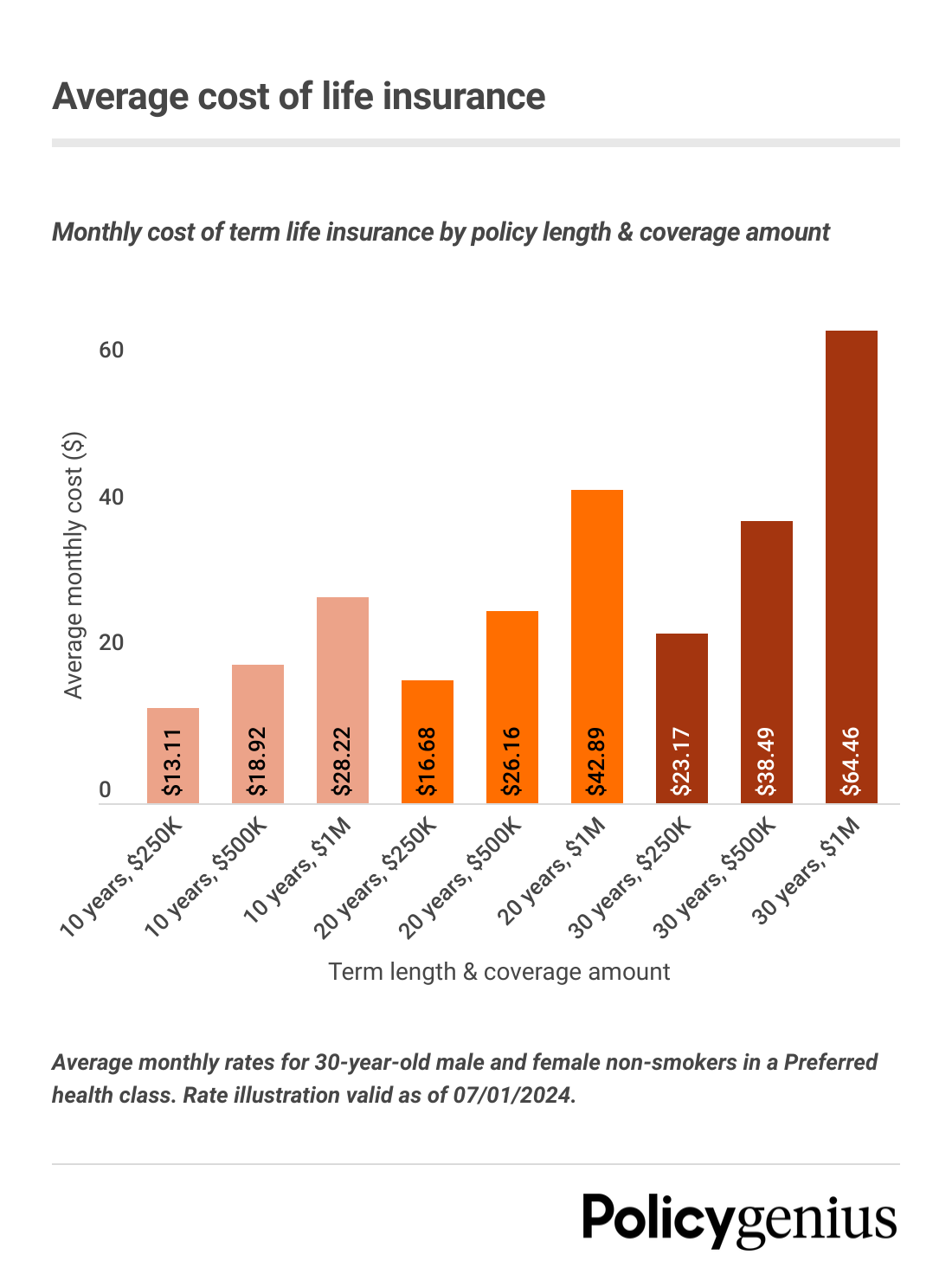
Ways To Lower Your Life Insurance Cost
Life insurance doesn’t have to be expensive. Here are some smart ways to save:
- Buy young: Lock in a low rate before health issues appear.
- Get healthy: Losing weight, quitting smoking, or controlling blood pressure can reduce your premium.
- Shop around: Prices can vary a lot between companies for the same coverage.
- Choose term over permanent: If you only need protection for a certain period (like until kids are grown), term is much cheaper.
- Skip unnecessary riders: Only add features you really need.
- Pay annually: Some insurers give a discount if you pay once a year instead of monthly.
Common Mistakes People Make With Life Insurance Cost
Even smart shoppers can make errors. Watch out for these common pitfalls:
- Waiting too long to buy: Prices rise each year you wait.
- Underestimating your needs: Don’t pick the cheapest policy if it won’t protect your family.
- Ignoring your health: Not sharing accurate medical info can lead to denied claims later.
- Focusing only on price: The cheapest company isn’t always the best—look for financial strength and good reviews, too.
- Forgetting to review your policy: Life changes (new baby, marriage, new job) may mean you need more or less coverage.
How Life Insurance Costs Change Over Time
Your premium is usually fixed for the term you choose, especially with level-term policies. But what happens if you renew or wait to buy?
- Renewing a policy: If your term ends and you renew, your new rate will be based on your current age and health—usually much higher.
- Buying later in life: Every year you wait, the price goes up. Sometimes by 8-10% each year.
For permanent policies, some premiums can change (like universal life), while others are fixed (like whole life). Always check the policy details.
Life Insurance Costs Around The World
Life insurance isn’t the same everywhere. In the US, term life is popular and relatively affordable. In other countries, permanent life insurance or government-provided options may be more common.
For example, in Japan, life insurance ownership is among the highest in the world, but average coverage amounts are lower than in the US. In the UK, term policies are also very popular, but the buying process may differ.
Local rules, health systems, and cultural views about insurance all affect cost and popularity.
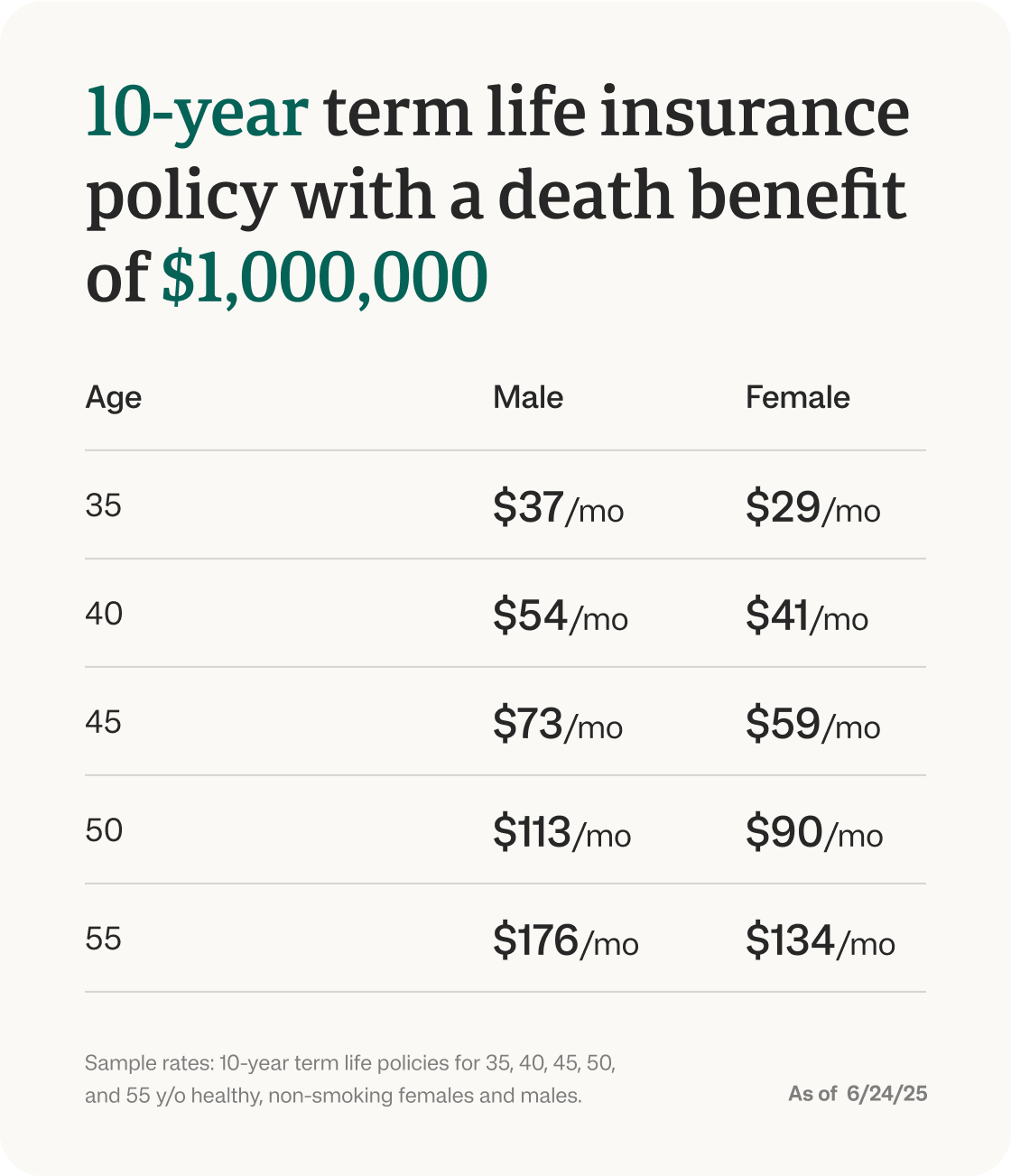
Data Snapshot: Average Us Life Insurance Premiums
Here’s a quick look at recent average monthly premiums in the US:
| Type | Coverage | Age 30 | Age 40 | Age 50 |
|---|---|---|---|---|
| Term (20 years) | $250,000 | $13 | $21 | $47 |
| Term (20 years) | $1,000,000 | $36 | $61 | $156 |
| Whole Life | $250,000 | $160 | $235 | $355 |
Your own quote may be higher or lower, depending on your health, location, and the insurer.
Special Cases: No-exam And Group Life Insurance
No-exam Life Insurance
Some people want to avoid medical exams, either for convenience or health reasons. No-exam life insurance is faster to get, but it usually costs more for the same coverage. Insurers charge more because they know less about your health.
Group Life Insurance
Many employers offer group life insurance as a benefit. It’s often cheap or even free, but coverage may be low (like one or two times your salary). These policies usually end if you leave your job.
If you have group life, it can be a good supplement, but most families need extra private coverage.
Hidden Insights Most People Miss
Even careful shoppers often miss these important details:
- Your rate class matters a lot: Even a small health issue (like slightly high cholesterol) can drop you into a lower class and raise your premium by 25-50%. It’s often worth asking if you can retake your medical exam after improving your health.
- Policy conversion options: Some term policies let you convert to permanent coverage later, even if your health changes. This can be valuable if you develop a health problem but want lifelong coverage.
Many people only look at the monthly cost and forget to ask about these features, which can save money and provide flexibility in the future.
How To Get The Best Value For Your Money
If you want to pay less but still protect your family, focus on these steps:
- Get quotes from several companies. Each uses different risk models, so prices can differ a lot.
- Work with a broker. Brokers can compare many companies for you. Some specialize in cases with health issues.
- Ask about discounts. Some insurers offer price breaks for things like being married, having a safe driving record, or bundling with home/auto insurance.
- Review your needs every few years. You may be able to lower your coverage (and cost) if your kids grow up, debts are paid off, or you build more savings.
Life Insurance Myths That Affect Cost
Many people believe things about life insurance that aren’t true. Here are a few myths that can lead to overpaying:
- “I can’t get life insurance because I’m not healthy.” Many companies offer coverage for people with health issues, though it may cost more.
- “Life insurance is always expensive.” Term life can be quite affordable for most people, especially when bought young.
- “I don’t need insurance if I’m single.” Even singles may want coverage for debts, funeral costs, or if others depend on them.
- “Group insurance at work is enough.” Employer coverage is usually not enough for most families’ needs.
Knowing the facts can help you make better decisions and avoid paying more than necessary.
When Paying More Might Be Worth It
Sometimes, it’s smart to pay a bit extra for features that matter to you:
- Guaranteed insurability rider: Lets you buy more coverage later without new health checks.
- Disability waiver of premium: Keeps your policy active if you can’t work due to illness or injury.
- Accelerated death benefit: Lets you access part of your payout if you get a serious illness.
These features can make your policy more flexible and valuable, even if they add to the price.
How To Apply For Life Insurance
Ready to get covered? Here’s what to expect:
- Decide what you need: How much coverage, what type, and for how long.
- Get quotes: Use online tools or work with a broker.
- Apply: Fill out the application and answer all questions honestly.
- Medical exam (if needed): Schedule and complete it quickly.
- Wait for approval: This can take a few days to a few weeks, depending on the policy.
- Review your offer: Make sure the price and terms match what you want.
- Sign and pay: Your policy is active once you pay your first premium.
Tip: Keep your beneficiaries up to date, and tell them about the policy.
Where To Learn More
For more information on how life insurance works in detail, you can visit the National Association of Insurance Commissioners—it’s a trusted resource for insurance consumers.
Frequently Asked Questions
How Much Does Life Insurance Cost Per Month?
The price can range from as low as $10 per month for young, healthy people with term insurance, to several hundred dollars per month for older adults or those choosing whole life. Most people pay between $15 and $50 per month for basic term coverage.
Does Life Insurance Get More Expensive Every Year?
If you buy a level-term policy, your rate stays the same for the entire term (like 20 years). If you renew or buy a new policy later, the cost will be higher based on your new age and health.
Can I Get Life Insurance Without A Medical Exam?
Yes, no-exam life insurance is available from many companies. It’s usually more expensive because the insurer knows less about your health, but it can be a good option if you need coverage quickly or have health concerns.
What Happens If I Stop Paying My Premium?
If you stop paying, your policy will usually end and your coverage stops. Some permanent policies have a cash value that may help keep the policy active for a short time, but term policies end quickly if you don’t pay.
Does Life Insurance Cover Death From Illness Or Accident?
Yes, most policies cover death from any cause—illness, accident, or natural causes—as long as the policy is active and the cause is not excluded (like suicide in the first two years, or certain risky activities not disclosed).
Life insurance costs can seem complicated, but a little knowledge goes a long way. By understanding what affects price and how to compare policies, you can find good coverage at a fair cost—and have peace of mind knowing your loved ones are protected.