
Choosing between life insurance and term insurance can be confusing, especially if you’re new to insurance terms or not a native English speaker. Both options help protect your loved ones if something happens to you, but they work in different ways. If you want to make the best choice for your family and future, it’s important to understand what each type offers, how they compare, and which matches your needs. In this article, we’ll break down the differences, show real examples, and help you decide which insurance is better for you.
What Is Life Insurance?
When people say “life insurance,” they often mean whole life insurance or permanent life insurance. This type of insurance covers you for your entire life, as long as you pay the premiums. When you die, your family or chosen person (beneficiary) gets a payout, called the death benefit.

But there’s more. Permanent life insurance also builds cash value over time. This is a small savings part inside your policy. You can sometimes borrow money from it or even take it out, but it’s not as simple as a normal savings account.
Key Features Of Life Insurance
- Lifetime coverage: The policy stays active as long as you keep paying.
- Cash value: Part of your premium goes into a savings pot that grows over time.
- Higher premiums: You pay more each month compared to term insurance, especially at the start.
- Loan options: You can borrow against your cash value in emergencies (but it’s not free money).
- Fixed premiums: Payments often stay the same for life.
What Is Term Insurance?
Term insurance is much simpler. It protects you for a set period, like 10, 20, or 30 years. If you die during that period, your family gets the payout. If you survive the term, the policy ends and you get nothing back. There’s no savings or investment part—just pure protection.
Key Features Of Term Insurance
- Fixed term: Coverage lasts for a set number of years.
- No cash value: You can’t borrow or withdraw from it.
- Lower premiums: Costs much less than permanent life insurance.
- Simple purpose: Designed to protect your family while you have big financial responsibilities (like kids or a mortgage).
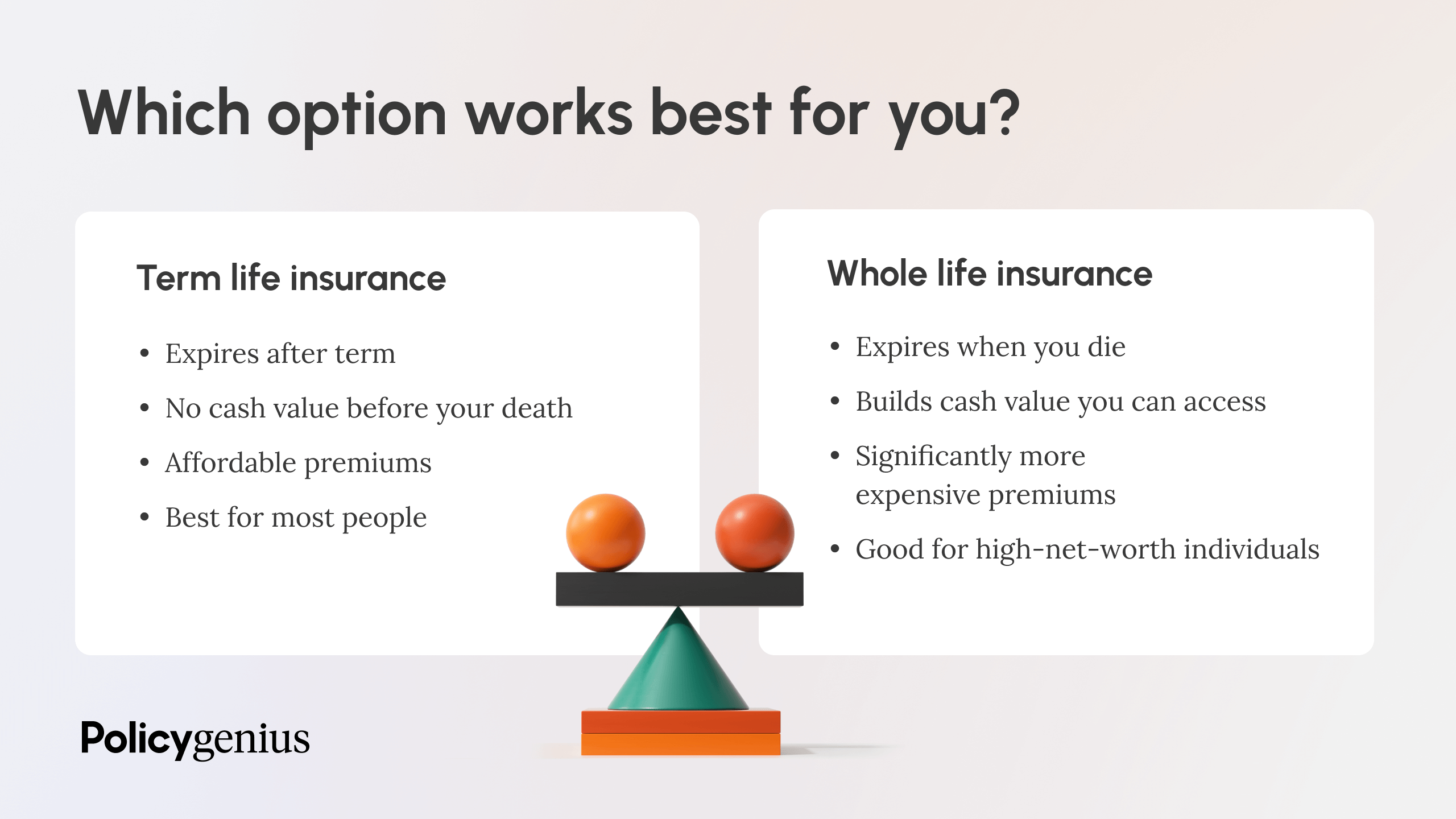
:max_bytes(150000):strip_icc()/dotdash-term-life-vs-whole-life-5075430-Final-60fb4e8f7bae43e0a65a3fac2431479c.jpg)
Comparing Life Insurance And Term Insurance
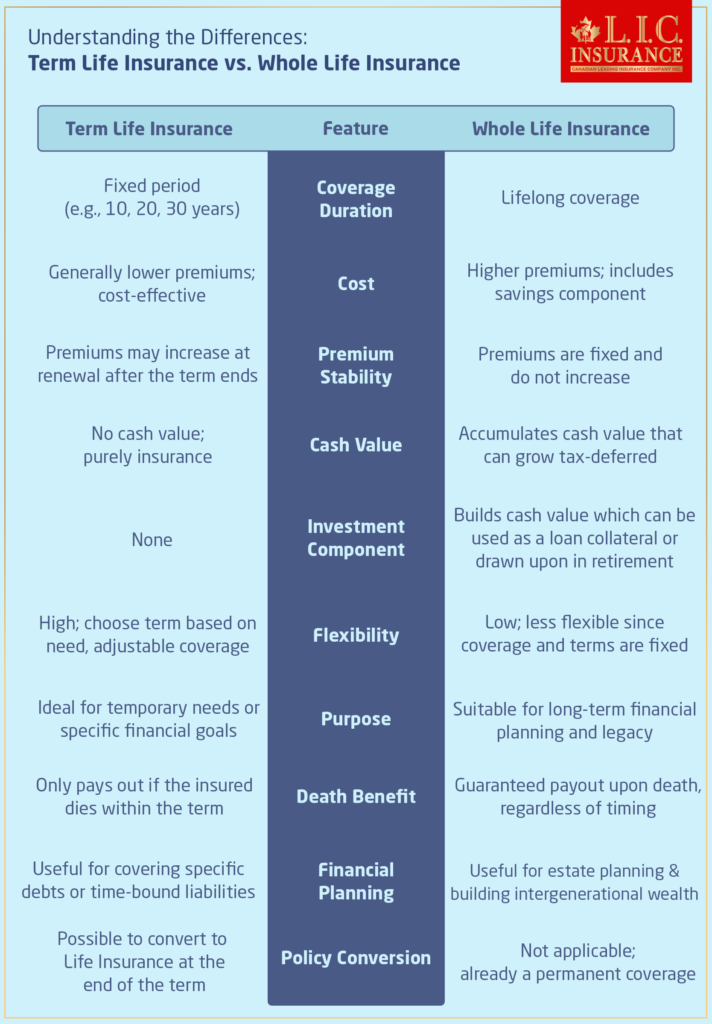
It helps to see the differences side by side. Here is a clear comparison:
| Feature | Life Insurance (Whole/Permanent) | Term Insurance |
|---|---|---|
| Coverage Duration | Lifetime | Fixed term (e.g., 20 years) |
| Premium Cost | Higher | Lower |
| Cash Value | Yes | No |
| Death Benefit | Pays out whenever you die | Pays out only if you die during term |
| Flexibility | Can borrow from cash value | No borrowing options |
| Complexity | More complex | Simple |
Which Is Cheaper: Life Insurance Or Term Insurance?
For most people, term insurance is much cheaper. Here’s a sample monthly cost for a healthy 30-year-old buying $500,000 coverage:
| Policy Type | Monthly Premium | Coverage Amount | Term |
|---|---|---|---|
| Term Insurance | $25–$35 | $500,000 | 20 years |
| Whole Life Insurance | $300–$500 | $500,000 | Lifetime |
This big difference is why many young families choose term insurance. You get a lot of protection for a low price.
When Does Life Insurance Make Sense?
Permanent life insurance is not for everyone. It can be a good fit if:
- You want lifelong coverage. If you want a payout for your family no matter when you die, permanent coverage guarantees this.
- You like forced savings. The cash value grows slowly, but can be used as an emergency fund or to help with retirement.
- You have complex financial needs. Some people use whole life insurance in estate planning or to leave a legacy.
- You have a lifelong dependent. If you care for a child or relative who will always need support, permanent insurance makes sense.
- You want fixed premiums. Payments don’t go up as you age.
But remember, you pay a lot more for these features. The cash value grows slowly, especially in the early years, and many people find they don’t use it.
When Is Term Insurance The Better Choice?
For most people, especially younger families or those on a budget, term insurance is the best choice. Here’s why:
- It’s affordable. You can get high coverage for a low cost.
- Covers the important years. You can match the term with your big expenses—kids’ college, mortgage, or until retirement.
- Simple and clear. No cash value or investment to worry about.
- Easy to buy. Many term policies can be purchased online with minimal medical checks.
A common mistake is to buy more insurance than you need. With term, you can adjust coverage to match your life stage. For example, a 20-year term covers your kids until they’re grown.
Real-life Example: Family Protection
Let’s say you’re 35, married, with two young children. Your main concern is making sure your family can pay the bills and keep their home if you’re not around. A $500,000 20-year term policy might cost $30 a month. This covers you until your kids are in college.
You pay a low price, and if nothing happens, you’ve protected your family during the most important years.
If you chose whole life insurance for the same amount, you might pay $400 a month. Over 20 years, that’s $96,000 in premiums—much more than term insurance. You do build cash value, but it grows slowly and is not always easy to use.
The Cash Value Trap: What Beginners Miss
Many new buyers hear “cash value” and think it’s like a savings account. In reality, it’s complicated. The insurance company controls the money, and if you borrow from it, you pay interest. If you take out too much, your policy could end.
Also, the returns are usually lower than what you’d get from other investments like mutual funds.
Another thing most people miss: If you die, your family usually gets only the death benefit, not the death benefit plus the cash value. The cash value often goes back to the insurance company.
Flexibility: Can You Switch Later?
Some people wonder if they can start with term and “convert” to permanent life insurance later. Many term policies do allow this, usually without a new medical exam. But the cost will jump a lot when you convert. If you’re not sure about your long-term plans, this flexibility can be helpful.
Another option is to “ladder” term policies. For example, you buy a 10-year and a 20-year term policy. As your needs change, one policy drops off, and you keep the other, saving money as your responsibilities go down.
Risks And Common Mistakes
Buying the wrong policy can be costly. Here are some mistakes to avoid:
- Underestimating needs: Don’t buy too little insurance. Think about all your debts, your family’s living costs, and future expenses.
- Focusing only on price: Cheap is good, but the right amount of coverage is better.
- Ignoring health changes: If your health changes, you might not be able to get new coverage later.
- Letting a policy lapse: If you stop paying, you lose all coverage.
Who Should Choose Which?
Here’s a summary to help you decide:
| You Should Choose | If You… |
|---|---|
| Term Insurance |
|
| Life Insurance (Whole) |
|
Is One Really “better”?
There is no one-size-fits-all answer. For most people, especially those with limited budgets or short-term needs, term insurance is the better choice. It gives you high coverage for a low price, and you can invest the savings on your own. But for those with special needs—like lifelong dependents, estate planning, or a desire for guaranteed coverage—whole life insurance can be useful, if you’re prepared for the higher costs and complexity.
Most financial experts recommend buying term insurance and investing the rest. For example, Investopedia explains that you’ll often come out ahead by keeping insurance and investments separate.
Frequently Asked Questions
What Happens If I Outlive My Term Insurance?
If you outlive your policy’s term, coverage ends and you receive nothing back. Some policies offer a “return of premium” option, but these cost much more and are rarely worth it.
Can I Have Both Term And Life Insurance At The Same Time?
Yes, you can own both types. Some people start with term insurance for big needs, then add a small whole life policy later for lifelong coverage.
Is The Cash Value In Whole Life Insurance Worth It?
For most people, the cash value grows slowly and isn’t a good investment. It can be useful if you need forced savings, but you’ll often earn more by investing on your own.
How Much Life Insurance Do I Really Need?
A common rule is 10–15 times your yearly income, but this depends on your debts, family size, and goals. Use an online calculator or speak to a financial advisor for a more exact number.
Can I Buy Term Insurance Online?
Yes, many companies let you buy term insurance online with simple forms and sometimes no medical exam. Always check the company’s reputation before buying.
Making the right choice between life insurance and term insurance depends on your goals, budget, and family needs. Take your time, compare options, and don’t be afraid to ask questions. Protecting your loved ones is important, and the right policy will give you peace of mind now and in the future.