
Choosing the right insurance can feel confusing. Many people hear about life insurance and burial insurance but wonder how they are different. Both protect your family from money problems when you die. But their purpose, coverage, cost, and benefits are not the same. Understanding these differences helps you make better decisions for your family and future.
What Is Life Insurance?
Life insurance is a contract with an insurance company. You pay regular payments, called premiums. In return, the company promises to pay money to your chosen person (beneficiary) if you die during the policy period. There are two main types:

- Term life insurance: Only lasts for a set number of years (for example, 10, 20, or 30). If you die during this time, your family gets the money. If you live past the term, the coverage ends.
- Whole life insurance: Stays active your entire life, as long as you pay the premiums. It also builds up cash value you can borrow or use later.
Life insurance is usually meant to replace lost income, pay off debts, or help with big financial needs (like kids’ education).
What Is Burial Insurance?
Burial insurance, also called final expense insurance, is a type of life insurance. But it is much smaller and simpler. The main purpose is to cover funeral costs, burial, and other small expenses that happen after death. Most policies offer coverage from $2,000 to $25,000.
Burial insurance is easy to get, even for older people or those with health problems. The application often asks few or no health questions. It is sometimes called “guaranteed issue” or “simplified issue” life insurance.
%2520(1).png)
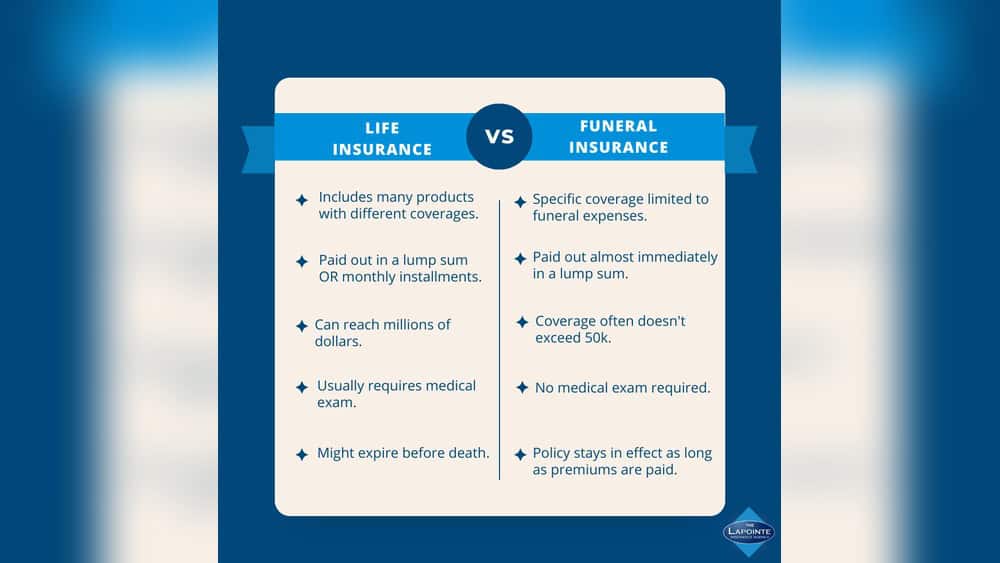
Key Differences At A Glance
Here is a side-by-side comparison to help you see the main differences:
| Feature | Life Insurance | Burial Insurance |
|---|---|---|
| Purpose | Income replacement, debts, large expenses | Funeral and small final expenses |
| Coverage Amount | $50,000 to millions | $2,000 to $25,000 |
| Medical Exam Needed | Often yes (for larger policies) | Usually no |
| Cost | Lower per $1,000 of coverage | Higher per $1,000 of coverage |
| Length | Term or lifelong (whole life) | Lifelong |
| Payout Speed | Weeks to months | Usually faster |
How Life Insurance Works
When you buy life insurance, you choose a coverage amount and name a beneficiary. The policy may require a medical exam or ask questions about your health, job, and hobbies. This helps the company decide your premium.
If you die while the policy is active, your beneficiary files a claim. After reviewing the claim, the company pays the death benefit. People often use this money for:
- Daily living expenses
- Paying off the mortgage
- College costs for children
- Loans, credit cards, or medical bills
Types Of Life Insurance
- Term life insurance: Best for short-term needs and lower cost. If you only need protection for a certain period (until your kids grow up, for example), term is a good choice.
- Whole life insurance: Good for lifelong coverage, estate planning, or leaving money behind.
- Universal life insurance: Flexible, lets you change the premium and coverage as your needs change.
Non-obvious insight: Many people do not know that some life insurance policies can be used for “living benefits.” For example, if you become very sick, you may be able to use part of the death benefit for medical expenses. This feature is not common in burial insurance.
How Burial Insurance Works
Burial insurance is designed to be easy. Most policies do not require a medical exam. People as old as 85 can qualify. Some policies accept almost anyone, even with health problems.
You pay monthly or yearly premiums. When you die, the insurance pays a small sum to your beneficiary. This money covers:
- Funeral and burial services
- Cremation costs
- Unpaid bills (like medical, credit cards)
- Small debts
Unlike larger life insurance, the payout is often quick. Many funeral homes accept burial insurance assignments, meaning they work directly with the insurance company to get paid.
Non-obvious insight: Burial insurance often has a “waiting period.” If you die in the first two years (unless by accident), the policy may not pay the full amount. Instead, your family may get back only the premiums paid plus interest.
Cost Comparison
Price matters a lot when choosing insurance. Here is a rough example of typical monthly costs for a healthy 50-year-old non-smoker:
| Coverage Type | Coverage Amount | Monthly Cost |
|---|---|---|
| Term Life Insurance | $100,000 | $25–$35 |
| Whole Life Insurance | $100,000 | $90–$130 |
| Burial Insurance | $10,000 | $40–$60 |
Burial insurance costs more per $1,000 of coverage compared to term or whole life. But the application is much easier, and almost anyone can qualify.
Pros And Cons
Each type of insurance has good and bad points. Here is a quick overview:
Life Insurance
Pros:
- Large coverage amounts
- Lower cost per $1,000
- Can cover many needs, not just burial
Cons:
- Health questions and exams often required
- May be harder for older adults or people with serious health problems
Burial Insurance
Pros:
- Easy approval, even with health issues
- Simple application process
- Quick payout for funeral costs
Cons:
- Small coverage amounts
- Higher cost for the coverage you get
- Waiting periods may apply
Who Should Choose Life Insurance?
Choose life insurance if you:
- Have people who depend on your income
- Want to cover big debts (like a house loan)
- Need to provide for children’s education
- Plan to leave an inheritance
If you are younger and in good health, life insurance is usually a better value. It provides more money for your family and costs less per dollar of coverage.
Example: Maria, age 35, buys a 20-year term life policy for $250,000. She pays $18 per month. If she dies during that time, her family gets enough to pay off the house and help her kids.
Who Should Choose Burial Insurance?
Burial insurance is best if you:
- Only want to cover funeral expenses
- Do not need large coverage
- Are older or have health problems
- Have trouble getting approved for regular life insurance
Example: John, age 72, has no big debts or dependents. He wants to make sure his family is not stressed about funeral costs. He buys a $10,000 burial insurance policy with no medical questions.
Common Mistakes To Avoid
- Buying too little coverage: Funerals can cost $8,000–$12,000 in the US. Make sure the policy is enough for your family’s needs.
- Ignoring the waiting period: Some burial insurance only pays the full benefit after two years. Check the details before you buy.
- Not comparing quotes: Prices and benefits can vary a lot. Compare several companies before choosing.
- Overpaying for convenience: Burial insurance is easy, but more expensive per dollar. If you are healthy, look at term life first.
- Not naming a beneficiary: If you do not name a person, the money may go to your estate and be delayed.

Real-world Data: Funeral Costs
Knowing the average cost of a funeral helps you decide how much burial insurance to buy. Here are common expenses in the US:
| Item | Average Cost |
|---|---|
| Funeral service fee | $2,100 |
| Casket | $2,500 |
| Grave space | $1,000 |
| Headstone | $1,500 |
| Flowers, obituary, etc. | $1,000 |
| Other services | $2,000 |
| Total | $10,100 |
These numbers are averages. Some funerals cost less, others more. Always check local prices.
Which Is Right For You?
The answer depends on your goals, age, health, and family needs. If you want to leave behind enough to pay off debts or help your family long-term, choose life insurance. If you just want to pay for funeral expenses and do not need a large policy, burial insurance may be enough.
Do not rush your decision. Talk with a licensed insurance agent, compare options, and read the fine print.
If you want to learn more about life insurance types and how they work, visit the Insurance Information Institute.

Frequently Asked Questions
What Is The Main Difference Between Life Insurance And Burial Insurance?
The main difference is the coverage amount and purpose. Life insurance offers larger amounts and is meant for income replacement, debts, and family support. Burial insurance is smaller and mainly covers funeral and final expenses.
Is Burial Insurance Easier To Get Than Life Insurance?
Yes, burial insurance usually has simpler applications, fewer health questions, and often no medical exam. Life insurance often asks for more health information, especially for larger policies.
Can I Have Both Life Insurance And Burial Insurance?
Yes, many people have both. Life insurance covers big needs, while burial insurance provides quick money for funeral costs. Having both is common, especially if you want to be sure funeral expenses are handled fast.
Does Burial Insurance Always Pay Immediately?
Not always. Some burial insurance policies have a waiting period (often two years). If you die of natural causes during this time, the company may only return the premiums you paid, not the full benefit.
How Much Burial Insurance Do I Need?
You should add up expected funeral costs and any small debts you want to cover. In the US, the average funeral is about $10,000. Buy enough to cover these costs, but not more than you can afford.
Choosing between life insurance and burial insurance is a personal decision. Think about your family, your budget, and what you want your insurance to do. Take your time, ask questions, and make sure your choice truly fits your needs.