
Understanding insurance can feel confusing, especially when terms sound similar. Many people wonder about the difference between life insurance and accidental death and dismemberment (AD&D) coverage. If you’re choosing protection for your loved ones or your own financial security, knowing how these two types of insurance work is important. Let’s break down their meaning, what they cover, and which one might fit your needs best.
What Is Life Insurance?
Life insurance is a contract between you and an insurance company. You pay regular premiums, and if you pass away during the policy period, your family or chosen people (called beneficiaries) get a lump sum of money. The main idea is to help your loved ones handle costs like funeral expenses, debts, or daily living after you’re gone.

There are two main types:
- Term life insurance: Covers you for a set time (like 10, 20, or 30 years). If you die during the term, your beneficiaries get paid. If you’re alive when it ends, the coverage stops.
- Whole life (or permanent) insurance: Covers you for your whole life, as long as you keep paying. It also builds up cash value over time, which you can sometimes borrow against.
The payout, called the death benefit, can be used for anything: paying a mortgage, sending kids to college, or just keeping the family comfortable.
What Is Accidental Death And Dismemberment Insurance (ad&d)?
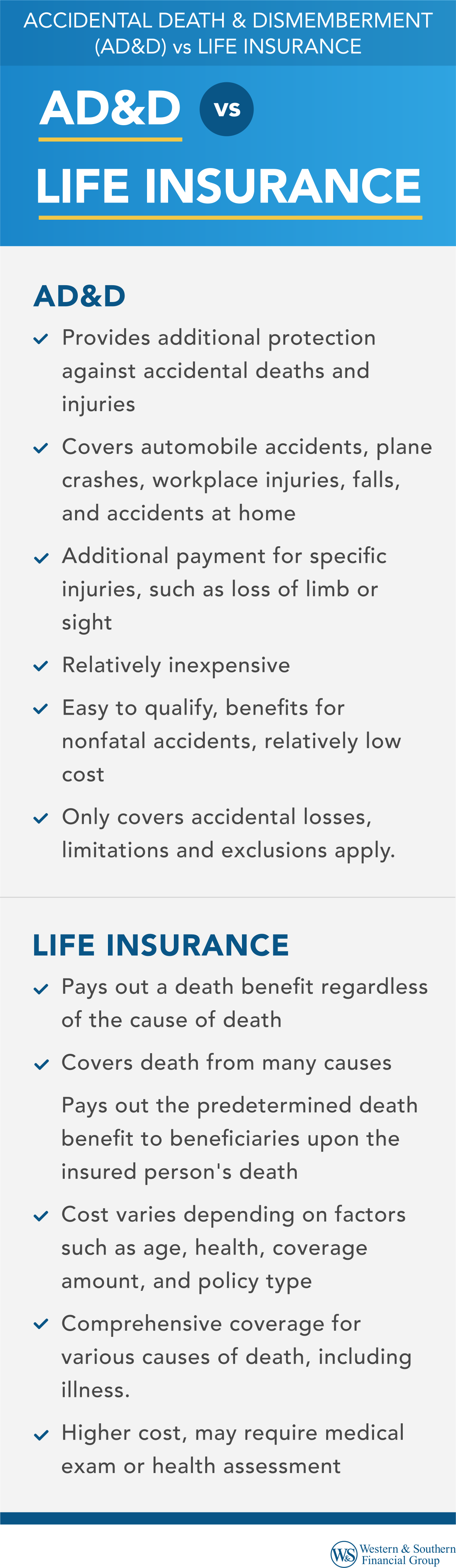
Accidental death and dismemberment (AD&D) insurance is more limited. It only pays out if you die or lose a body part because of an accident. For example, if someone dies in a car crash or loses a limb in a work accident, AD&D can help.
AD&D covers two main events:
- Accidental death: If you die from a sudden accident (not illness or natural causes), your beneficiaries get the payout.
- Dismemberment: If you survive but lose a limb, eyesight, hearing, or other body parts, you get a part of the payout (the amount depends on the injury).
AD&D is often cheaper than life insurance, but it does not cover death from sickness or old age.
:max_bytes(150000):strip_icc()/Accidental-Death-and-Dismemberment-ADD-Insurance-v3-745262583fd74ebf9964311fd9bcaf29.png)
Credit: www.investopedia.com
Key Differences Between Life Insurance And Ad&d
To make things clearer, look at this comparison:
| Feature | Life Insurance | AD&D Insurance |
|---|---|---|
| Cause of Death Covered | All causes (illness, accident, natural) | Only accidents |
| Dismemberment Coverage | No | Yes |
| Cost | Usually higher | Usually lower |
| Policy Length | Term or permanent | Usually term |
| Cash Value | Possible (with whole life) | No |
Life insurance offers broad protection, while AD&D is more limited but can be a good extra layer.
How Each Insurance Pays Out
It’s important to understand what triggers a payout. Here’s a simple breakdown:
| Event | Life Insurance Pays? | AD&D Pays? |
|---|---|---|
| Death from illness | Yes | No |
| Death from accident | Yes | Yes |
| Losing a limb in accident | No | Yes (partial payout) |
| Death from old age | Yes | No |
| Death by suicide (first 2 years) | Usually no | Usually no |
Notice that AD&D has a narrow focus. If you want your family to get money no matter the cause of death, life insurance is the better choice.
Common Uses For Each Policy
Why might someone choose one or both? Here are some practical examples:
- Life insurance: Good for replacing lost income, paying off debts, or making sure your family keeps their home.
- AD&D insurance: Useful for people in risky jobs (like construction), or for extra protection if you already have life insurance.
Some people have both. In fact, many employers offer AD&D as a free benefit, but the coverage amount is usually low.
Real-world Examples
Let’s say Sarah is a 35-year-old teacher. She has two kids and a mortgage. If Sarah buys life insurance, her children can stay in their home and pay for college if she dies from any cause—even a disease like cancer.
Now, imagine Tom, who works in a factory. He adds AD&D coverage because he’s worried about accidents. If Tom loses a hand in a machine accident, AD&D pays him a lump sum, which he can use for medical bills or to adapt his house.
These examples show that both types have their place, depending on your worries and your life situation.

Credit: abramsinc.com
Costs And Value
Life insurance is usually more expensive because it covers more situations. The price depends on your age, health, the amount of coverage, and policy length. For example, a healthy 30-year-old might pay $25 per month for a $500,000 term policy.
AD&D is much cheaper. The same person might pay $5 to $10 per month for similar coverage, but only for accidents. Sometimes, AD&D is offered as a “rider” (an add-on) to life insurance for a few more dollars per month.
But be careful: AD&D might seem like a good deal, but most deaths happen from illness, not accidents. This is a detail many beginners miss. According to the CDC, only about 5% of deaths are accidental. That means life insurance is more likely to pay out.
What Ad&d Does Not Cover
It’s easy to misunderstand what AD&D means by “accident.” Some events that you might think are accidents are not covered. Here are some common exclusions:
- Death or injury from illness or disease
- Suicide or self-harm
- Death while under the influence of drugs or alcohol
- War or acts of war
- Injuries during risky hobbies (like skydiving), unless you pay extra
Insurers are very strict with these rules. Always read the policy details before buying.
Should You Get Both?
Some people get both types, and that’s okay. If you want your family to have full protection, start with life insurance. Add AD&D if you feel at higher risk for accidents (such as certain jobs, travel, or hobbies).
But remember, AD&D is not a replacement for life insurance. It’s an extra layer, not a full safety net.
How To Choose The Right Policy
If you’re thinking about which to buy, ask yourself:
- Do you want coverage for all types of death, or just accidents?
- Does your job or hobby put you at higher accident risk?
- Do you already have group life or AD&D from your employer?
- How much can you afford in monthly premiums?
Don’t forget to check the fine print. Some policies look similar but have big differences in what they cover.
Common Mistakes To Avoid
- Thinking AD&D is the same as life insurance: Many people buy AD&D and think their family is fully protected. But if you die from illness, there’s no payout.
- Ignoring exclusions: AD&D has many exceptions. Always read the details.
- Buying too little life insurance: The payout should cover your family’s needs for several years.
- Not reviewing workplace benefits: Sometimes, you already have some coverage through work. Check before buying more.
How Claims Are Handled
With life insurance, when the insured person dies, the beneficiary submits a claim with a death certificate. If it’s a covered cause, the insurer pays out—usually in a few weeks.
With AD&D, if the death or injury was accidental, you’ll need to give proof (like a police report or medical records). The process can take longer, especially if the cause of death is not clear.
Credit: www.westernsouthern.com
Combining Life And Ad&d: Double Indemnity
Some life insurance policies include a feature called double indemnity. If the insured dies by accident, the insurer pays double the normal amount. For example, if a policy is worth $100,000, a qualifying accidental death pays $200,000. This acts like built-in AD&D coverage and is worth asking about.
Comparing Sample Scenarios
Here’s how a combination of both policies works in practice:
| Situation | Life Insurance Payout | AD&D Payout | Total Benefit |
|---|---|---|---|
| Death from heart attack | $100,000 | $0 | $100,000 |
| Death in a car accident | $100,000 | $100,000 | $200,000 |
| Lose a leg in accident | $0 | $50,000 (partial) | $50,000 |
This shows how the two types can work together for broader coverage.
When Is Ad&d A Good Idea?
AD&D is not for everyone. But it can be helpful if:
- You have a dangerous job or commute
- You want extra protection but can’t afford more life insurance
- Your employer offers it for free or at a low cost
Just remember, it should not be your only life insurance if you have dependents.
Where To Learn More
For deeper information about insurance basics, you can visit the National Association of Insurance Commissioners for consumer guides and tips.
Frequently Asked Questions
What Is The Main Difference Between Life Insurance And Ad&d?
Life insurance covers death from any cause (illness, accident, or natural), while AD&D only pays for death or injury from accidents.
Can I Have Both Life Insurance And Ad&d?
Yes, many people have both. AD&D can add extra protection on top of life insurance, especially for accidents.
Does Ad&d Cover Injuries From Sports Or Risky Hobbies?
Usually, AD&D does not cover injuries from dangerous activities like skydiving unless you pay extra. Always check your policy for exclusions.
Is Ad&d Cheaper Than Life Insurance?
Yes, AD&D is usually much cheaper, but it covers fewer situations. Most deaths happen from illness, which AD&D does not cover.
How Do I Know How Much Life Insurance I Need?
Think about your family’s living costs, debts, future expenses (like college), and how many years you want to cover. Many experts suggest 5–10 times your yearly income.
Choosing between life insurance and accidental death and dismemberment insurance is not always simple, but understanding the differences helps you protect what matters most. Take your time, ask questions, and pick the coverage that fits your life and your loved ones’ future.