
Life insurance is one of those financial topics many people hear about but don’t always understand fully. In the United States, it’s a major part of how families plan for the future. But how many people actually have life insurance in the US?
The answer is more complex than a simple number. It involves looking at trends, age groups, reasons for having or not having coverage, and how the industry is changing. If you’re curious about whether you’re like most Americans when it comes to life insurance, or just want to understand how common it is, this guide will walk you through everything you need to know.

Current Life Insurance Coverage In The Us
Millions of Americans have some form of life insurance. According to the 2023 Insurance Barometer Study by LIMRA and Life Happens, about 52% of Americans have life insurance, either through their employer or an individual policy. This means over 170 million people are covered. While this is a large number, it’s slightly lower than previous decades.
The study also found that 106 million adults in the US believe they need life insurance or need more coverage. This highlights a significant gap between those who have insurance and those who feel underinsured or not protected at all.
How Life Insurance Ownership Has Changed Over Time
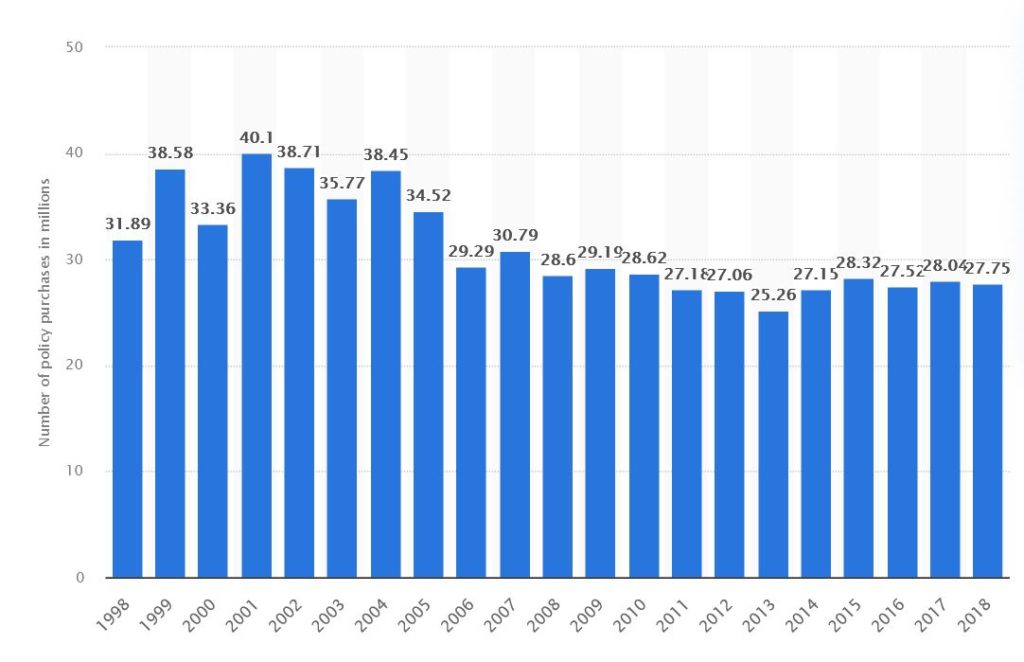
Life insurance ownership in the US has shifted in the past few decades. In the 1960s and 70s, around 75% of adults had some type of life insurance. Back then, it was seen as a basic part of financial planning. Today, with only about half of adults covered, the trend is down.
Several factors explain this drop:
- Fewer employers now offer group life insurance as a benefit.
- More people work freelance or have gig jobs that don’t include benefits.
- Some people believe they don’t need life insurance, especially if they are single or have no dependents.
However, ownership has stabilized in recent years. After a steady decline, the last decade has seen the number of insured adults remain fairly constant.
Types Of Life Insurance Most Americans Have
Life insurance comes in several forms, but two main types dominate in the US: term life insurance and permanent life insurance.
| Type | Description | Popularity |
|---|---|---|
| Term Life | Coverage for a set period (10, 20, 30 years). Pays only if the insured dies during term. | Most popular (about 70% of new policies) |
| Permanent Life | Lasts entire lifetime. Includes whole, universal, and variable life. Builds cash value. | About 30% of new policies |
| Group Life | Offered by employers. Usually term, may be basic or optional. | Very common as employee benefit |
Most people with coverage have term life insurance, either through work or as an individual policy. Permanent policies are less common, mainly due to higher cost and complexity.
Who Is Most Likely To Have Life Insurance?
Life insurance ownership is not equal among all Americans. Age, income, family status, and even race can affect who has coverage.
Age And Life Insurance
Younger people are less likely to own life insurance. According to LIMRA, only about 40% of Millennials (age 27–42) have a policy, compared to 57% of Baby Boomers (age 59–77). Older adults often see insurance as a way to help family with funeral costs or estate planning.
Income And Coverage
People with higher incomes are more likely to own life insurance. For households earning over $100,000 a year, about 70% have coverage. In contrast, only 35% of households earning under $50,000 have life insurance.
Family And Dependents
Having children or a spouse increases the chance someone will have life insurance. Parents with children under 18 are among the most likely to buy or keep a policy. This is often to ensure their family is taken care of if something happens.
Race And Ethnicity
There are also differences by race. For example, Black Americans are slightly more likely than White Americans to own life insurance (56% vs 52%), often to build generational wealth or cover final expenses. Hispanic ownership is lower, at around 42%, often due to language barriers or lack of information.

Why Do People Buy Life Insurance?
Most Americans get life insurance to protect loved ones financially. But there are other reasons as well:
- Income replacement: To help family cover bills if the main earner dies.
- Paying debts: Including mortgages, car loans, or student loans.
- Covering funeral costs: Funerals can be expensive, often over $7,000.
- Leaving an inheritance: Some want to provide money for children or grandchildren.
- Business reasons: Business owners may use life insurance to protect their company or buy out partners.
A less obvious reason is to use certain types of permanent life insurance as a savings or investment tool. Some policies let you borrow money or build cash value over time.
Reasons Many Americans Don’t Have Life Insurance
With so many benefits, why do nearly half of Americans lack life insurance? Surveys show several main reasons:
- Cost concerns: Many believe it’s too expensive, even though term life can be affordable.
- Lack of knowledge: Some don’t understand how it works or how much they need.
- No dependents: Single people or those without children may not see a need.
- Procrastination: Many plan to buy “someday,” but never get around to it.
One insight many miss: younger, healthier people can usually get coverage for much less. Waiting until you’re older or have health problems can make it harder or more costly to buy a policy.
How The Covid-19 Pandemic Changed Life Insurance
The pandemic led to a spike in interest in life insurance. LIMRA reported that 2021 saw the biggest jump in life insurance applications in 25 years. Many people became more aware of the risks of unexpected death and wanted to protect their families.
However, not everyone who wanted insurance got it. Some found the process confusing, while others faced higher prices due to health risks.
Here’s a quick look at how the pandemic affected policy sales in recent years:
| Year | Percent of Americans with Life Insurance | Change from Previous Year |
|---|---|---|
| 2019 | 54% | — |
| 2020 | 54% | 0% |
| 2021 | 55% | +1% |
| 2022 | 52% | -3% |
| 2023 | 52% | 0% |
While there was a brief rise in interest, the overall percentage of Americans with life insurance returned to pre-pandemic levels. Still, many experts believe the pandemic encouraged more people to think about their financial security.
Common Myths And Misunderstandings
A big reason for low life insurance ownership is misunderstanding. Here are some myths:
- “It’s only for older people.” In reality, younger people can often get the best rates.
- “It’s too expensive.” The average cost of a $250,000 term life policy for a healthy 30-year-old is about $15–$20 a month.
- “My work policy is enough.” Group policies are often small (one or two times your salary) and may not follow you if you leave your job.
- “You have to take a medical exam.” Many insurers now offer no-exam policies, especially for younger applicants.
One non-obvious insight: Many people think life insurance is an “all or nothing” decision. But you can mix different types and coverage amounts to fit your needs and budget.

How To Know If You Need Life Insurance
Not everyone needs life insurance, but many do. Ask yourself:
- Do others depend on your income?
- Would your debts become a burden to your family if you died?
- Do you want to leave money for children, a spouse, or even a charity?
If you answer yes, even to one, life insurance is worth considering. Keep in mind, coverage needs change over time. It’s smart to review your policy after major life events like marriage, having a child, or buying a home.
How Much Life Insurance Do Most People Have?
The average life insurance coverage in the US is about $168,000 per policy, according to the American Council of Life Insurers. But experts often recommend 7–10 times your annual income as a starting point. Many Americans are underinsured, meaning they have some coverage but not enough to meet their family’s needs.
Here’s how average coverage compares by policy type:
| Type | Average Coverage |
|---|---|
| Individual Term Life | $250,000 |
| Group Life (through employer) | $50,000 |
| Permanent Life | $100,000–$150,000 |
A common mistake: relying only on employer-provided life insurance, which is usually much lower than what your family might need.
The Future Of Life Insurance In The Us
Life insurance is evolving. More companies now offer online applications, instant approvals, and flexible coverage. Younger adults, especially Millennials and Gen Z, are used to buying everything online and expect a fast, simple process.
Digital insurance or “insurtech” startups are also growing, making it easier to compare quotes and buy policies with less paperwork. Experts expect life insurance ownership could rise again as these options become more common.
Still, the basics stay the same: life insurance is a financial safety net. The challenge is helping more people understand its value and make informed choices.
Frequently Asked Questions
How Many Americans Have Life Insurance In 2023?
About 52% of Americans have some form of life insurance, according to the latest LIMRA study. That’s roughly 170 million people.
What Is The Most Common Type Of Life Insurance In The Us?
Term life insurance is the most popular. It’s simple, affordable, and covers a set period, which fits many people’s needs.
Why Don’t More Americans Have Life Insurance?
The main reasons are cost concerns, lack of understanding, and not feeling a need for coverage. Many overestimate the price or think it’s too complicated to buy.
How Much Life Insurance Do I Need?
A good rule of thumb is 7–10 times your annual income, but your needs may vary. Consider debts, living expenses, and future goals when choosing an amount.
Where Can I Find Reliable Statistics On Life Insurance Ownership?
Trusted sources include LIMRA, the American Council of Life Insurers, and the Insurance Information Institute. For more details, see this LIMRA Insurance Barometer Study.
Life insurance is more than a product—it’s a way to protect those you care about. Whether you already have coverage or are thinking about getting it, understanding how many people have life insurance in the US—and why—can help you make smarter choices for your future.