
If someone names a child as a beneficiary for their life insurance, it might seem simple. But in reality, life insurance policies have special rules when the beneficiary is under 18. Many people make this mistake without realizing the legal and financial complications it can cause. If you’re thinking about naming a minor, or you already have, understanding the process can save time, stress, and money. This article explains everything you need to know about what happens if a life insurance beneficiary is under 18. You’ll learn how payouts work, possible challenges, and the smartest ways to protect your child’s future.
Why Minors Cannot Directly Receive Life Insurance Payouts
Naming a minor as a beneficiary is common, especially for parents. However, insurance companies do not hand over large sums of money to children. In most US states, a child under 18 cannot legally manage assets. There are two main reasons:

- Legal restrictions: Minors do not have the legal capacity to sign contracts or manage financial accounts.
- Financial risk: Large sums of money can be misused or lost without proper adult guidance.
When an insured person passes away and the beneficiary is under 18, the payout process becomes more complicated. The money does not go directly to the child. Instead, it follows a legal path, which depends on what the insured person planned, and what the state law allows.
Typical Scenarios: What Actually Happens
Let’s look at the most common situations. Understanding these helps you avoid mistakes and plan ahead.
1. No Special Arrangements Made
If you simply name your child as the beneficiary without setting up anything else:
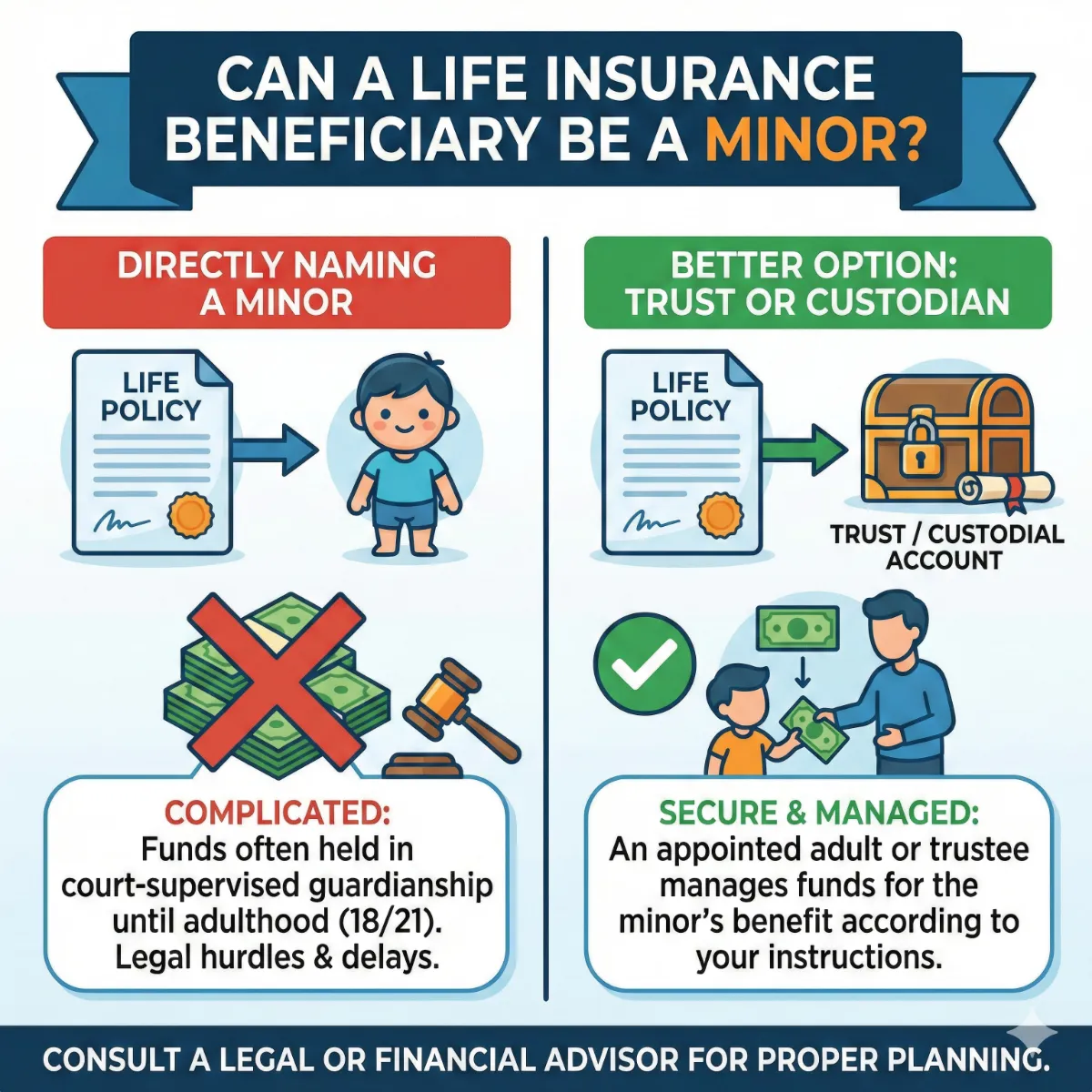
- The insurance company cannot pay the benefit directly to the child.
- The funds are usually held by the state or court until an adult guardian is appointed.
This process can take months, sometimes longer. The court will appoint someone to manage the money for the minor. Usually, it’s a parent or close relative. However, this is not automatic. Sometimes, the court chooses a neutral third party.
2. Custodian Or Guardian Appointed
If a guardian or custodian is named in the policy or appointed by the court, the insurance payout goes into a special account. The adult manages the funds for the child’s benefit. The guardian must follow rules set by the court.
In many states, the guardian must file reports about how the money is spent.
3. Trust Created For The Child
A trust is a legal arrangement where money is managed by a trustee for the benefit of the child. If the policyholder creates a trust and names the trust as the beneficiary, the insurance proceeds go directly into the trust.
The trustee follows instructions to spend or invest the money until the child reaches a certain age—often 18, 21, or older.
Trusts are often used by high-net-worth families, but they can be valuable for anyone who wants to control how and when the money is used.
Comparing Custodianship And Trusts
It’s important to understand the differences between custodianship and trusts. Here is a clear comparison:
| Feature | Custodianship | Trust |
|---|---|---|
| Who manages the funds? | Custodian or guardian (usually parent) | Trustee (can be parent, relative, or professional) |
| Control over spending | Limited, must follow court rules | Flexible, based on trust instructions |
| Reporting requirements | Usually must report to court | Trustee reports to beneficiaries |
| Cost | Low to moderate | Moderate to high, depends on complexity |
| When does the child get control? | At age 18 (or 21 in some states) | At age specified in trust (can be 18, 21, or older) |
The Uniform Transfers To Minors Act (utma)
The UTMA is a law used in many US states to handle gifts and assets for minors. If you name a child as a beneficiary, you can also appoint a custodian under UTMA. The insurance payout goes to the custodian, who manages it until the child reaches the age set by state law, usually 18 or 21.
UTMA accounts are simpler than trusts. They do not require court involvement unless there are disputes. However, once the child reaches the legal age, they get full control over the money, even if they are not ready.
State-by-state Differences
Not all states treat minors and insurance payouts the same way. Some states use UTMA, others use the Uniform Gifts to Minors Act (UGMA), and some have their own rules. Here is a quick overview:
| State | Legal Age for Control | Main Law Used |
|---|---|---|
| California | 18 or 21 (if specified) | UTMA |
| Texas | 21 | UTMA |
| New York | 18 | UTMA |
| Florida | 21 | UTMA |
| Illinois | 21 | UTMA |
Most states allow the custodian to manage funds until the child turns 18 or 21. After that, the funds are released, even if the child is not financially mature. This is a key reason why some parents prefer trusts.
What Happens If No Guardian Or Trust Exists
If the insured person dies and the child is the only beneficiary, but no guardian or trust is named, the insurance company cannot pay out the funds. The process is:
- The insurance company notifies the court.
- The court appoints a guardian of the estate for the child.
- The guardian manages the funds until the child reaches legal age.
This court process can be stressful, expensive, and slow. There is also a risk that the guardian appointed is not someone the deceased would have chosen.

Smart Ways To Protect A Minor Beneficiary
If you want your child to receive your life insurance, there are safer, smarter ways to do it. Here are the most reliable approaches:
- Create a trust: Name the trust as the beneficiary. Set clear rules for how the money is used and when the child gets access.
- Use UTMA/UGMA accounts: Name a trusted adult as custodian and use the account until the child comes of age.
- Appoint a guardian: Officially name a guardian in your will or insurance documents.
- Consult a lawyer: Estate planning attorneys can help create the best structure based on your family and state law.
Real-life Example: Avoiding Common Mistakes
Consider this case: Sarah names her 12-year-old son as her life insurance beneficiary. She does not set up a trust or name a custodian. When she passes away, the insurance company cannot pay the benefit directly to her son. The court steps in and appoints a guardian, but it takes six months. Sarah’s son cannot access the funds during that time. If Sarah had created a trust or used a UTMA account, her son’s financial security would have been protected without delays.
Hidden Risks Most People Miss
Many parents think naming a child as beneficiary is enough. But two often-overlooked dangers are:
- Unintended guardianship: If a court chooses someone you wouldn’t, your child’s money could be at risk.
- Premature access: Once the child turns 18 or 21, they can use all the money. Many young adults are not ready to handle large sums responsibly.
These risks are real. According to a study by the American Council of Life Insurers, nearly 20% of life insurance payouts for minors require court intervention. This adds stress, cost, and sometimes poor outcomes for families.
Tax Implications And Management Fees
Life insurance payouts are usually income tax-free for beneficiaries. However, if money is placed in a trust or managed by a guardian, there can be management fees. Some trusts also create tax reporting requirements. You should discuss these details with a financial advisor to avoid surprises.
How To Change Your Beneficiary If They Are Under 18
If you realize your beneficiary is a minor and want to update your policy:
- Contact your insurance company.
- Request a change of beneficiary form.
- Set up a trust, UTMA/UGMA account, or name a guardian.
- Update your will to match the new structure.
Most insurance companies make this process straightforward, but you must be clear about your intentions. Always confirm changes in writing.
Data: How Often Are Minors Named As Beneficiaries?
Recent surveys suggest that more than 25% of parents with life insurance name a minor child as their beneficiary. However, only about 35% of those parents set up a trust or custodian. The rest risk legal delays and complications.
Here’s a summary:
| Action | Percentage of Parents |
|---|---|
| Named minor as beneficiary | 25% |
| Set up trust or custodianship | 35% of those |
| No special arrangements | 65% of those |
What Insurance Companies Recommend
Most insurance companies recommend never naming a minor as a direct beneficiary. Instead, they suggest:
- Creating a trust
- Appointing a custodian
- Consulting legal experts
If you have questions, your insurance agent or estate planning attorney can help. For more information, you can visit the National Association of Insurance Commissioners.
Frequently Asked Questions
What If My Child Is The Only Beneficiary And I Haven’t Set Up A Trust Or Custodian?
The insurance company cannot pay out the funds. The court will appoint a guardian to manage the money until your child reaches legal age, which can cause delays and extra costs.
Can A Minor Ever Receive Life Insurance Money Directly?
No. US law does not allow minors to directly receive or manage life insurance payouts. The money must be managed by an adult or placed in a legal arrangement.
What Happens When The Child Turns 18 Or 21?
When the minor reaches the legal age, the funds are released to them. If the money is in a trust, the trust may have rules for when and how the child gets access. If it’s a custodianship, the child gets full control at the legal age.
Are Life Insurance Payouts To Minors Taxable?
Life insurance payouts are generally income tax-free. However, interest or investment gains in a trust or custodianship may be taxable. Speak to a tax advisor for details.
How Can I Avoid Legal Problems When Naming A Child As Beneficiary?
The safest way is to set up a trust or use a UTMA/UGMA account with a named custodian. Always update your insurance documents and will to match your plan.
Taking the right steps today can protect your child’s financial future and prevent legal trouble. If you have a life insurance policy and your beneficiary is under 18, review your options carefully. Planning ahead ensures your child receives the support they need—without unexpected delays or risks.