
Will Life Insurance Affect Medicaid
Understanding how life insurance can impact your Medicaid eligibility is important, especially if you or a loved one are planning for long-term care or support. Many people are surprised to learn that owning a life insurance policy may influence whether you qualify for Medicaid. This is because Medicaid has strict rules about how much income and assets you can have. But not all life insurance is treated the same way. There are different rules depending on the type and value of your policy.
If you’re thinking about applying for Medicaid, or you already have life insurance and want to make sure you’re still eligible, it’s smart to learn the basics. This article will guide you through the relationship between life insurance and Medicaid, explain which policies count as assets, and offer practical tips for protecting your coverage and benefits.

What Is Medicaid And Why Do Assets Matter?
Medicaid is a state and federal program that helps people with low income and limited assets pay for health care. It covers many services, including doctor visits, hospital care, and long-term care in nursing homes. To qualify for Medicaid, you must meet certain rules about your income and the value of things you own—these are called resource limits.
In most states, if you have too many assets, you won’t qualify for Medicaid. This is because Medicaid is designed for people who do not have the means to pay for their own care. The government looks at your countable assets, which can include bank accounts, real estate (other than your main home), investments, and sometimes life insurance.
Here’s a simple comparison of asset limits for Medicaid in selected states:
| State | Individual Limit | Couple Limit |
|---|---|---|
| California | $2,000 | $3,000 |
| Texas | $2,000 | $3,000 |
| Florida | $2,000 | $3,000 |
| New York | $30,182 | $40,821 |
*Note: Limits vary by state and situation. Some states have higher limits for certain Medicaid programs.*
Types Of Life Insurance And How Medicaid Views Them
Not all life insurance policies are the same. The main types are term life insurance and whole life insurance. Medicaid treats these differently.
Term Life Insurance
Term life insurance covers you for a set period, such as 10, 20, or 30 years. If you die during that time, your beneficiaries get a payout. Term life policies do not have any cash value—they are pure insurance.
- Medicaid does not count term life insurance as an asset because it has no cash value while you are alive.
- You can own a term policy and still qualify for Medicaid, as long as it has no cash value.
Whole Life (and Other Permanent) Insurance
Whole life, universal life, and other permanent life insurance policies have a cash value that grows over time. You can borrow against it or cash it out while you’re alive.
- Medicaid may count the cash value of these policies as an asset.
- If the total face value of all your life insurance policies is more than $1,500 (in most states), the cash value is counted toward your Medicaid asset limit.
- If the combined face value is $1,500 or less, the cash value is usually ignored.
Let’s compare these types in a simple table:
| Policy Type | Cash Value? | Medicaid Counted? |
|---|---|---|
| Term Life | No | No |
| Whole Life (Face Value ≤ $1,500) | Yes | No |
| Whole Life (Face Value > $1,500) | Yes | Yes (cash value only) |
How Medicaid Evaluates Life Insurance
Medicaid does not just look at whether you own life insurance. It looks at the type and value of your policy. Here’s what usually happens:
- Face Value: Medicaid first checks the total face value of all your life insurance policies. The face value is the amount paid to your beneficiaries when you die.
- Cash Value: If the total face value is more than $1,500, Medicaid checks the cash surrender value (the amount you’d get if you cashed in the policy).
- Exemptions: If your policies have a total face value of $1,500 or less, their cash value is usually not counted at all.
Example Scenario
Maria owns a $2,000 whole life policy with a cash value of $800. Medicaid would count the $800 as part of her assets because the face value is over $1,500.
If instead, Maria had two policies, each with a $750 face value (total $1,500) and combined cash value of $600, Medicaid would not count the cash value.
Why Does Medicaid Care About Cash Value?
Medicaid sees the cash value as something you could use to pay for your care. If you could cash out your policy, the program expects you to do so before relying on government help. This is why planning is important.
How Life Insurance Ownership And Beneficiaries Affect Medicaid
It’s not just the type and value of the policy that matter—ownership is key. If you own the policy, Medicaid counts it as your asset. If someone else owns it, it’s not counted against you.
- If you are listed as the owner, you control the policy and can access its cash value.
- If a family member is the owner (for example, your adult child), Medicaid will not count it as your asset.
- However, transferring ownership can have consequences. Medicaid has a look-back period (usually five years) where it reviews any transfers of assets. If you transfer a policy and don’t get fair value in return, you may face penalties.
Beneficiaries are also important, but Medicaid mostly cares about ownership and cash value while you are alive. After you die, the payout does not affect your eligibility.

Life Insurance And The Medicaid Spend-down
Some people have too many assets to qualify for Medicaid, but they can “spend down” their assets to become eligible. This often happens when someone needs long-term care.
What Is A Spend-down?
A spend-down is when you legally reduce your assets to meet Medicaid’s limits. You might pay for medical bills, home improvements, or other allowable expenses.
- You cannot simply give away assets to family or friends. That could trigger a penalty period.
- Cashing out or surrendering a life insurance policy is one way to spend down assets.
Using Life Insurance In A Spend-down
You can cash out a whole life policy, use the money for care, and then apply for Medicaid once your assets are below the limit. However, this often means losing the policy and the death benefit your heirs would get.
Tip: Some states allow you to convert a life insurance policy into a long-term care benefit account. This lets you use the value to pay for care, and any leftover amount can go to your beneficiaries. Check with your state Medicaid office for details.
Medicaid Estate Recovery And Life Insurance
After you pass away, Medicaid may try to recover the costs of your care from your estate. This is called Medicaid estate recovery. Life insurance can play a role here, depending on the policy’s setup.
- If your policy pays out to a named beneficiary (like your child or spouse), the money usually goes directly to them and is not subject to estate recovery.
- If your estate is the beneficiary, Medicaid may claim some or all of the payout to recover costs.
Non-obvious insight: Naming an individual as beneficiary, instead of your estate, can help protect the death benefit from Medicaid’s recovery program.
Common Mistakes People Make With Life Insurance And Medicaid
When planning for Medicaid, people often make these errors with life insurance:
- Forgetting about small policies: Even a small whole life policy can put you over the asset limit if its cash value is counted.
- Transferring ownership too late: Giving away your policy during the five-year look-back can cause a penalty. Plan early if you want to transfer ownership.
- Not updating beneficiaries: If you forget to name a person as beneficiary, your estate might receive the payout, opening it up to Medicaid estate recovery.
- Cashing out unnecessarily: Some people cash out policies when they don’t have to. If your face value is below $1,500, you might be able to keep it.
How To Protect Your Life Insurance And Medicaid Eligibility
If you want to keep your life insurance and still qualify for Medicaid, consider these steps:
1. Review Policy Types And Values
- Check the face value and cash value of all your policies.
- If the total face value is below $1,500, you’re usually safe.
- If it’s higher, talk to a Medicaid planner or attorney.
2. Consider Transferring Ownership
- Transferring ownership to a trusted family member can remove the policy from your assets.
- Do this well before you apply for Medicaid (more than five years ahead if possible).
3. Reduce Cash Value
- Some people take loans from their whole life policies to reduce the cash value below Medicaid’s limit.
- This can help you keep the policy, but be careful—loans must be repaid, or they reduce the death benefit.
4. Name The Right Beneficiary
- Always name a person (not your estate) as the beneficiary to avoid estate recovery.
- Review your policies regularly to make sure the information is current.
5. Seek Professional Help
- Medicaid rules are complicated and vary by state.
- Work with a Medicaid planner, elder law attorney, or financial advisor who understands both Medicaid and life insurance.
Real-world Example: How Life Insurance Impacted Medicaid Eligibility
Let’s look at a true-to-life scenario. John is 68 and needs nursing home care. He applies for Medicaid. He owns a whole life policy with a face value of $5,000 and a cash value of $2,500. The state counts the $2,500 as an asset.
John’s other assets total $1,000, putting him $1,500 over the $2,000 limit. He decides to cash out the policy, uses the money for medical bills, and then qualifies for Medicaid.
If John had transferred the policy to his daughter within the last five years, Medicaid would have penalized him, delaying his eligibility.
Non-obvious insight: Some states let you assign the life insurance policy to a funeral home for pre-paid burial expenses, making the policy exempt from asset limits. This is a smart way to preserve the death benefit.
Life Insurance And Medicaid: State-by-state Differences
Medicaid is a joint federal-state program, so rules can vary widely. Some states have higher asset limits, different ways of counting cash value, or special exceptions for funeral expenses. Always check your own state’s guidelines.
Here’s a quick comparison of how three states handle life insurance and Medicaid:
| State | Face Value Exemption | Cash Value Counted? | Special Notes |
|---|---|---|---|
| New York | $1,500 | Yes, over $1,500 | Pre-paid burial trusts allowed |
| California | $1,500 | Yes, over $1,500 | Some policies exempt if irrevocable |
| Texas | $1,500 | Yes, over $1,500 | Funeral policies must be irrevocable |
Even small details, such as whether a policy is irrevocable or assigned for funeral expenses, can make a big difference.

Planning Ahead: Smart Steps Before Applying For Medicaid
If you think you might need Medicaid in the future, start planning as early as possible. Here are some practical steps:
- Inventory all your assets, including life insurance policies.
- Understand your state’s Medicaid rules—they can differ a lot.
- Talk to a professional about your options, especially if you have a policy with a cash value.
- Consider pre-paying funeral expenses with your life insurance. In many states, this makes the policy exempt.
- Keep records of all changes you make to your policies or assets.
Many people are surprised by how quickly health needs can change. By preparing ahead, you can protect your loved ones and avoid last-minute stress.
The Bottom Line
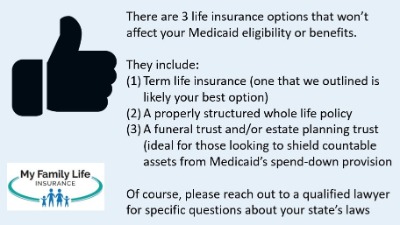
Owning life insurance does not always mean you can’t get Medicaid, but the rules are detailed and sometimes confusing. The type of policy, its face value, and its cash value are all important. If you have a term life policy, you’re usually safe.
If you have a whole life policy with a face value over $1,500, you may need to take action to protect your eligibility.
Work with a trusted advisor, check your state’s rules, and don’t leave planning to the last minute. The right steps can help you keep both your coverage and your peace of mind.
For more details on Medicaid and life insurance, you can visit the official Medicaid website.
Frequently Asked Questions
Will I Lose My Medicaid If I Buy Life Insurance?
If you buy term life insurance, it won’t affect your Medicaid because it has no cash value. Buying a whole life policy with a face value over $1,500 could affect your eligibility if the cash value pushes your total assets above Medicaid’s limit.
Can I Transfer My Life Insurance To A Family Member To Qualify For Medicaid?
You can transfer ownership, but if you do it within five years of applying for Medicaid, you may face a penalty period. Medicaid will review all asset transfers in the past five years, so plan ahead.
What Happens To My Life Insurance Policy After I Go On Medicaid?
If your policy is exempt (for example, a term policy or a whole life policy with a face value under $1,500), you can keep it. If not, you may need to cash it out or take other steps. After you pass away, the payout usually goes to your beneficiary, unless your estate is the beneficiary—then Medicaid may recover costs from the policy.
Can I Use My Life Insurance To Pay For Nursing Home Care Before Medicaid?
Yes, you can cash out a whole life policy and use the money for care. This is a common way to spend down assets to qualify for Medicaid. Just remember, cashing out reduces or eliminates the death benefit for your heirs.
Is There Any Way To Keep My Whole Life Policy And Still Get Medicaid?
Yes. If the face value is under $1,500, it’s exempt. You might also assign the policy for funeral expenses or transfer ownership (well before you apply). Each state has different rules, so talk to an expert before making changes.