
Life insurance is a product almost everyone hears about, but not everyone understands. This makes life insurance agents more important than ever. They help people choose policies, protect families, and build financial security. If you want to become a life insurance agent, or you’re curious about how agents are made—how they learn, get licensed, and succeed—this article will guide you through the whole process. Whether you dream of a flexible career or want to help others with a vital service, understanding how to make a life insurance agent is the first step.
What Does A Life Insurance Agent Do?
A life insurance agent does much more than just sell policies. They act as advisors, educators, and problem solvers. Their daily work includes:

- Meeting with clients to discuss financial needs
- Explaining complex insurance terms in clear language
- Recommending suitable life insurance products
- Assisting with applications and claims
- Keeping up with changing laws and policy options
Agents must be good listeners, patient teachers, and skilled communicators. They deal with sensitive topics like death and family security, so trust and empathy are essential. For many, it’s not just a sales job—it’s about helping people plan for the future.
Key Steps To Become A Life Insurance Agent
The journey to becoming a successful life insurance agent involves several steps. Each one is important for building knowledge, trust, and a strong career.
1. Understand The Role And Commit To The Path
Before starting, it’s important to understand what the job really involves. Life insurance sales can be rewarding, but it’s also challenging. Agents must find clients, deal with rejection, and keep learning new information. Ask yourself:
- Do you enjoy helping people?
- Are you comfortable talking about money and future planning?
- Can you handle setbacks and keep going?
Being honest about your skills and motivation at this stage saves time later.
2. Meet Basic Requirements
Most states in the US have similar requirements for becoming a life insurance agent:
- Minimum age: Usually 18 years old
- Legal residency: You must be legally allowed to work in the US
- Background check: No serious criminal history
Some companies may also require a high school diploma or equivalent.
3. Choose The Type Of Insurance To Sell
There are two main types of life insurance agents:
- Captive agents: Work for one insurance company and sell only its products.
- Independent agents: Work with multiple companies, offering clients more choices.
Each path has pros and cons. Captive agents often get more training and support but have limited products. Independent agents have more freedom but must build relationships with several companies.
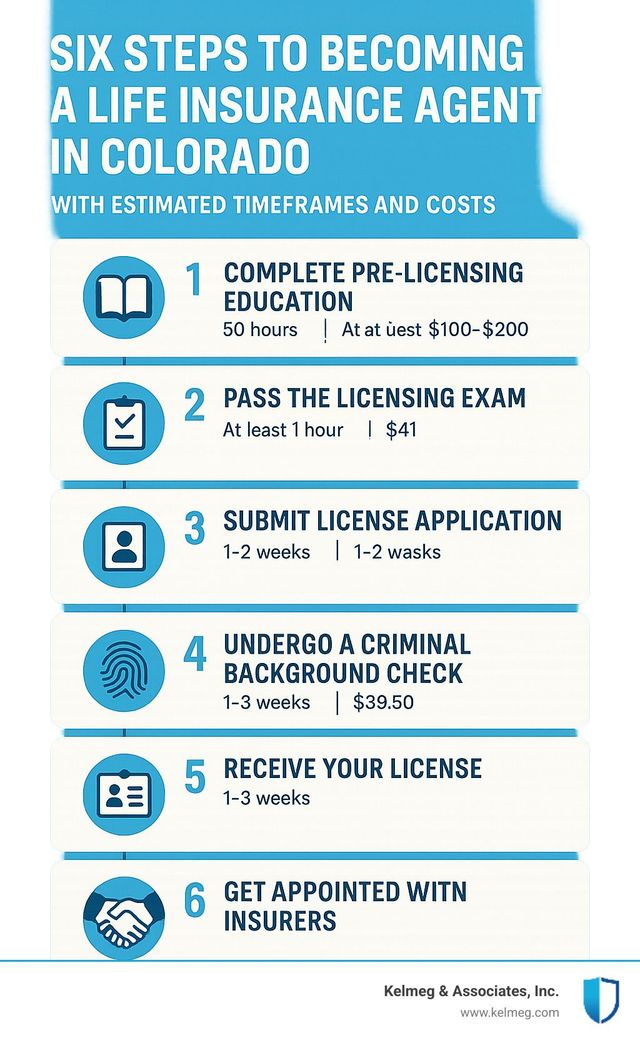
4. Complete Pre-licensing Education
Most states require pre-licensing education before you can take the licensing exam. These courses cover:
- Types of life insurance (term, whole, universal, etc.)
- State insurance laws and regulations
- Ethics and responsibilities
- Policy features and riders
The number of hours required varies by state, usually between 20 and 40 hours. You can often choose between in-person classes or online courses.
5. Pass The State Licensing Exam
Once your pre-licensing education is complete, you must pass the life insurance licensing exam. This test checks your understanding of key concepts and state laws.
Most exams are multiple-choice and last about 2 hours. Topics include:
- Insurance basics
- Policy types and features
- State-specific rules
- Ethics and professional conduct
You usually need a score of 70% or higher to pass. If you fail, you can retake the test, but there may be a waiting period and extra fees.
6. Submit A License Application And Background Check
After passing the exam, you’ll submit your application to your state’s insurance department. This step often includes:
- Filling out an online application
- Submitting fingerprints for a background check
- Paying licensing fees (typically $50–$200)
Once approved, you’ll receive your official insurance license. This license must be renewed every 1–2 years, with continuing education required.
7. Find A Sponsor Or Employer
Most new agents join an insurance agency or company as a starting point. Larger companies offer training, support, and marketing resources. They may also provide leads (potential clients), which is helpful for beginners.
Some agents start as independent contractors, but this can be tough without experience or a personal network.
8. Get Additional Training
Passing the exam is just the beginning. To truly help clients, agents need real-world training on:
- Sales techniques and client communication
- Understanding different types of clients (families, business owners, retirees)
- Using technology and insurance software
- Handling claims and customer service
Many companies offer mentorship programs, group workshops, or online learning.
9. Build A Client Base
Clients are the heart of a life insurance agent’s business. Building a strong client base takes time and effort. Common methods include:
- Networking at local events
- Asking friends and family for referrals
- Using social media and online marketing
- Giving educational talks or seminars
Staying in touch with clients is key. Many successful agents check in regularly, offer policy reviews, and provide ongoing advice.
10. Continuing Education And Professional Growth
Laws, products, and client needs change over time. Most states require agents to complete continuing education every year or two. This keeps skills sharp and ensures agents stay compliant.
Many agents also pursue advanced certifications, like:
- Certified Life Underwriter (CLU)
- Chartered Financial Consultant (ChFC)
- Certified Financial Planner (CFP)
These designations can help agents stand out and earn more.
Comparing Captive Vs. Independent Life Insurance Agents
Choosing between being a captive or independent agent is a big decision. Here’s a simple comparison:
| Aspect | Captive Agent | Independent Agent |
|---|---|---|
| Products Offered | One company’s products | Multiple companies’ products |
| Training & Support | Strong initial support | Must find own resources |
| Commission Rates | May be lower | Can be higher |
| Flexibility | More structure | Greater independence |
| Brand Recognition | Company name helps | Build personal brand |
Each path fits different personalities. If you like structure and teamwork, captive might be best. If you want flexibility and variety, independent is better.
Essential Skills For Life Insurance Agents
Not everyone is a natural fit for this career, but many skills can be learned. The most successful agents develop:
- Communication skills: Explaining policies simply and listening to client needs
- Empathy: Understanding family concerns and emotional topics
- Persistence: Following up, handling rejection, and staying motivated
- Organization: Managing paperwork, appointments, and follow-ups
- Sales ability: Presenting options and closing deals without being pushy
A non-obvious insight: Agents who educate first, sell second often build deeper trust and longer-lasting client relationships. Clients value advice more than a hard sell.
Earning Potential And Career Outlook
Life insurance agents can earn a good living, but income varies widely. Here’s a look at typical earnings:
| Experience Level | Average Annual Income | Top Earners |
|---|---|---|
| Entry-Level | $35,000–$50,000 | $70,000+ |
| Mid-Career | $50,000–$80,000 | $120,000+ |
| Experienced | $80,000–$120,000 | $200,000+ |
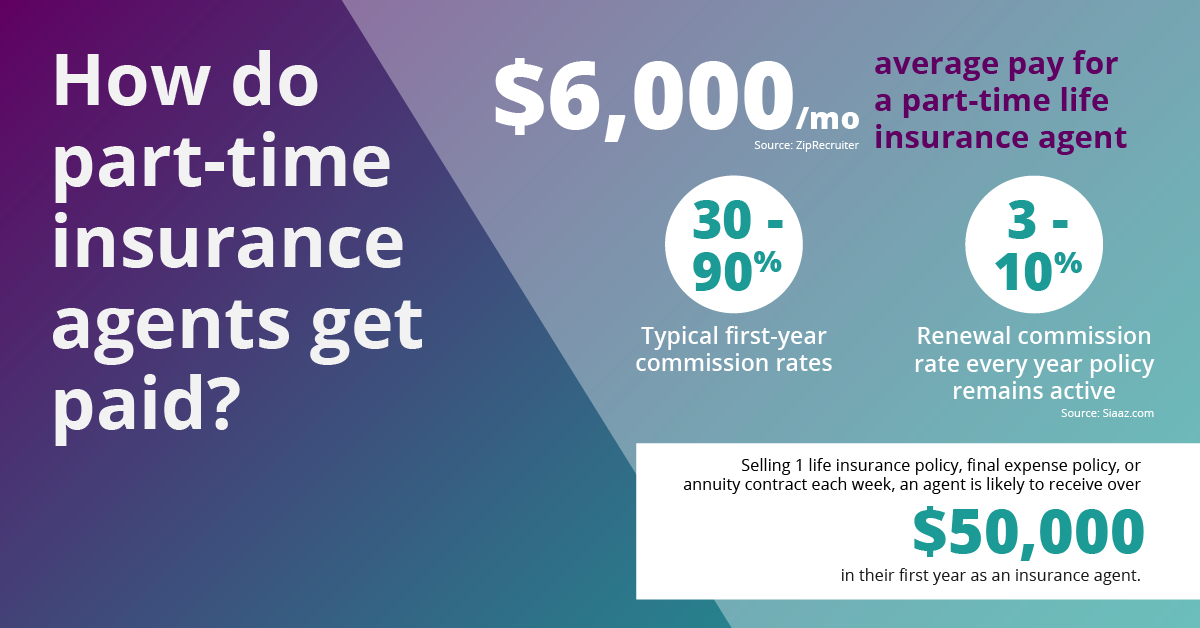
Much of an agent’s income comes from commissions. This means your earnings are tied to how many policies you sell and the type of products. For example, selling permanent life insurance often pays more than simple term policies.
It’s also common for agents to earn renewal commissions. This means you keep earning a small amount each year for clients who keep their policies. Over time, this creates more stable income.
According to the U. S. Bureau of Labor Statistics, the number of insurance agent jobs is expected to grow 6% from 2021 to 2031, which is about average for all jobs. This steady demand is due to an aging population and more people understanding the importance of life insurance.
Challenges And Common Mistakes
While the rewards are real, there are also challenges. Many new agents face:
- Finding enough clients: The first year is often the hardest.
- Dealing with rejection: Many people say no, or avoid talking about insurance.
- Keeping up with regulations: Rules change often, and mistakes can cost your license.
- Burnout: Working long hours to build a business can be tiring.
Common mistakes to avoid:
- Focusing only on sales: Clients can tell when you care more about commissions than their needs.
- Ignoring follow-up: Many sales are made after several conversations.
- Skipping education: Laws and products change; staying up-to-date is key.
- Overpromising: Never promise returns or benefits you can’t guarantee.
A non-obvious insight: It’s easy to underestimate the amount of paperwork and compliance. Successful agents set aside time each week to handle documents and double-check details.
Technology And Tools In Life Insurance Sales
Modern life insurance agents use a range of digital tools to serve clients and grow their business. Some important tools include:
- Customer Relationship Management (CRM) systems: Track leads, client information, and follow-ups.
- Online quoting tools: Give instant policy estimates for clients.
- E-signature platforms: Allow clients to sign documents remotely.
- Educational websites and videos: Help clients understand products before meeting with an agent.
Agents who adopt technology early often save time and close more sales. For example, using a CRM can improve follow-up rates by up to 30%.
Here’s a quick comparison of popular CRM tools for insurance agents:
| CRM Tool | Main Feature | Typical Monthly Cost |
|---|---|---|
| Salesforce | Customizable workflows | $25–$150 |
| HubSpot | Integrated marketing | Free–$50 |
| AgencyBloc | Insurance-specific features | $70–$100 |
Choosing the right tools depends on your budget and needs. Many agents start with basic options and upgrade as their business grows.
How To Stand Out As A Life Insurance Agent
The best agents do more than just sell policies. They build a reputation for trustworthiness and service. Here are some tips to stand out:
- Specialize: Focus on a niche, like young families, business owners, or seniors. This lets you become an expert in their unique needs.
- Educate clients: Offer free workshops or webinars on financial planning.
- Use testimonials: Ask happy clients for feedback and referrals.
- Stay visible: Write articles, join local business groups, and be active online.
A non-obvious tip: Agents who follow up with clients after a claim—just to see how they’re doing—often get more referrals. Small gestures build strong loyalty.
The Licensing Process: A State-by-state Snapshot
While most states have similar steps for licensing, some differences exist. For example, California requires a 20-hour course plus 12 hours of ethics, while Texas focuses on a single 20-hour course. Fees and exam formats also vary.
If you want detailed, up-to-date information for your state, check the official National Association of Insurance Commissioners website or your state insurance department. Here’s a helpful resource for more: National Association of Insurance Commissioners.
Frequently Asked Questions

What Is The Difference Between Term And Whole Life Insurance?
Term life insurance covers you for a set period, such as 10, 20, or 30 years. If you die during this time, your family gets the payout. Whole life insurance lasts your entire life and often builds cash value you can borrow against. Term is usually cheaper, while whole life offers more long-term benefits.
How Long Does It Take To Become A Life Insurance Agent?
Most people can become licensed in 4–8 weeks. This includes pre-licensing education, passing the exam, and completing the application process. If you study part-time or face delays, it may take a bit longer.
Do Life Insurance Agents Need A College Degree?
No, a college degree is not required. Most agents start with a high school diploma or equivalent. However, further education or certifications can help you stand out and earn more.
Can Life Insurance Agents Work From Home?
Yes, many agents work from home, especially independent agents. Technology allows you to meet clients online, handle paperwork digitally, and run marketing campaigns from your computer.
What Are The Biggest Challenges For New Agents?
The hardest part is often finding enough clients and dealing with rejection. Many new agents also struggle with staying organized and keeping up with changing rules. Building a routine and seeking mentorship can help overcome these challenges.
Starting a career as a life insurance agent isn’t easy, but it’s possible for anyone willing to learn, work hard, and genuinely help others. With the right steps, skills, and mindset, you can build a rewarding career that makes a real difference in people’s lives.